Crypto Market Psychology: Navigating Cycle Emotions from Disbelief to Euphoria
Explore the psychological stages of crypto market cycles, understand cognitive biases like FOMO and loss aversion, and learn strategies to maintain emotional detachment.
On this page
Quick read
Cryptocurrency markets are driven by the collective psychology of millions of participants. Understanding the emotional wave—from bear market depression and disbelief to bull market optimism and parabolic euphoria—enables investors to spot market extremes and execute disciplined, objective trading decisions.
What to remember
- Markets Are Driven by Emotions: Price movements in 24/7 crypto markets reflect extreme shifts in human psychology—primarily greed and fear—rather than pure fundamental valuation.
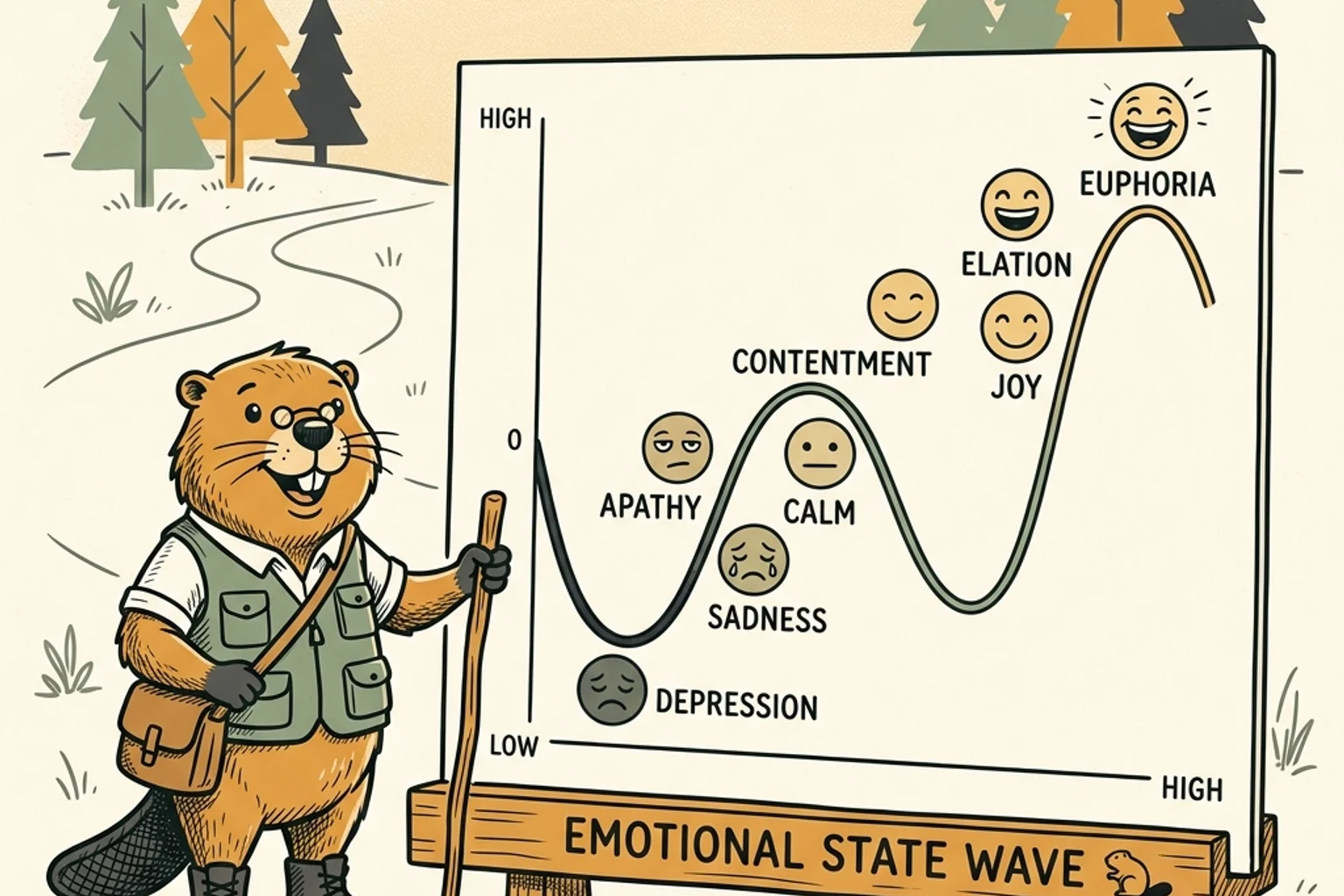
- The Emotional Cycle Clock: Every market cycle moves through distinct emotional stages: Disbelief → Hope → Optimism → Euphoria (Top) → Anxiety → Denial → Panic → Depression (Bottom).
- Max Risk at Max Optimism: Financial risk is highest when market sentiment reaches absolute euphoria. Financial opportunity is highest when market sentiment is in total depression.
- Overcoming Cognitive Biases: Traders must actively counter Confirmation Bias, Recency Bias, and Loss Aversion by following pre-written, rules-based trade plans.
- Automate to Remove Emotion: Using pre-set stop-loss orders, automated take-profit scales, and Dollar-Cost Averaging insulates your portfolio from impulsive emotional decisions.
Why market psychology dominates cryptocurrency
Unlike traditional stock markets governed by quarterly corporate earnings reports and institutional trading hours, cryptocurrency operates 24/7 in a highly retail-driven, global environment. Because digital assets are early-stage technologies subject to high uncertainty, price movements are heavily amplified by collective human emotion.
In behavioral finance, price charts are essentially visual maps of crowd psychology:
- Greed and FOMO drive prices far above fundamental valuation during bull runs.
- Fear and Panic drive prices far below intrinsic value during bear market crashes.
Investors who learn to recognize where the market sits within the psychological cycle can avoid buying at parabolic tops and selling at capitulation bottoms.
| Cycle Stage | Dominant Emotion | Market Reality | Optimal Investor Action |
|---|---|---|---|
| Disbelief / Recovery | Skepticism | Smart money quietly accumulates; first higher highs form | Begin systematic spot position accumulation |
| Optimism & Belief | Growing Confidence | Broad market rally accelerates; adoption news increases | Hold core positions; trail stop-losses upward |
| Parabolic Euphoria | Greed & Overconfidence | Mainstream media hype; retail leverages to max at top | Scale out of positions; lock in stablecoin profits |
| Denial & Anxiety | Reluctance to Accept | Initial sharp crash; traders view drop as a minor dip | Avoid buying falling knives; enforce strict risk rules |
| Panic & Capitulation | Fear & Despair | Forced liquidations; retail sells at massive losses | Prepare buy lists; monitor for bottoming volume |
| Depression / Bottom | Apathy & Hopelessness | Trading volume dries up; public loses interest in crypto | Deploy long-term capital into high-conviction assets |
The 4 phases of the emotional market cycle
While individual market cycles vary in duration, they universally move through four distinct emotional phases:
Phase 1: Accumulation and disbelief
Following a devastating bear market crash, prices begin to stabilize in a quiet horizontal range. Public interest in crypto is near zero, media headlines declare digital assets "dead," and retail participants remain deeply traumatized by previous losses.
When early price rallies occur, the dominant sentiment is disbelief ("This is just a sucker's rally before another crash"). Institutional investors and experienced market participants quietly accumulate assets during this phase.
Phase 2: Markup, optimism, and belief
As positive network fundamentals accumulate, prices break through major resistance levels. Doubts turn into hope, then optimism, and finally widespread belief.
Trading volume expands, new users download wallet apps, and mainstream news outlets cover price milestones. Portfolio values appreciate steadily, rewarding disciplined holders.
Phase 3: Parabolic peak and euphoria
This is the most dangerous phase for retail capital. Prices rise vertically on a daily basis. Social media feeds are flooded with luxury flexes, speculative meme coins surge 500% overnight, and retail investors borrow funds or use 50x leverage to maximize exposure.
The prevailing mindset is euphoria—the dangerous belief that "this time is different" and prices will rise forever. Financially, this moment represents the absolute point of maximum financial risk, as smart money quietly distributes supply to incoming retail buyers.
Phase 4: Markdown, panic, and capitulation
The market reaches structural exhaustion as buying power dries up. A sudden sharp sell-off catches leveraged buyers off guard. Initially, traders experience denial ("It's just a healthy correction"), refusing to take profits or cut losses.
As prices break below major support levels, denial turns to anxiety, then panic. Cascading margin liquidations trigger rapid price drops. Eventually, market sentiment hits capitulation—investors sell their holdings at massive losses just to stop the psychological pain. The cycle concludes in depression and apathy, setting the stage for the next accumulation phase.
The 4 cognitive biases warping trader decisions
To navigate market psychology successfully, you must recognize the psychological shortcuts (cognitive biases) that lead to self-sabotage:
1. Confirmation bias
The tendency to search for, interpret, and remember information that confirms your pre-existing bullish or bearish thesis while ignoring contradictory evidence. For example, a trader holding a losing altcoin will actively seek out bullish tweets while ignoring broken technical support and declining developer activity.
2. Recency bias
Extrapolating recent price action infinitely into the future. During a 3-month bull run, recency bias makes traders believe prices will never fall. During a bear market, it makes investors believe crypto will never recover.
3. Loss aversion
Prospect theory demonstrates that human beings experience the psychological pain of a loss twice as intensely as the joy of an equivalent financial gain. This causes traders to hold onto losing trades far too long (hoping to break even) while cutting winning trades prematurely out of fear of giving back gains.
4. Herd mentality (FOMO and panic)
The instinctual impulse to follow the crowd. Humans are social creatures engineered to seek safety in numbers. In financial markets, however, following the crowd means buying when prices are highest and selling when prices are lowest.
Practical strategies to achieve emotional detachment
Transitioning from an emotional victim of market cycles to a disciplined investor requires building structural barriers against your own impulses:
- Pre-Commit to Trade Plans: Write down your entry price, stop-loss level, and profit targets before executing any order. Once an order is live, never alter your parameters based on intraday emotion.
- Automate Execution: Use limit orders, trailing stop-losses, and automated Dollar-Cost Averaging (DCA) to remove real-time decision-making during volatile candles.
- Maintain a Trade Journal: Document your emotional state during every trade entry and exit. Reviewing past entries will quickly reveal whether your losses are driven by strategy flaws or emotional impulse.
- Practice Disconnect Discipline: During periods of extreme market volatility, step away from 1-minute price charts and social media feeds. High-frequency price monitoring triggers adrenaline and impulsive trading.
Frequently Asked Questions
The Wall Street Cheat Sheet is a classic psychological chart template illustrating the emotional stages of a financial market cycle—from Hope, Optimism, and Euphoria at the top, down to Complacency, Anxiety, Panic, and Depression at the bottom.
Euphoria is characterized by vertical price candles, record high exchange funding rates, widespread media coverage, non-traders asking how to buy crypto, and the general belief that market pullbacks will never happen again.
During the Depression phase, market sentiment is bleak, prices have crashed 70%+, and media headlines declare the asset class dead. Buying requires going directly against human herd instinct and absorbing negative social sentiment.
FOMO (Fear Of Missing Out) is the emotional urge to buy an asset after a rapid price surge. FUD (Fear, Uncertainty, and Doubt) refers to negative headlines, rumors, or panic that induce traders to sell their holdings.
Loss aversion makes traders refuse to accept small stop-loss exits because closing a losing trade confirms a monetary loss. As a result, traders hold losing positions through massive drawdowns, wiping out account equity.
Limiting social media during market crashes is highly beneficial. Social platforms amplify panic and outrage, triggering impulsive sell-offs at the exact moment long-term value opportunities are emerging.
This article is educational. It is not financial or investment advice. Market cycles vary in duration and severity, and past psychological patterns do not guarantee future price performance. Conduct your own research.
Keep learning
Recommended next reads based on this lesson.
- Why the Memecoin Craze HappensAttention as the scarce resource, lottery preference, community as the product, and why knowing the base rate does not change behaviour — the mechanism behind the odds.
- Altcoin Season: What It Is and How to Measure ItWhy a 90-day rolling index confirms a rotation three quarters of the way through it, the survivorship problem in the top 50, and how to read it honestly.