Learn crypto from the ground up.
Follow a clear path from first principles to safer decisions and deeper market understanding.

Four stages, from roots to leaves.
Each stage builds on the one before it. Follow the order if you are new, or jump straight to the question in front of you.
Know what you are buying
What crypto assets actually are: coins versus tokens, Bitcoin versus stablecoins, and how wallets and custody work.
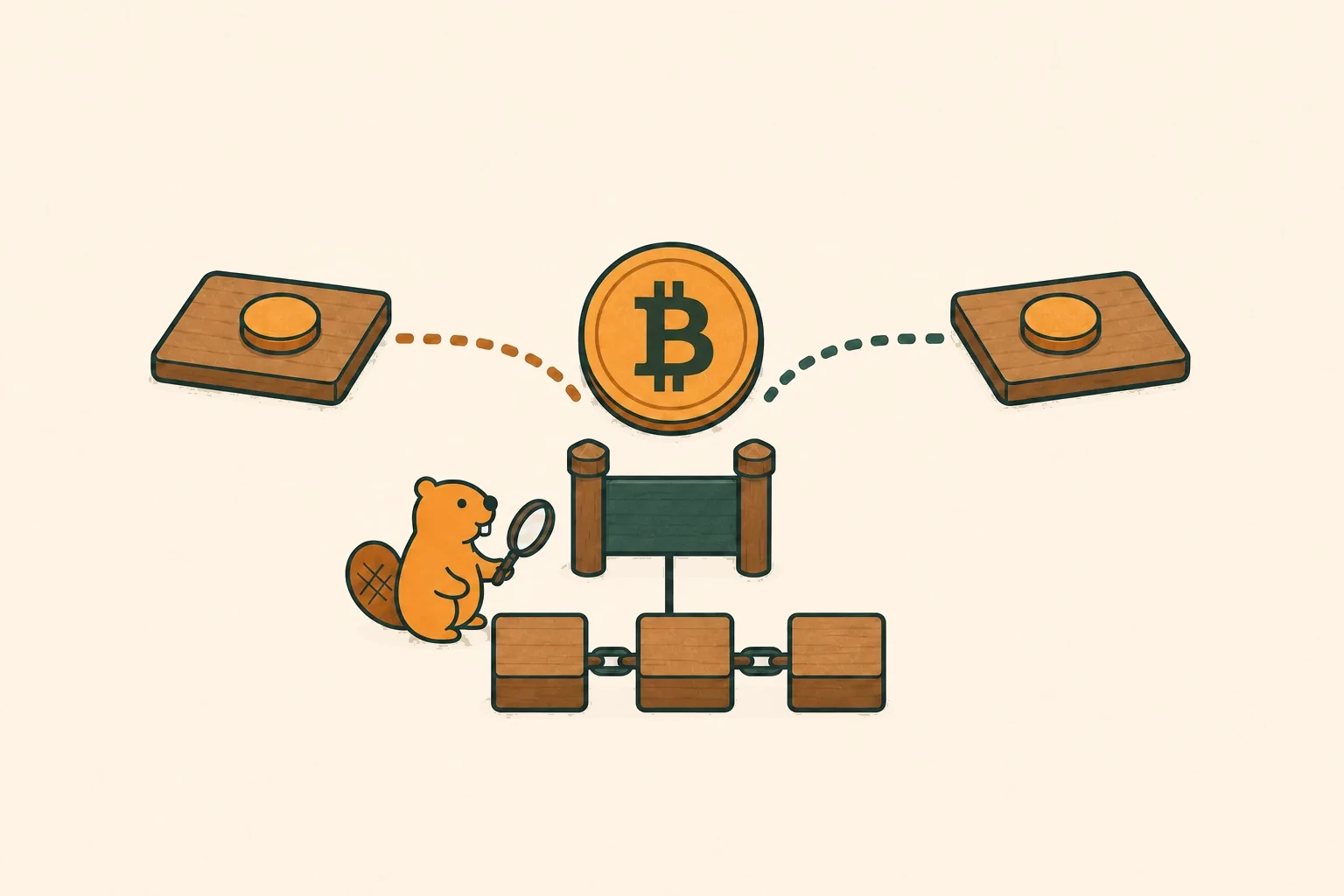
- Why did Bitcoin need to exist?Start with the double-spend problem to understand why Bitcoin needed a shared transaction history.
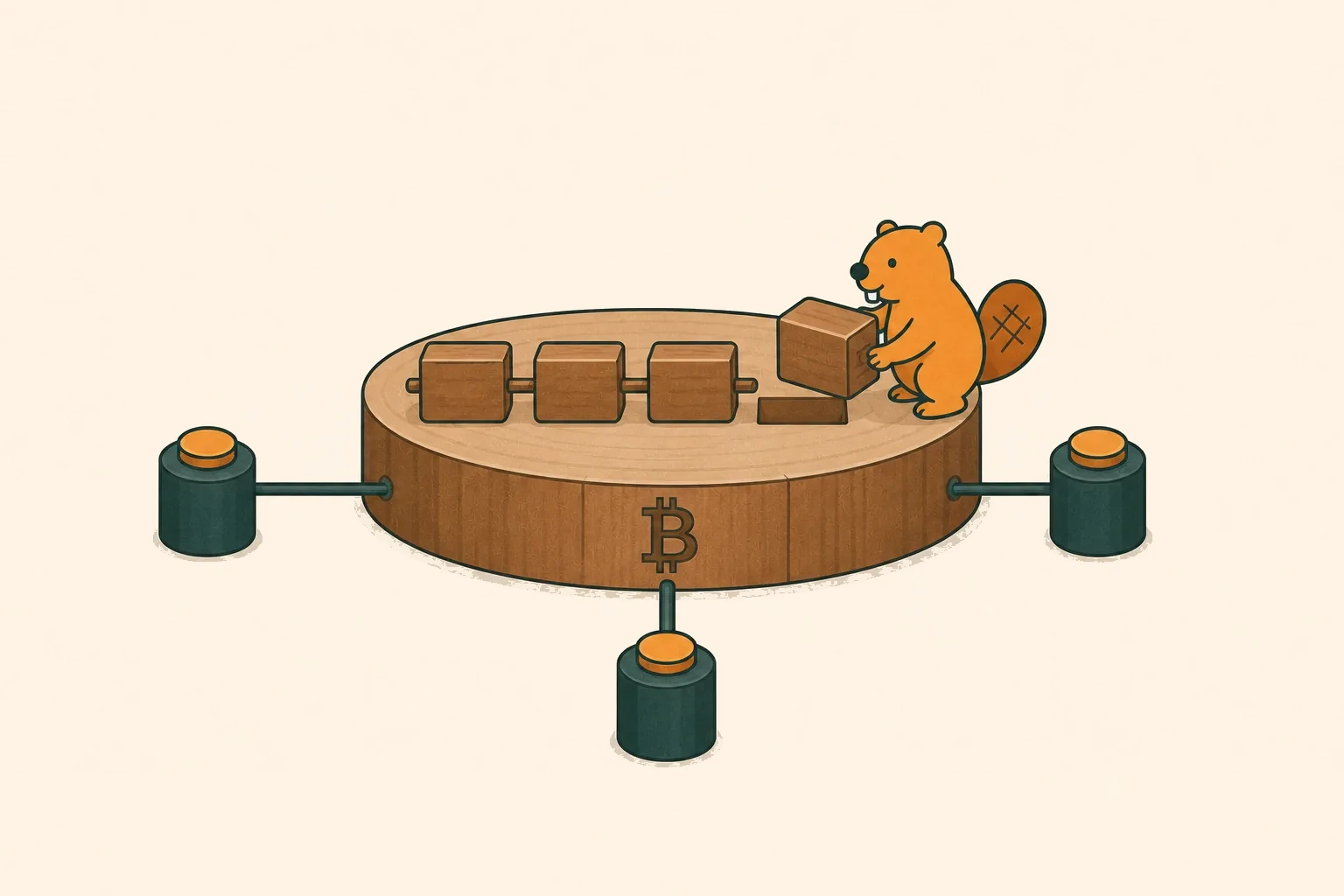
- Bitcoin: the first Layer 1Learn why Bitcoin is a Layer 1 network, how its own rules secure BTC, and why settlement has trade-offs.
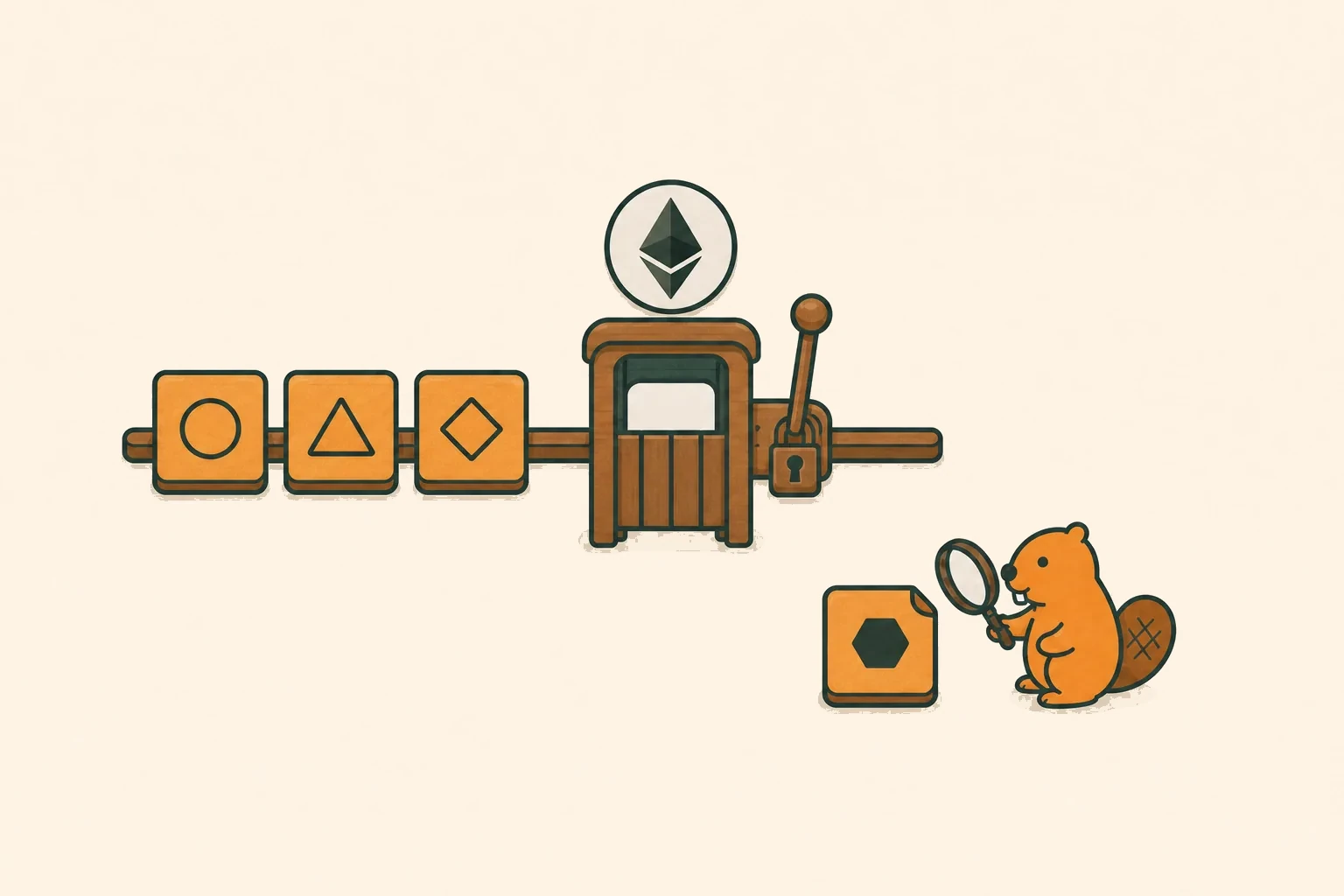
- Why is Ethereum programmable?See how Ethereum extended the Layer 1 idea with shared programs, ETH gas, and new trade-offs.
- Why are there so many tokens?Learn how ERC-20 made tokens reusable across Ethereum apps, and why a shared standard still leaves important risks.
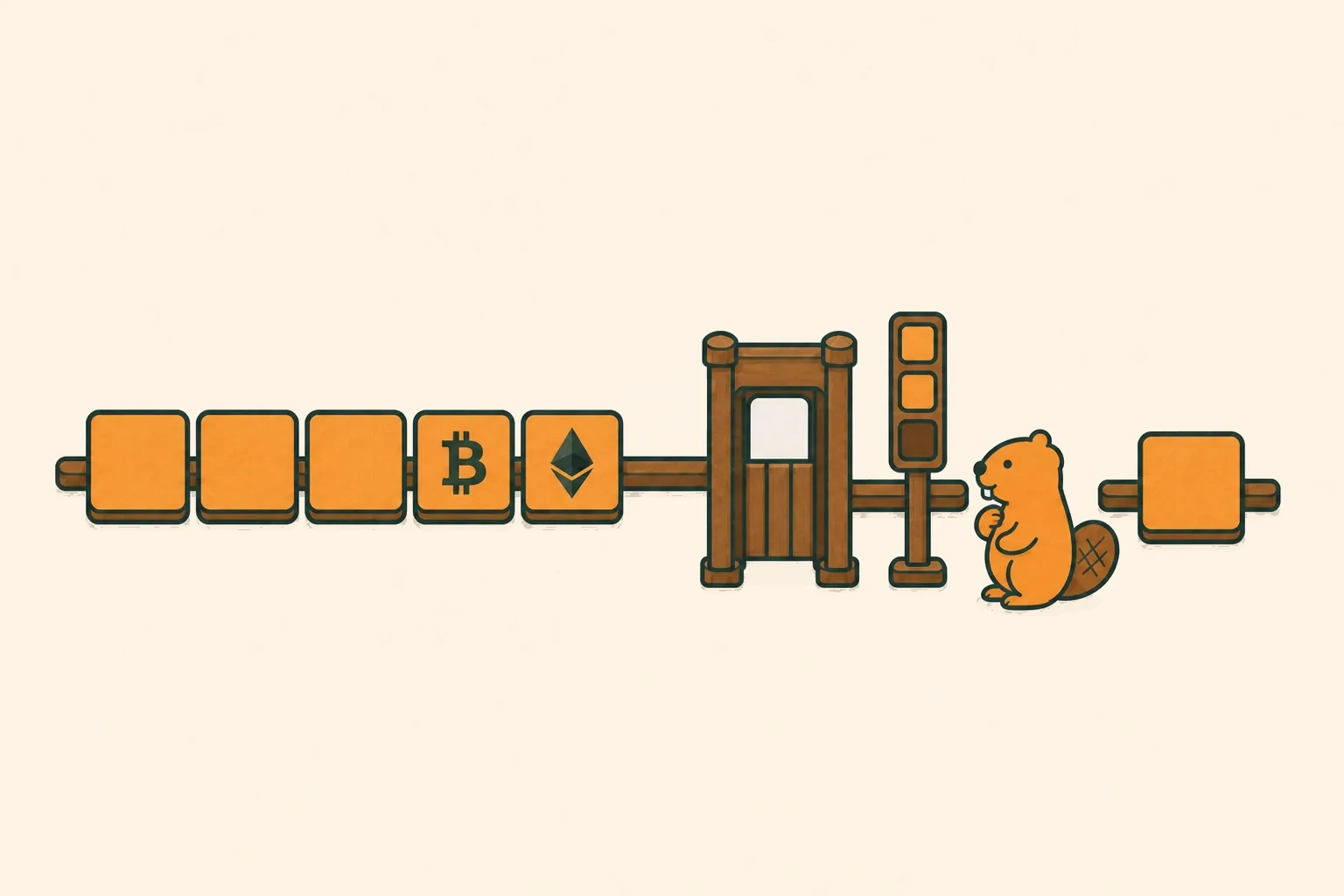
- Why do blockchains get congested?Learn why shared Layer 1 resources are limited, how demand turns into fees and delays, and why scaling creates trade-offs.
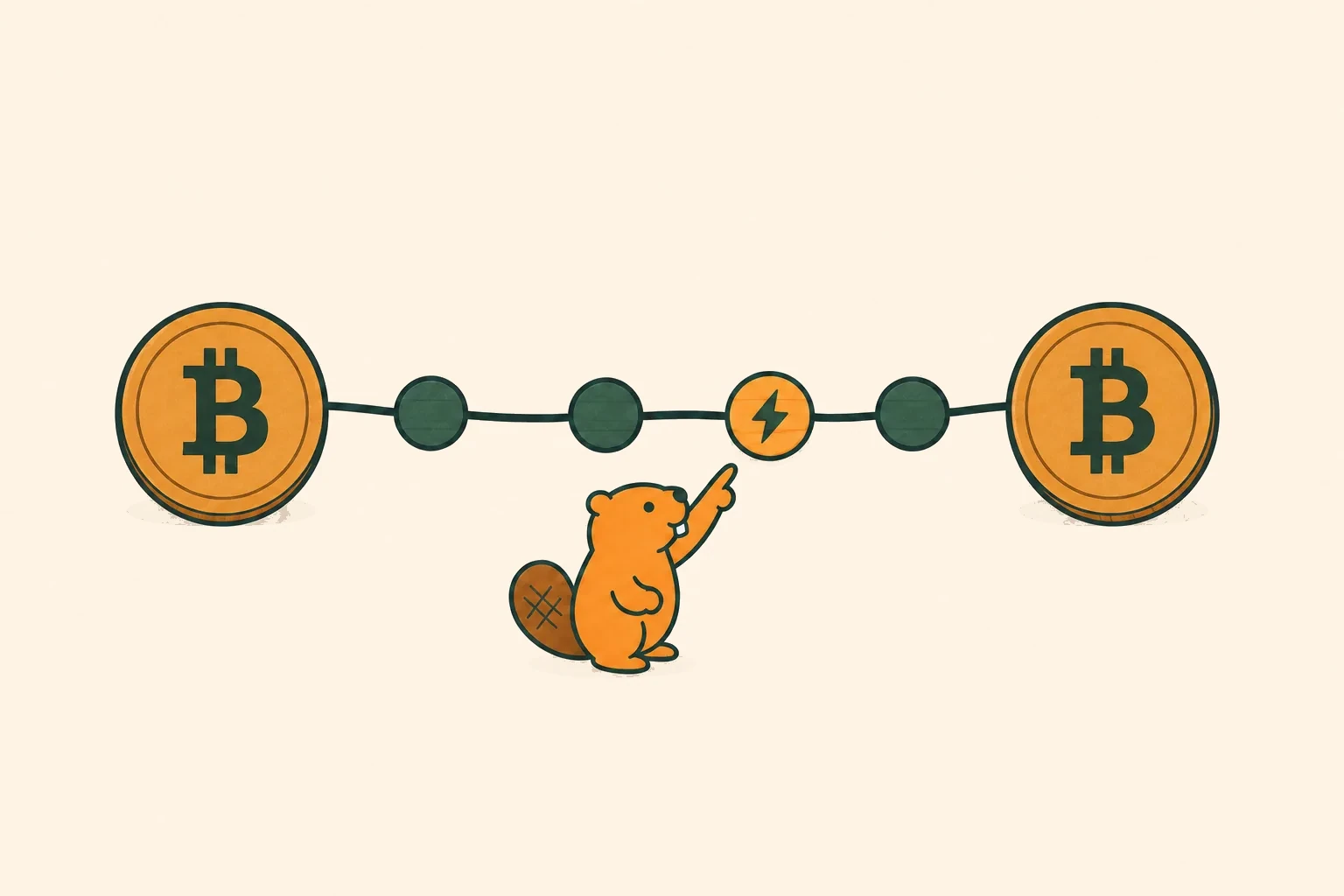
- Why can Lightning payments be faster?Learn how Bitcoin Lightning payment channels update balances away from the base layer, route payments, and keep their final settlement tied to Bitcoin.

Read the market
How to read price, volume, market cap, and ETF flows - the numbers behind every CoinBeaver data page.
- Crypto Treasury Companies: What You Own and What Makes Them SellHow digital asset treasury companies finance their coin purchases, who ranks ahead of common shareholders, why the buying stops, and what forces a sale.
- How Exchanges Build the Index Price: The Basket Behind Your LiquidationEvery venue builds its index from its own basket of spot exchanges, with its own rule for what to do when one of them dislocates. Work through the published methodologies at Binance, Bybit, OKX and Deribit, and see why the same position carries a different liquidation price on each.
- Why the Memecoin Craze HappensAttention as the scarce resource, lottery preference, community as the product, and why knowing the base rate does not change behaviour — the mechanism behind the odds.
- What "Beta" Actually Means in Crypto (And Why Most Portfolios Are All Beta)Beta gets used three incompatible ways in the same conversation. Work through the real definition, why the benchmark is contested when Bitcoin is 56% of it, why crypto beta will not hold still, and why a ten-coin basket is closer to a leverage decision than a diversification one.
- Pre-Launch Perps: Trading a Price That Doesn't Exist YetA pre-launch perp has no spot market to reference, so the contract becomes its own oracle. Work through how Hyperliquid and Binance each solve that, why arbitrage cannot anchor the price, and the XPL case where the pre-launch market printed a price the token never reached.
- Auto-Deleveraging (ADL) Explained: When the Exchange Closes Your WinnerHow the ADL queue is ranked, what price your position is closed at, why the settlement gap matters less than the forced exit, and how to read the indicator on your position row.





Choose a safe route
Buying routes, exchange fees, and custody risk - the checks to make before choosing where to transact.
- Position Sizing Beyond the 1% Rule: Fixed Fractional, Kelly, and Volatility-Adjusted SizingHow fixed fractional, fixed dollar, Kelly, and volatility-targeted position sizing actually behave in crypto, with the arithmetic worked and the failure modes named.
- Crypto Market Psychology: Navigating Cycle Emotions from Disbelief to EuphoriaExplore the psychological stages of crypto market cycles, understand cognitive biases like FOMO and loss aversion, and learn strategies to maintain emotional detachment.
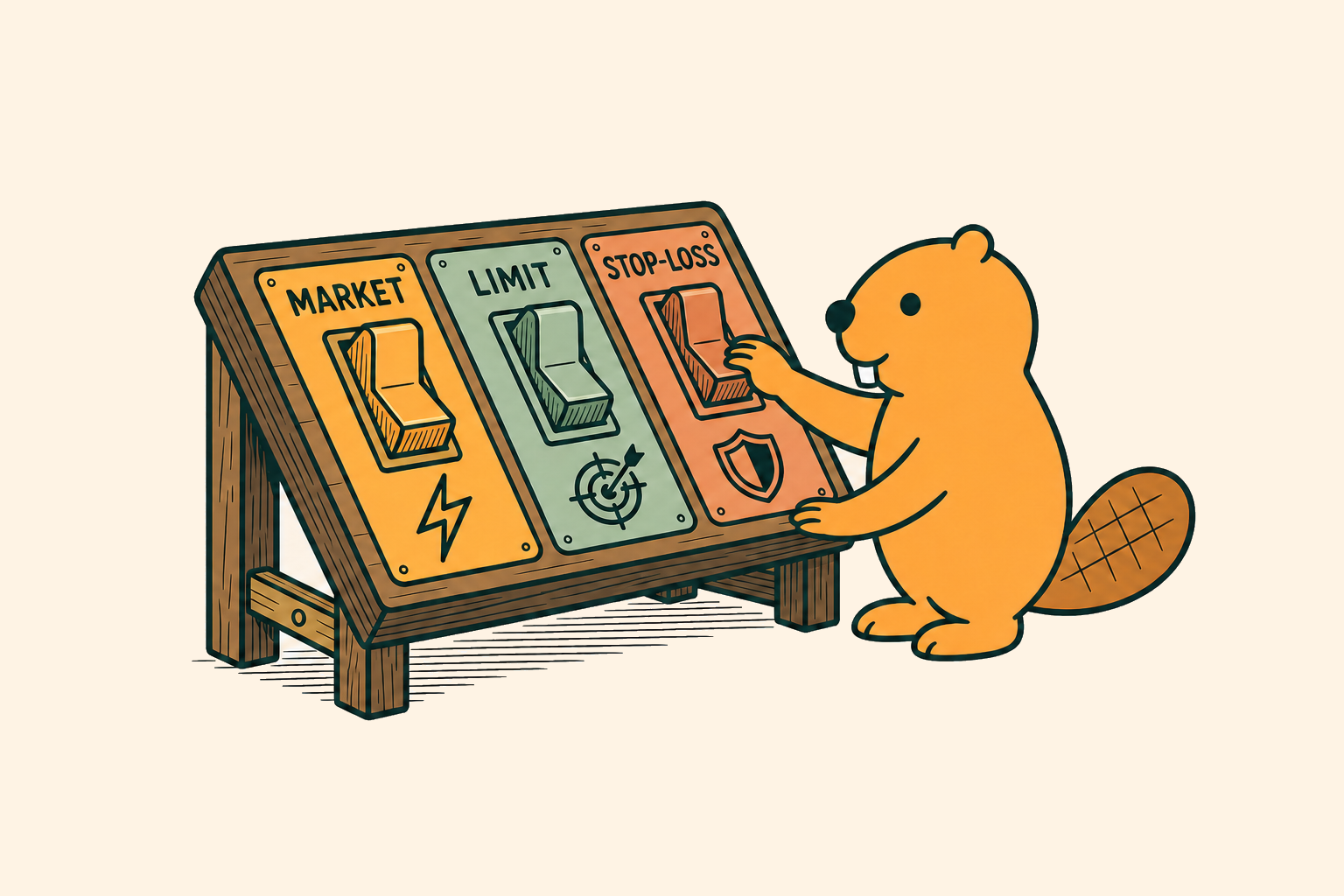
- Crypto Order Types Explained: Market, Limit, Stop, TWAP, Chase, and ScaleMaster market, limit, stop-loss, TWAP, Chase, and Scale orders to control execution prices, avoid slippage, and automate professional exchange trading.
- Managing Risk in Crypto: A Practical Framework for TradersLearn how to protect your trading capital in crypto with a 4-variable framework, position sizing rules, R-multiples, and multi-layered risk management.
- Crypto Rug Pulls Explained: Red Flags, Mechanics, and How to Protect Your WalletLearn how crypto rug pulls work, identify major smart contract red flags, and discover essential tools to verify token safety before investing.
- Crypto Slippage Explained: How It Works and When It HurtsUnderstand the difference between price impact and slippage, how order book depth affects execution prices, DEX slippage tolerance, and practical ways to minimize trading losses.





Go deeper
Deeper topics once the basics hold: individual assets like Ethereum and Solana, ETF mechanics, and tax questions.
- StonkFun vs Pump.fun and pons: Why the Quote Asset DecidesHow StonkFun prices new Solana tokens against tokenised stocks, and what that changes versus Pump.fun's SOL curve and pons's WETH pool — plus how to verify STONK's burn from the chain.
- Leveraged ETF Perps: Three Kinds of Leverage in One PositionSOXL, TQQQ, SOXS and TZA trade as perpetual futures on crypto venues. Work through the daily-reset arithmetic that makes a flat index cost money in both directions, what the perp wrapper adds on top, and why shorting both sides is a path bet rather than a free harvest.
- Zcash vs Monero: Optional Privacy, Mandatory Privacy, and What Each One CostsZEC and XMR disagree about who has to be private. Compare shielding models, ring signatures against zero-knowledge proofs, the 2026 Orchard bug and Ironwood upgrade, Monero's pending FCMP++, exchange access, and the EU rule that lands in July 2027.
- Advanced DeFi Yield and Hedging Strategies for Active TradersHow on-chain markets price fixed against floating yield, how delta-neutral basis trades work, and why leverage loops multiply risk faster than income.
- DEX Perps: GMX GM Pools, Virtual AMMs, and Counterparty RiskHow perpetual DEXs source liquidity: GM pools and GLV vaults, virtual AMMs, the delta exposure LPs actually take, and Synthetix v3 credit delegation.
- Ethena and USDe: Deconstructing the Delta-Neutral Synthetic DollarHow USDe's delta-neutral structure works, where the yield comes from, what negative funding does to it, and how off-exchange custody works.






Reviews & analysis
Evidence-led comparisons and CoinBeaver's own judgment, with methodology and conflicts stated clearly.
- Top Regulated Crypto Exchanges in the US: Fees, Spreads & Safety Guide [July 2026 Update]Compare every regulated crypto exchange and broker in the United States — Coinbase, Kraken Pro, Gemini, Robinhood, Cash App, Webull, Fidelity, Crypto.com, Binance.US. Verified fees, spreads, coin counts, and withdrawal costs for 2026.
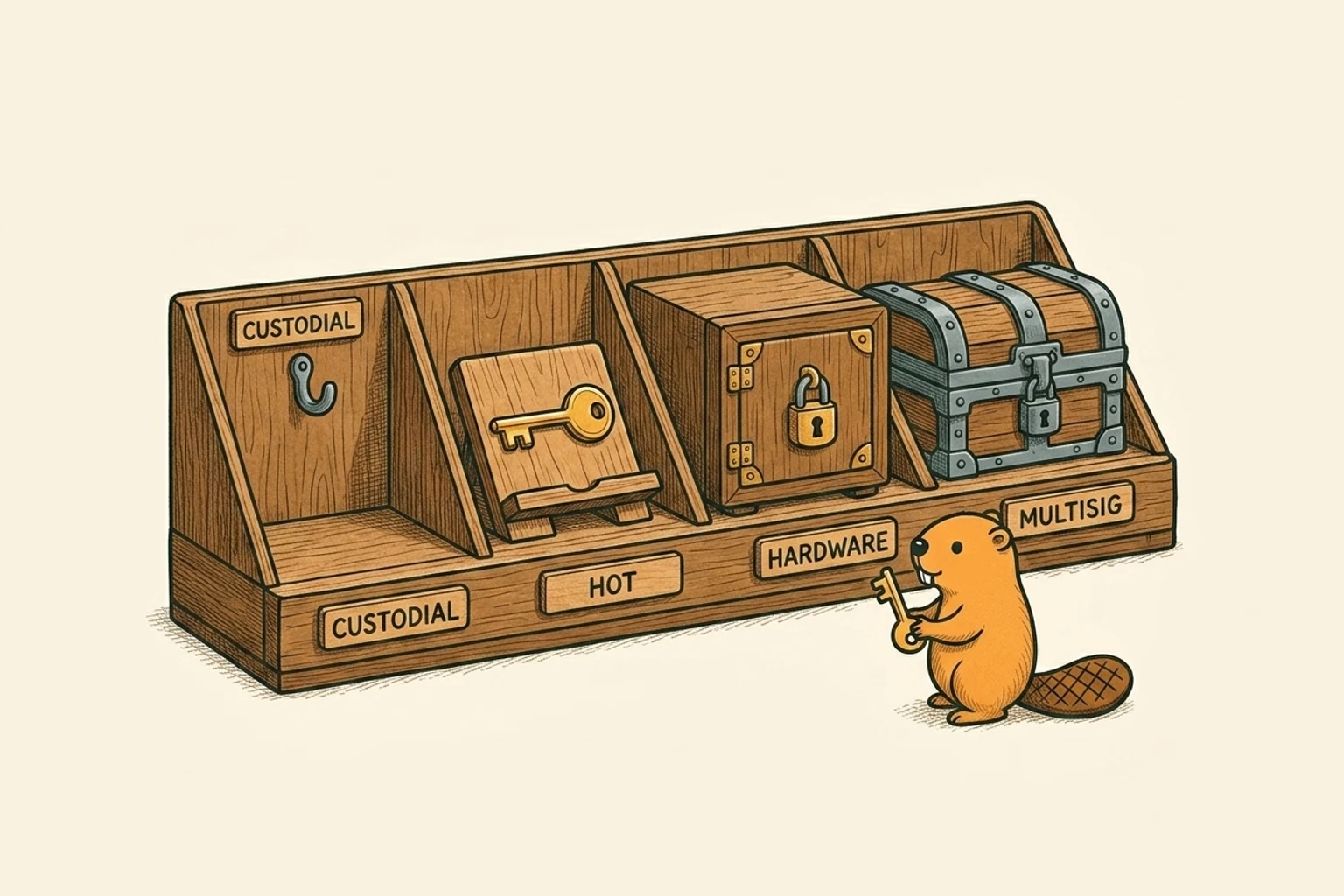
- How to choose a bitcoin walletThe four ways to hold bitcoin keys — custodial, hot, hardware, and multisig — and a single test for deciding which one your holdings actually need.