Bitcoin: the first Layer 1
Learn why Bitcoin is a Layer 1 network, how its own rules secure BTC, and why settlement has trade-offs.
On this page
Quick read
Bitcoin is a Layer 1: a network that validates and settles BTC transfers under its own rules. This lesson explains why a base layer needs a shared record, how confirmations and fees follow from limited block space, and which trade-offs users face when they rely on that settlement layer.
What to remember
- Layer 1 describes responsibility, not quality: a base layer decides what a valid transaction is and settles it using its own rules and security.
- Bitcoin qualifies because its participants validate Bitcoin's own rules — it never asks another blockchain whether a BTC transaction is legitimate.
- Fees and confirmations are consequences of limited block space and accumulated work, not arbitrary charges added on top.
- Finality is a policy decision made by whoever is receiving the payment, so confirm what they require before treating a large transfer as settled.
Why did a base layer need its own rules?
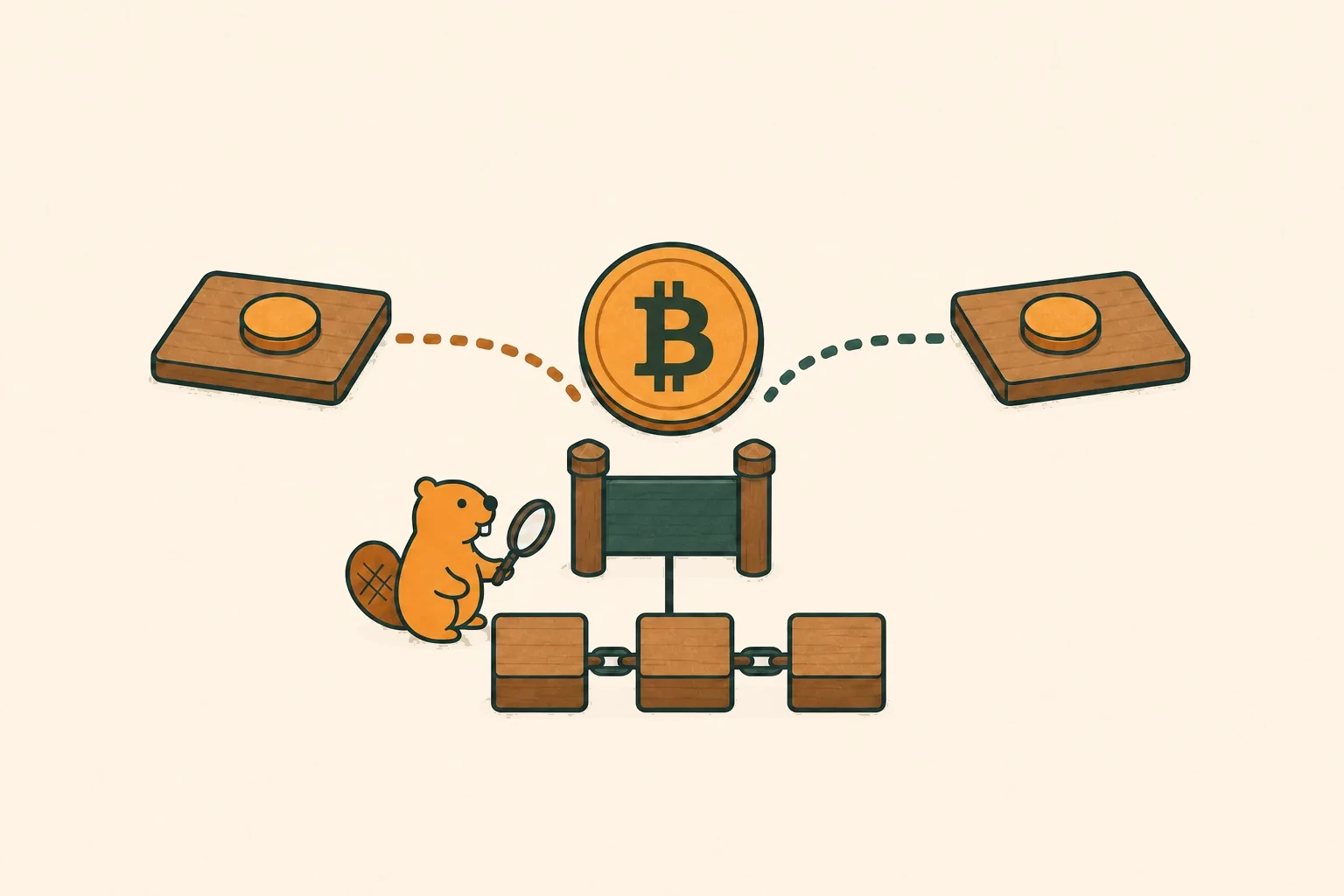
For a network to settle an asset without a central operator, participants need a common answer to a basic question: which transfers are valid? Bitcoin's base layer supplies that answer with its own transaction rules and shared history. It does not depend on another blockchain to decide whether a BTC transaction is valid; its participants validate Bitcoin's rules themselves.
What does Layer 1 mean?
Layer 1 is a practical name for the base blockchain that operates by its own rules. It decides what a valid transaction is, maintains its own history, and uses its own security mechanism to reach agreement.
What does Bitcoin Layer 1 do?
It provides the common place where BTC transfers are checked and recorded. Nodes evaluate the transaction rules; miners build proof-of-work blocks; and the accepted chain is the shared history other participants use when checking whether funds have already been spent.
| Layer | Who applies the rules? | What is settled there? |
|---|---|---|
| Bitcoin Layer 1 | Bitcoin nodes independently validate Bitcoin's protocol rules. | BTC transactions and the history used to determine whether they are valid. |
| An application built on a network | The application follows the underlying network's final rules. | Its actions ultimately depend on the base network's record. |
Why do confirmations and fees exist?
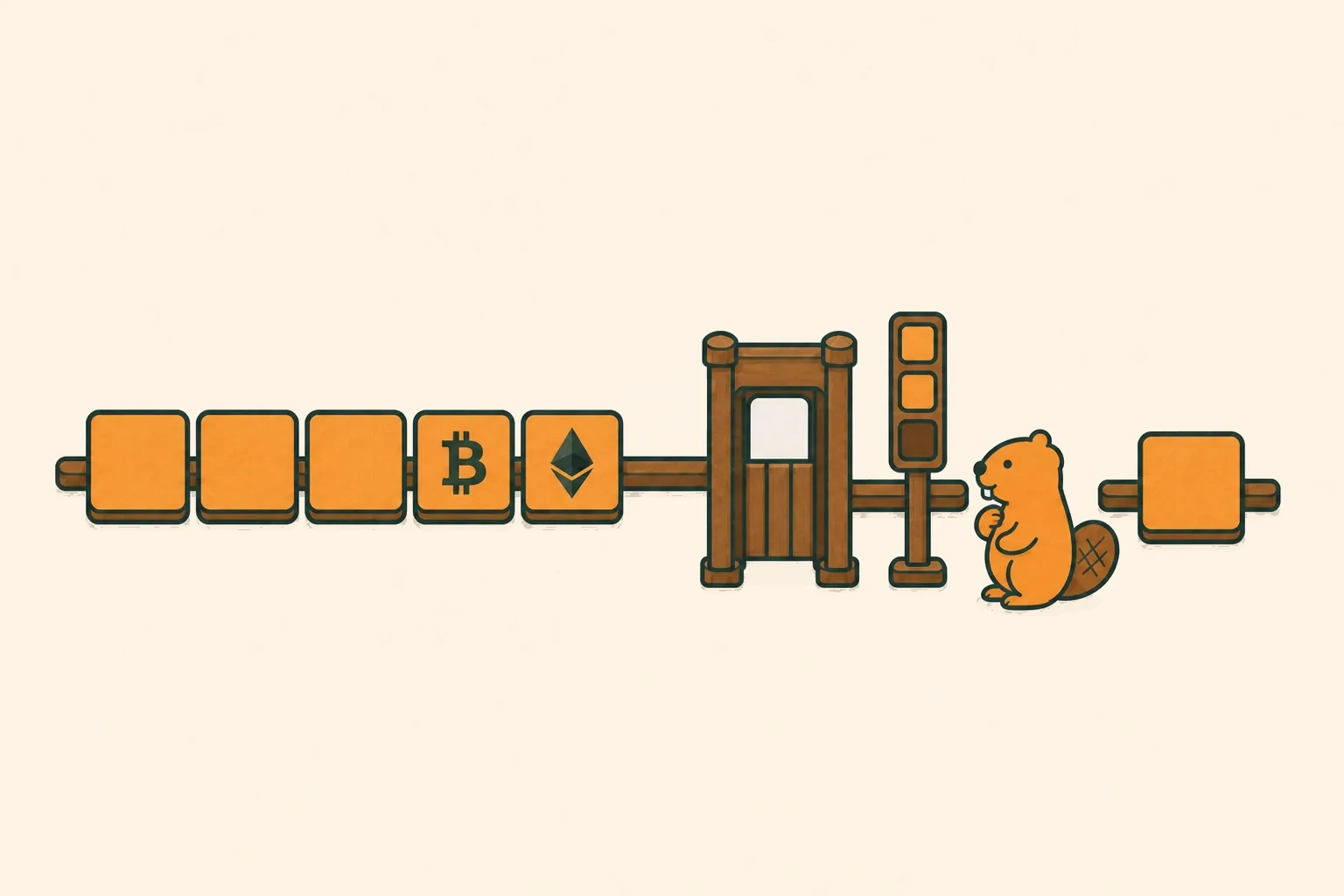
New transactions compete for limited block space. The network needs time to include a transaction in a block and then build further blocks after it. A sender can attach a fee as part of the transaction; block creators receive fees under the protocol's incentive design.
Conclusion
Layer 1 is a description of responsibility, not a marketing tier. Bitcoin is a Layer 1 because it answers the question which transfers are valid? using its own rules, its own history, and its own security mechanism. It does not ask another blockchain to decide whether a BTC transaction is legitimate, and that self-sufficiency is what the term is pointing at.
Everything users experience as friction follows from that job. Block space is limited because every participant has to validate the same activity, so transactions compete for inclusion and fees are the mechanism that sorts them. Confirmations exist because a transaction becomes progressively harder to displace as further blocks build on top of it. Neither is an arbitrary tax; both are what settling without a central operator actually costs.
The practical caution is to treat finality as a policy question rather than a status icon. How many confirmations are enough depends on the receiving party's risk tolerance and the size of the transfer, so an app showing "sent" is not the same as a counterparty treating the funds as settled. When you are moving a material amount, find out what the recipient requires before assuming it is done.
Bitcoin showed that a base layer could coordinate a scarce digital asset without a central ledger operator. But its rules intentionally keep the system narrow. Other projects asked whether a Layer 1 could also provide a shared environment for programs and applications — which leads to Ethereum.
Frequently asked questions
A Layer 1 is a base blockchain that operates under its own rules. It defines what counts as a valid transaction, maintains its own history, and uses its own security mechanism to reach agreement. The defining test is independence: a Layer 1 does not rely on another blockchain to settle its transactions or determine their validity.
Bitcoin is a Layer 1. Bitcoin nodes independently validate Bitcoin's protocol rules, and the accepted chain is the shared history used to determine whether funds have already been spent. Systems such as the Lightning Network are built on top of Bitcoin and rely on it for final settlement, which makes them layers above the base network rather than replacements for it.
A Layer 1 applies its own rules and settles its own transactions. A Layer 2 handles activity separately but depends on a Layer 1 for enforcement or final settlement. The useful question when you meet a new network is not whether it is fast, but where its transactions are ultimately settled and whose rules decide that.
Because a transaction becomes harder to displace as more blocks are built after it. Being included in a block places a transaction in the shared history, and each additional block increases the work that would have to be redone to change it. Confirmations are therefore a measure of how settled a transfer is, not a countdown to a fixed finish line.
There is no protocol rule that sets a number. The requirement comes from whoever is accepting the payment and reflects their own risk policy and the size of the transfer. Six confirmations is a widely used convention rather than a technical threshold, and some recipients require more or fewer. Do not assume a transfer is final because an app has marked it as sent.
New transactions compete for limited block space, so the fee a sender attaches is effectively a bid for inclusion. When many people want to transact at once, the fee needed to be selected promptly rises; when demand falls, it drops. Fees are set by that competition rather than by a published price list.
Block space is the finite room each block has for transaction data. It is limited on purpose, because every participant needs to validate the same activity for the shared history to be independently checkable. Raising that limit without bound would increase what it costs to take part in validating the network.
The cap is part of the protocol rules that participants validate, not a policy an operator can revise at will. New BTC enters circulation as a reward to the participants who produce blocks, on a schedule that reduces over time until issuance ends. Because the rule is enforced by everyone running the software, changing it would require the network to agree to a different set of rules.
No. That independence is precisely what makes it a Layer 1. Its participants validate Bitcoin's own transaction rules and maintain its own history, so no external chain is consulted to decide whether a BTC transaction is valid.
Related coins

Keep learning
Recommended next reads based on this lesson.
- Why did Bitcoin need to exist?Start with the double-spend problem to understand why Bitcoin needed a shared transaction history.
- Why is Ethereum programmable?See how Ethereum extended the Layer 1 idea with shared programs, ETH gas, and new trade-offs.
- Why are there so many tokens?Learn how ERC-20 made tokens reusable across Ethereum apps, and why a shared standard still leaves important risks.
- Why do blockchains get congested?Learn why shared Layer 1 resources are limited, how demand turns into fees and delays, and why scaling creates trade-offs.