Why did Bitcoin need to exist?
Start with the double-spend problem to understand why Bitcoin needed a shared transaction history.
On this page
Quick read
Bitcoin was created to solve double spending: the risk that the same digital value could be sent twice. This lesson shows how a shared transaction history lets independent participants agree on valid transfers, and why that choice makes transactions harder to reverse and slower to settle.
What to remember
- Bitcoin exists to solve double spending: stopping the same digital unit from being sent to two people without a central record keeper deciding which payment counts.
- The shared, timestamped history is the mechanism — participants each validate the same rules rather than trusting one operator's ledger.
- Removing the operator also removes the party who could reverse a mistake, so check the recipient address and network before sending.
- Keep the network and the asset separate: Bitcoin is the protocol that maintains the history, BTC is the asset issued under its rules.
The map before we start
This is a causal timeline, not a ranking of networks or assets. Follow the questions in order: each response addresses a real constraint and leaves a new trade-off for the next lesson.
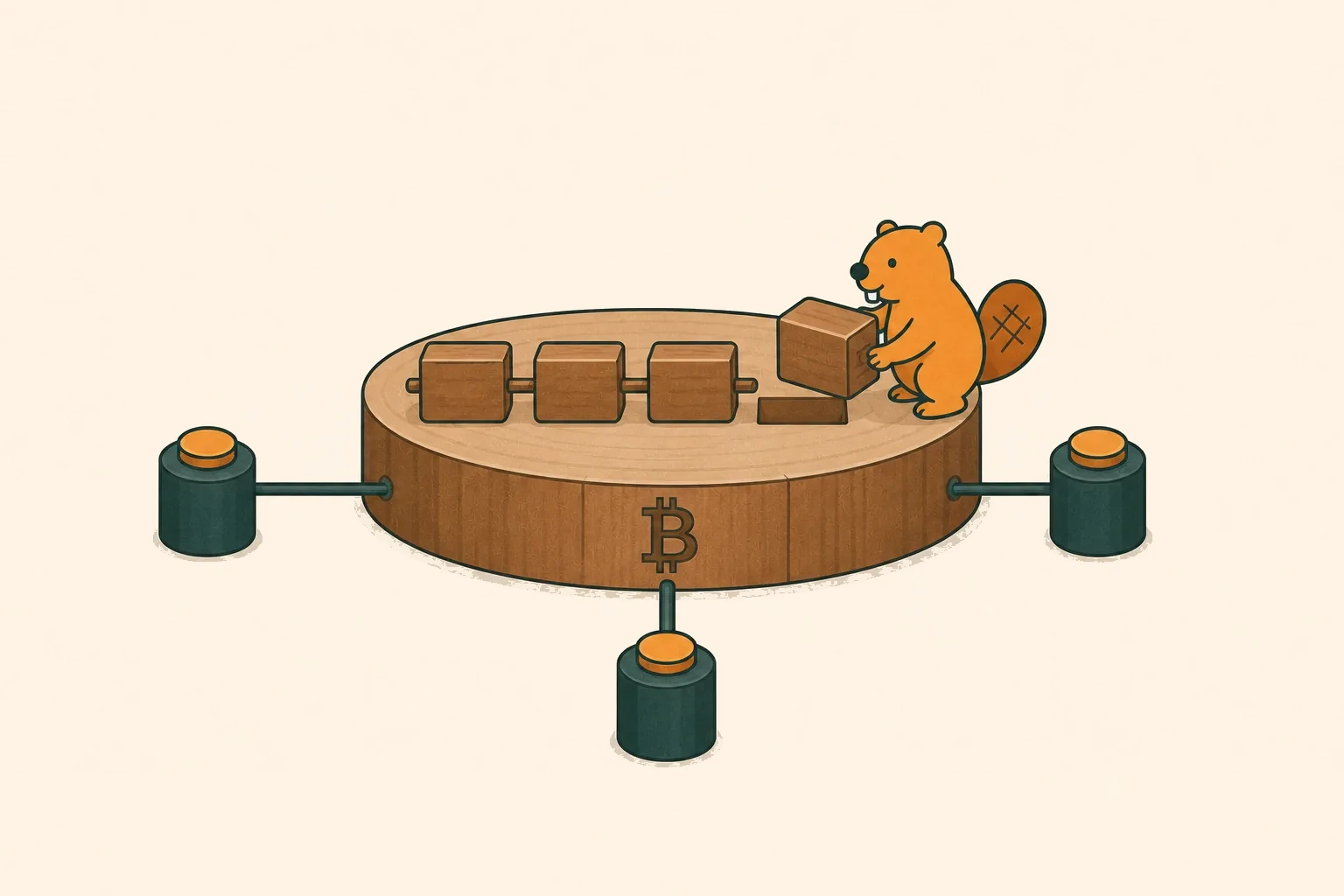
- 2008 — Solve double spending. Bitcoin proposed a shared, timestamped history so digital value could not be spent twice without a trusted record keeper.
- 2008 onward — Validate one base layer. Bitcoin made its base layer responsible for applying common rules to one transaction history. The next lesson separates that network from its native asset.
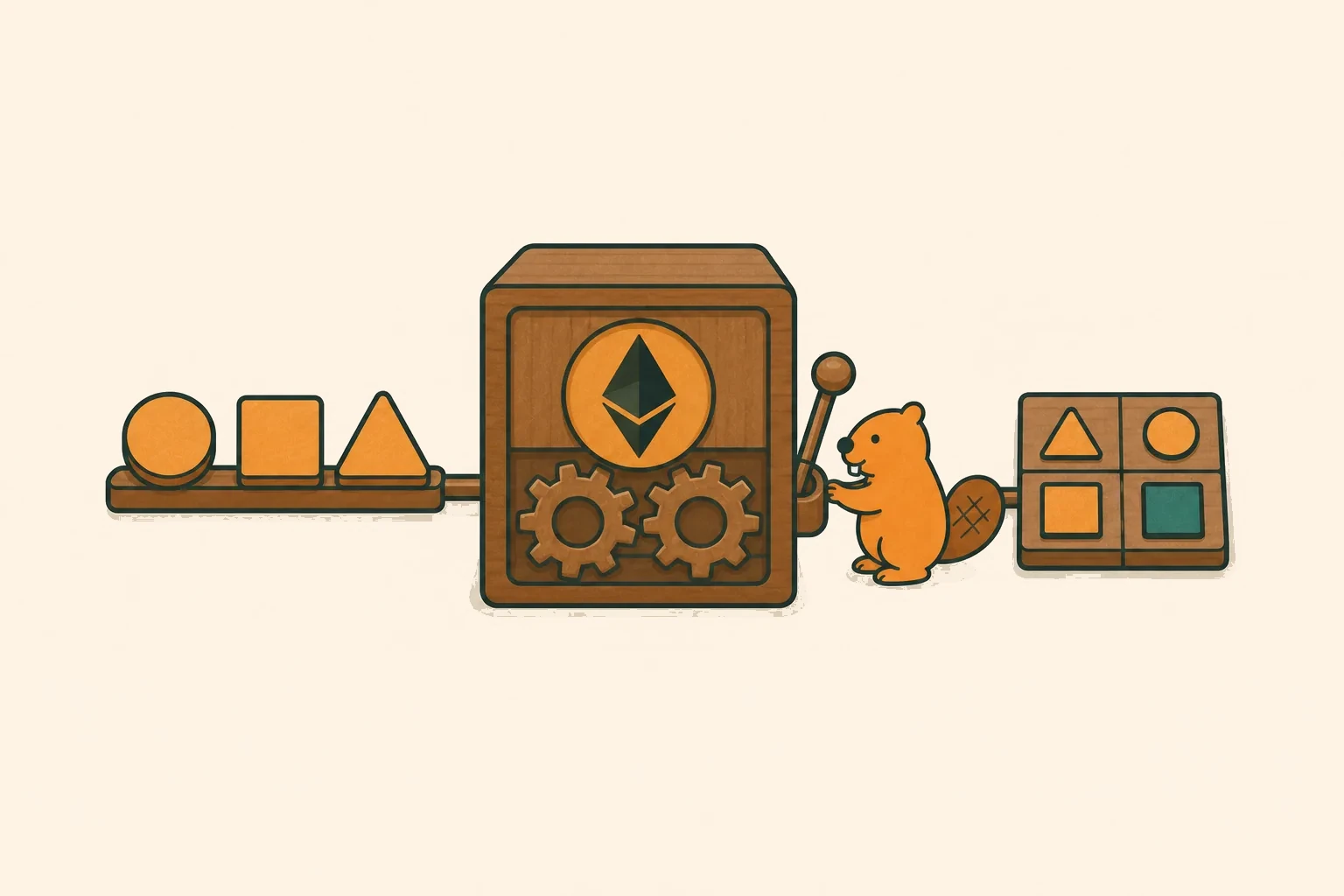
- 2015 — Program shared rules. Ethereum launched a base layer for smart contracts, so applications could share programmable state. The third lesson separates that network from ETH.
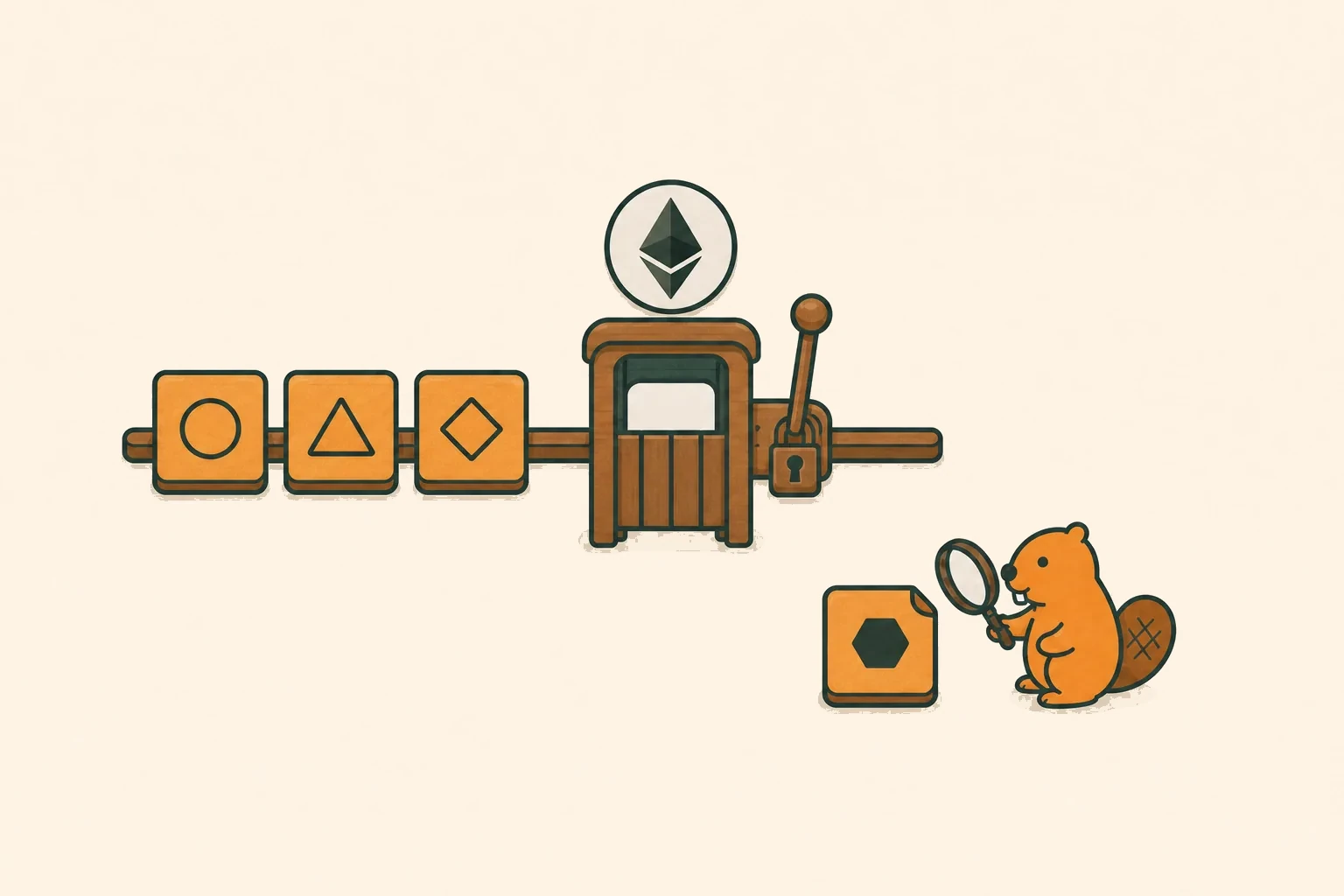
- 2015–2017 — Standardize token behavior. ERC-20 gave token contracts a common interface, helping applications work with many tokens while leaving each token's risks separate.
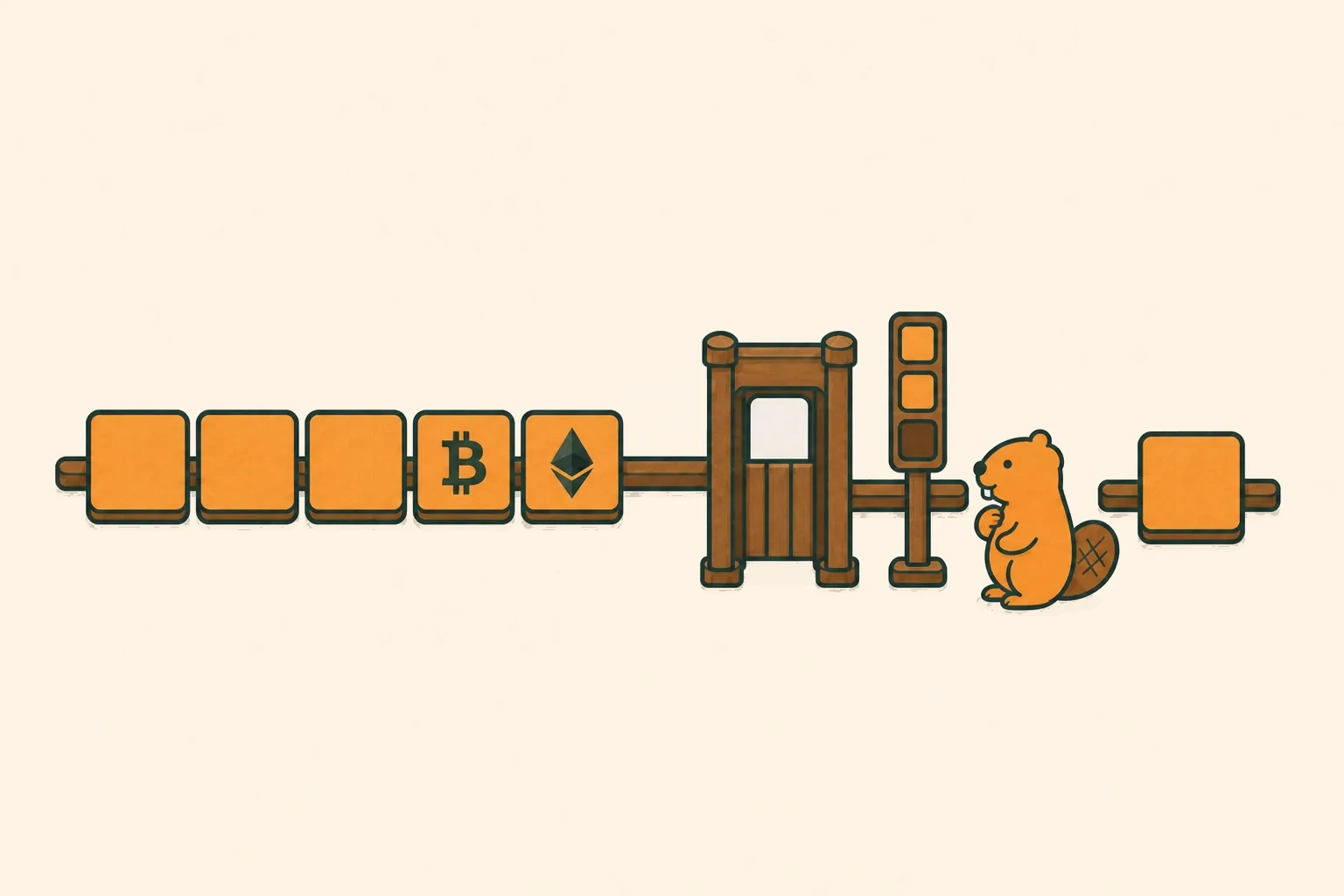
- As activity grows — Share scarce block space. More demand competes for limited validation and data space, turning fees and confirmation time into a design trade-off.
- One response — Move Bitcoin payments into channels. Lightning uses payment channels for many payments while relying on Bitcoin's base layer for enforcement and final settlement.
- Another response — Move Ethereum execution into rollups. Rollups execute separately but submit data and settle against Ethereum Layer 1, so their security boundary still matters.
- A different route — Choose another Layer 1 design. Solana is an independent Layer 1, so it makes its own validator, security, and operating trade-offs. The last lesson separates that network from SOL.
What problem did Bitcoin solve?
Digital information is easy to copy. That is useful for a photo or a document, but it is a problem for money: if the same digital unit could be sent to two people, which recipient should trust it?
Before Bitcoin, a bank or other central record keeper normally answered that question. It decided which payment arrived first and updated its ledger. Bitcoin asked whether a network could do the job without one operator owning the record.
How can strangers agree on one history?
Bitcoin combines signed transactions, public validation rules, and blocks that refer to earlier blocks. Participants check the same rules before accepting a block, so changing an earlier record means overcoming the work accumulated after it.
Steps
Authorize a payment
The owner signs a transaction, making the proposed transfer independently checkable.
Validate it against shared rules
Network participants reject transactions that try to spend the same recorded value again.
Extend the shared record
Valid transactions are placed into blocks that build on the accepted history.
What did this design trade away?
No central operator means there is no customer-service desk that can simply reverse a valid transaction. Agreement also takes time and resources. Bitcoin does not make every payment instant, private, or risk-free; it chooses an openly verifiable record over a centrally managed one.
Is Bitcoin the same thing as BTC?
| Term | What it means | Why it matters |
|---|---|---|
| Bitcoin | The protocol and network that maintains the shared transaction history. | It is the system whose rules participants validate. |
| BTC | The native asset issued and transferred under Bitcoin's rules. | It is what people usually mean when they quote a bitcoin price or balance. |
Conclusion
Bitcoin exists because digital value is easy to copy, and money cannot work if the same unit can be spent twice. Before Bitcoin, a bank or other central record keeper resolved that by owning the ledger and deciding which payment arrived first. Bitcoin's answer was to let independent participants maintain one shared, timestamped history under rules they each check for themselves.
That choice is what produces every other property people notice. Because no operator owns the record, no operator can quietly rewrite it — and no operator can reverse a valid transfer for you either. Because agreement takes work and time, settlement is slower and costlier than a database write. These are not defects bolted onto the design; they are the price of removing the trusted middleman. Treat any claim that a network is fast, cheap, and trust-free without trade-offs as a claim that needs evidence.
The practical habit to carry forward is to check the recipient address and the network before sending, because a valid transfer may have no party able or willing to undo it. Keep the network separate from its asset too: Bitcoin is the protocol that maintains the shared history, and BTC is the asset issued under its rules.
Bitcoin is more than an asset with a price. It is a network that validates and settles its own transactions. That is the idea behind a Layer 1 — the base network we will examine next.
Frequently asked questions
Double spending: the risk that the same digital unit could be sent to two different people. Digital information is easy to copy, so without a shared record there is no way for a recipient to know a payment has not already been made elsewhere. Bitcoin's 2008 white paper proposed a peer-to-peer timestamped history so participants could agree on which transfers are valid without a central record keeper.
It is the question of which recipient should trust a payment when the same digital value has been sent more than once. A bank solves it by deciding which instruction arrived first in its own ledger. Bitcoin solves it by having participants validate every transaction against one shared history, so a transaction that tries to spend already-recorded value is rejected.
Bitcoin was introduced in a 2008 paper published under the name Satoshi Nakamoto, and the network began operating in January 2009. Satoshi Nakamoto is a pseudonym, and the identity behind it has never been established. The design does not depend on knowing who wrote it, because participants validate the rules rather than trusting an author.
No, and the distinction matters. Bitcoin is the protocol and network that maintains the shared transaction history and the rules participants validate. BTC is the native asset issued and transferred under those rules, and it is what people usually mean when they quote a bitcoin price or balance.
Because there is no central operator with the authority to reverse it. A valid transfer that has been recorded in the shared history is accepted by participants applying the same rules, and undoing it would mean overcoming the work accumulated after it. A refund is possible only if the recipient chooses to send the value back.
No. That is the specific thing its design removes. Nodes independently validate the protocol rules, and the accepted history is the one that participants agree on by applying those rules, rather than one an operator publishes. This is also why there is no customer-service desk to appeal to when a transfer goes wrong.
Through a combination of signed transactions, public validation rules, and blocks that reference earlier blocks. The owner signs a transfer so anyone can check it was authorized, participants reject transactions that spend already-recorded value, and valid transactions are placed into blocks that build on the accepted history.
No. It is better described as pseudonymous. Transactions are recorded in a public history that anyone can inspect, and they are linked to addresses rather than to names. If an address is ever connected to a real identity, the activity associated with it can be examined alongside it.
No, and the design does not attempt to. Reaching agreement across independent participants takes time and resources, so transfers settle more slowly than a payment inside a single company's database, and fees compete for limited space. Bitcoin trades speed and cost for an openly verifiable record.
Related coins

Keep learning
Recommended next reads based on this lesson.
- Bitcoin: the first Layer 1Learn why Bitcoin is a Layer 1 network, how its own rules secure BTC, and why settlement has trade-offs.
- Why is Ethereum programmable?See how Ethereum extended the Layer 1 idea with shared programs, ETH gas, and new trade-offs.
- Why are there so many tokens?Learn how ERC-20 made tokens reusable across Ethereum apps, and why a shared standard still leaves important risks.
- Why do blockchains get congested?Learn why shared Layer 1 resources are limited, how demand turns into fees and delays, and why scaling creates trade-offs.