Why are there so many tokens?
Learn how ERC-20 made tokens reusable across Ethereum apps, and why a shared standard still leaves important risks.
On this page
Quick read
Ethereum made shared programs possible, and ERC-20 gave many of those programs a common way to represent interchangeable units. This lesson explains why standards let wallets and apps handle different tokens, why a token is not the same as ETH or a network, and which contract and approval risks remain.
What to remember
- A token is a smart contract's record on a network it does not own, which is why it never gets its own blockchain just by having a name and a symbol.
- ERC-20 is a compatibility interface, so it tells you a wallet can handle the token and nothing about whether the token or its issuer is sound.
- The contract address and network identify a token; names, symbols, and logos are display information anyone can copy.
- An approval grants reusable spending permission rather than authorizing one transfer, so check the spender and the amount before confirming.
Why did tokens multiply after programmable contracts?
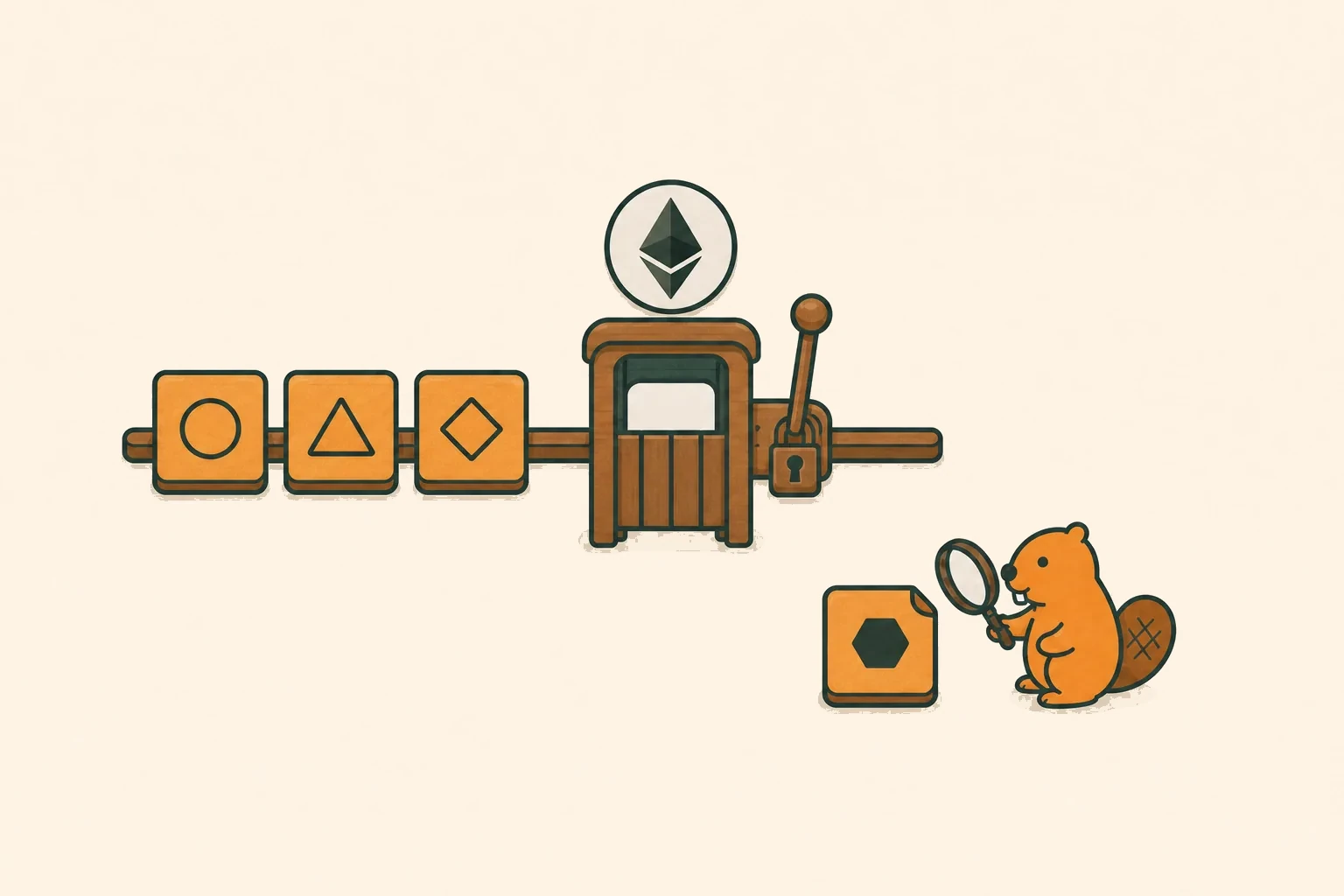
Ethereum made it possible for a smart contract to keep its own record of units and the accounts that control them. Those units are commonly called tokens. A token can represent many different things, but it does not get its own blockchain merely because it has a name or a symbol.
ETH is different: it is Ethereum's native asset and is used to pay gas. An ERC-20 token is a smart contract's record on Ethereum. Moving that token on Ethereum still requires ETH for the network fee.
What does ERC-20 make common?
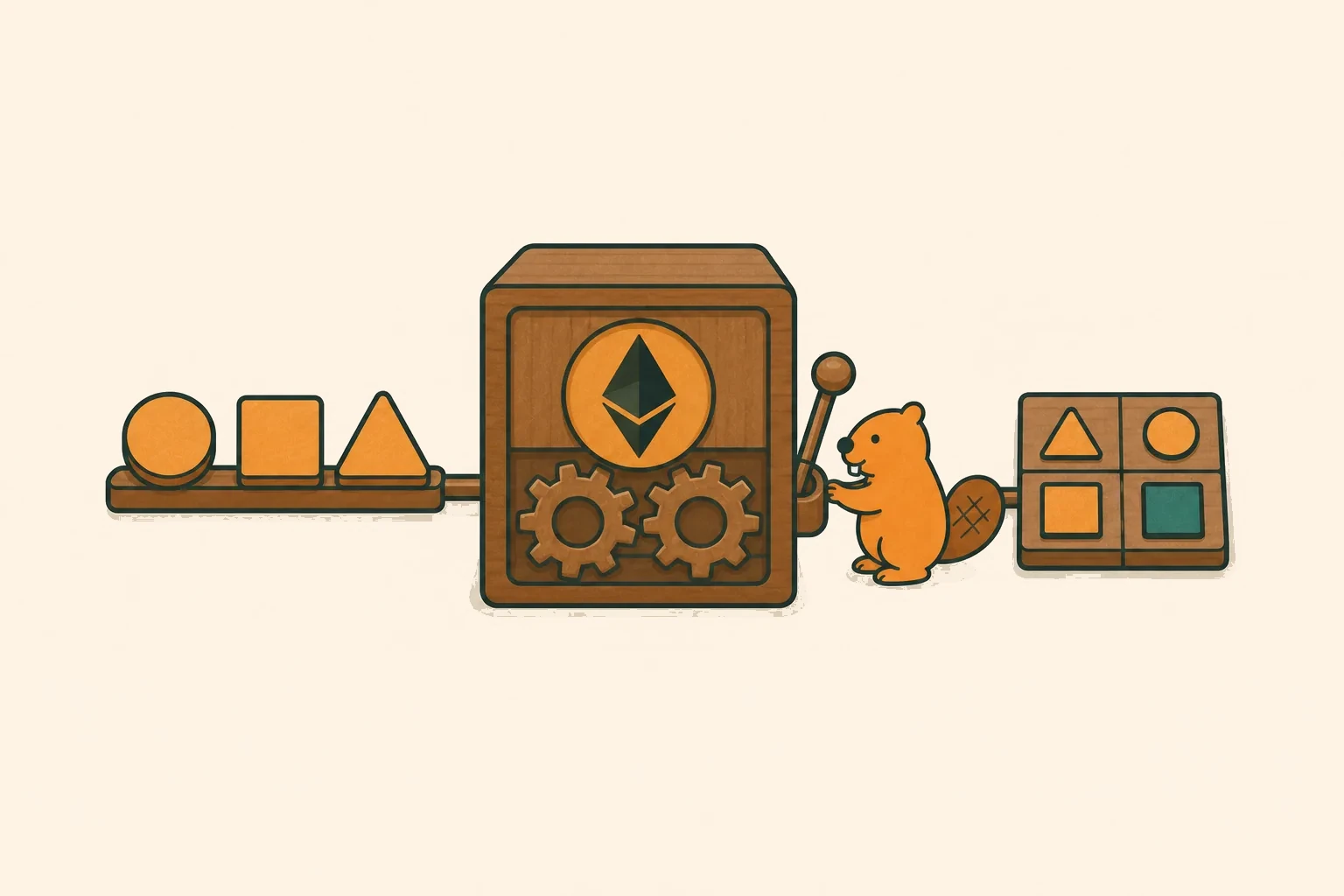
ERC-20 is a shared interface for fungible tokens. Instead of every project
inventing a different way to ask for a balance or send units, a compatible
contract exposes familiar functions such as balanceOf, transfer,
approve, and allowance.
That common shape lets a wallet or application work with many token contracts without needing a separate integration for every one. It is a compatibility rule, not a statement that every token has the same purpose, issuer, or risk.
| Question | ETH | An ERC-20 token |
|---|---|---|
| Where do its rules come from? | Ethereum's protocol rules. | A smart contract's code, often following the ERC-20 interface. |
| What pays for Ethereum gas? | ETH. | The transfer still needs ETH for gas. |
| What does a familiar name or symbol prove? | It identifies the native asset in this context. | Very little by itself; names and symbols are display information, not a safety check. |
Why does a common interface matter to applications?
Smart contracts on Ethereum are public programs that other applications can call. When token contracts expose a familiar interface, a new application can combine existing pieces instead of starting from zero. This is called composability: separate components can work together to create a new service.
Composability explains why one token may appear in several wallets, applications, and trading venues. It does not mean those products are one company or that each integration has been reviewed for safety.
What does the standard not promise?
ERC-20 describes an interface, not whether a project is trustworthy, whether a
token has value, whether it is backed by assets or reserves, or whether its
contract has been safely designed. Even the standard's name, symbol, and
decimals methods are optional usability features, so a familiar label is not
proof of identity or backing.
The contract address and the network on which it runs determine which program is actually being used. A token that looks familiar in an interface can still be an unrelated contract with different rules. Deploying a token on Ethereum does not mean Ethereum has approved or endorsed it.
Why are approvals a separate risk?
An ERC-20 transfer moves tokens directly. An approval is different: it
sets an allowance that permits another address, often a smart contract, to
move up to a stated amount later through transferFrom. The permission can be
used more than once until the allowance is exhausted or replaced.
This flexibility helps applications work together, but it also means an approval is not just a preview of one transfer. It is a permission granted to a specific spender under the token contract's rules.
Conclusion
Tokens multiplied because Ethereum let a smart contract keep its own record of units and the accounts controlling them, and ERC-20 gave those contracts a common way to be asked for a balance or told to transfer. That shared interface is why one wallet can handle thousands of different tokens without a separate integration for each, and why a new application can combine existing pieces rather than starting from zero.
The critical thing the standard does not do is vouch for anything. ERC-20
describes an interface, not whether a project is trustworthy, whether a token
is backed by anything, or whether its contract was safely written. Even name,
symbol, and decimals are optional display conveniences, so a familiar label
is not proof of identity. What identifies a token is its contract address and
the network it runs on — nothing shown in an interface is a substitute for
checking those.
Approvals deserve separate attention because they behave differently from
transfers. A transfer moves tokens once; an approval grants a spender an
allowance it can draw on repeatedly through transferFrom until that allowance
is exhausted or replaced. Reading an approval prompt as a preview of a single
transaction understates what is being granted. Before confirming one, check
which spender is being authorized and for how much.
Standards helped many applications and assets share Ethereum's programmable environment. That usefulness also means more activity can compete for the same Layer 1 execution and block space. The next lesson examines why a shared base layer can become expensive or congested as demand grows.
Frequently asked questions
ERC-20 is a shared interface for fungible tokens on Ethereum. A compatible contract exposes familiar functions such as balanceOf, transfer, approve, and allowance, so wallets and applications can work with many different tokens without a custom integration for each one. It is a compatibility rule, not a statement about a token's purpose or quality.
A coin usually means a network's native asset, issued and governed by that network's protocol rules — BTC on Bitcoin, ETH on Ethereum. A token is a record kept by a smart contract running on a network it does not own. A token does not get its own blockchain merely because it has a name, a symbol, and a price.
No. ETH is Ethereum's native asset and its rules come from Ethereum's protocol itself, whereas an ERC-20 token's rules come from a smart contract's code. This is a common point of confusion because many interfaces display them side by side, but they sit at different layers of the same experience.
Yes. Moving an ERC-20 token is a transaction on Ethereum, and Ethereum transactions are paid for in ETH. Holding a token balance with no ETH means the transfer cannot be paid for, which is why wallets can show a token balance that you are unable to move.
An approval sets an allowance that permits another address, often a smart contract, to move up to a stated amount of your tokens later through transferFrom. Unlike a transfer, the permission can be used more than once until the allowance is exhausted or replaced. The risk is that you are granting ongoing spending permission to a specific spender, not authorizing one movement.
No. The standard describes how a contract can be called, not whether it was written safely, whether the project behind it is legitimate, or whether the token is backed by anything. Deploying a token on Ethereum does not mean Ethereum has reviewed or endorsed it.
By the contract address and the network it runs on, because those determine which program is actually being used. Names and symbols are display information that anyone can reuse, so a token that looks familiar in an interface can be an unrelated contract with entirely different rules. Confirm the address against a source you already trust rather than a link you were sent.
Composability means separate components can work together to create a new service. Because smart contracts are public programs that other applications can call, a new application can build on existing token contracts instead of starting from scratch. It explains why one token appears across many wallets and venues, but it does not mean those products share an operator or that each integration has been reviewed.
Because creating one is cheap and the standard makes it immediately usable. Once a contract can keep its own record of units and expose the ERC-20 interface, existing wallets and applications can handle it without modification. Low creation cost plus instant compatibility is a combination that produces very large numbers of tokens, most of which represent no meaningful activity.
Related coins
Keep learning
Recommended next reads based on this lesson.
- Why did Bitcoin need to exist?Start with the double-spend problem to understand why Bitcoin needed a shared transaction history.
- Bitcoin: the first Layer 1Learn why Bitcoin is a Layer 1 network, how its own rules secure BTC, and why settlement has trade-offs.
- Why is Ethereum programmable?See how Ethereum extended the Layer 1 idea with shared programs, ETH gas, and new trade-offs.
- Why do blockchains get congested?Learn why shared Layer 1 resources are limited, how demand turns into fees and delays, and why scaling creates trade-offs.