Why is Ethereum programmable?
See how Ethereum extended the Layer 1 idea with shared programs, ETH gas, and new trade-offs.
On this page
Quick read
Ethereum extends the Layer 1 idea by letting shared programs run alongside asset transfers. This lesson explains how smart contracts change what a network can coordinate, why ETH pays for gas, and why flexible code creates extra costs and risks that users must understand before approving a transaction.
What to remember
- Ethereum kept the Layer 1 idea and widened it: the network maintains shared rules for programs, not just a record for one asset.
- A smart contract is not self-enforcing — it is code whose result the network's rules check, which is why every participant reaches the same state.
- ETH is both the native asset and the way gas is paid, so you need ETH to transact on Ethereum no matter what the transaction does.
- Flexible code widens the failure surface as well as the build surface: confirm the network and the contract before approving any wallet prompt.
What question did Ethereum add?
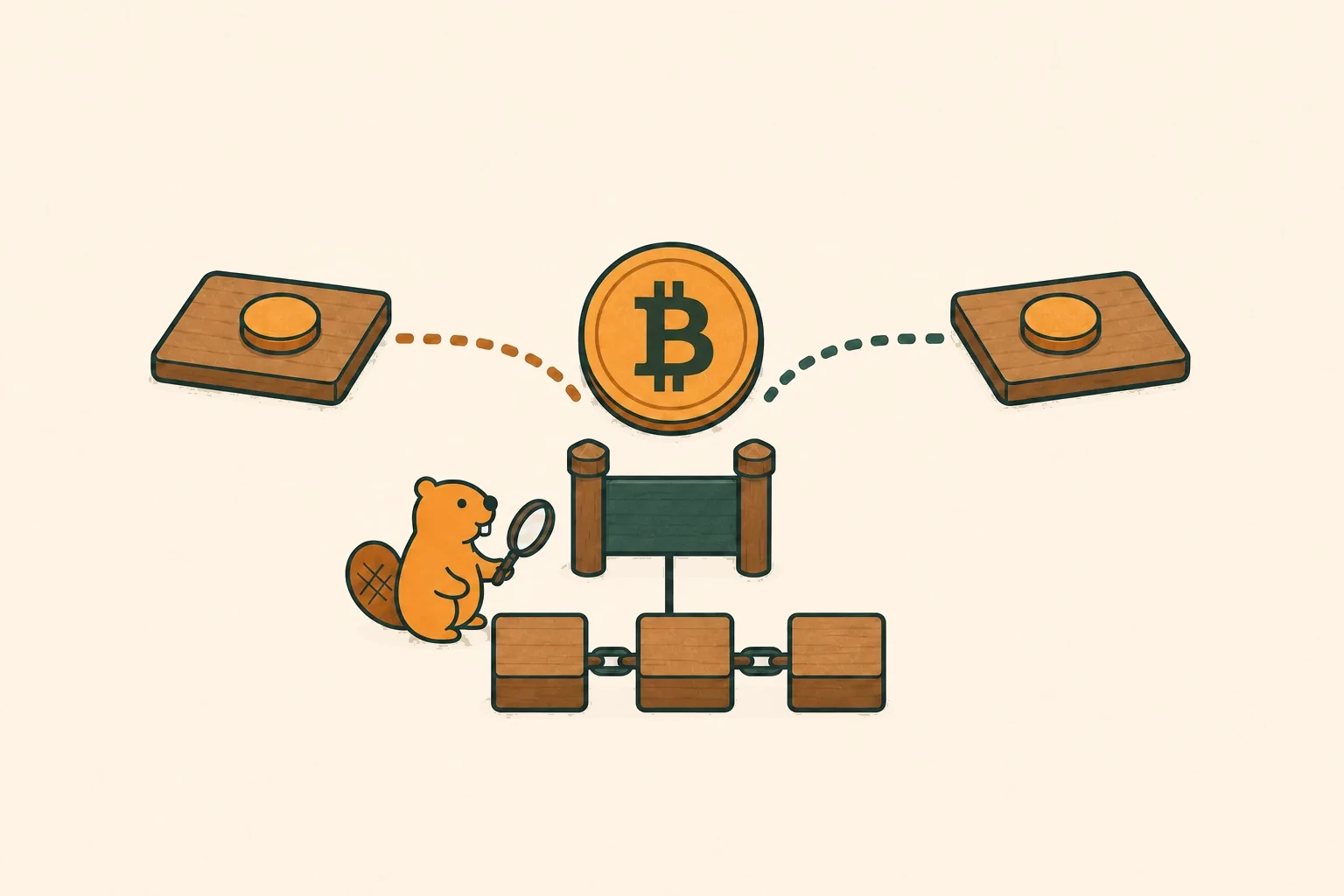
Bitcoin's base layer was designed to maintain a shared record for its native asset. Ethereum kept the Layer 1 idea but added a broader question: can a network also maintain shared rules for programs?
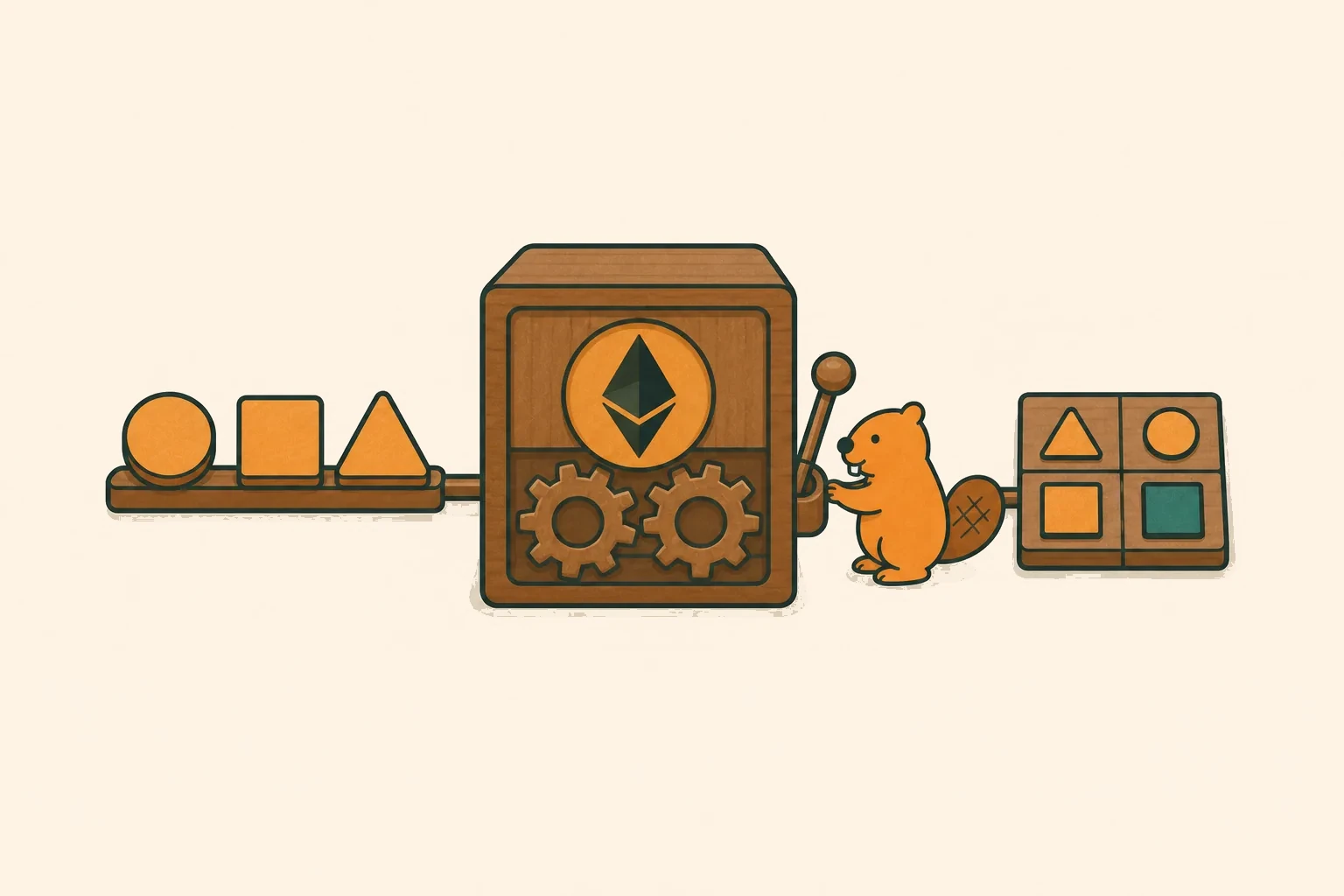
On Ethereum, programs called smart contracts can define actions that run when a transaction calls them. The result is recorded on the same shared network, rather than on one company's private server.
How does programmable shared state work?
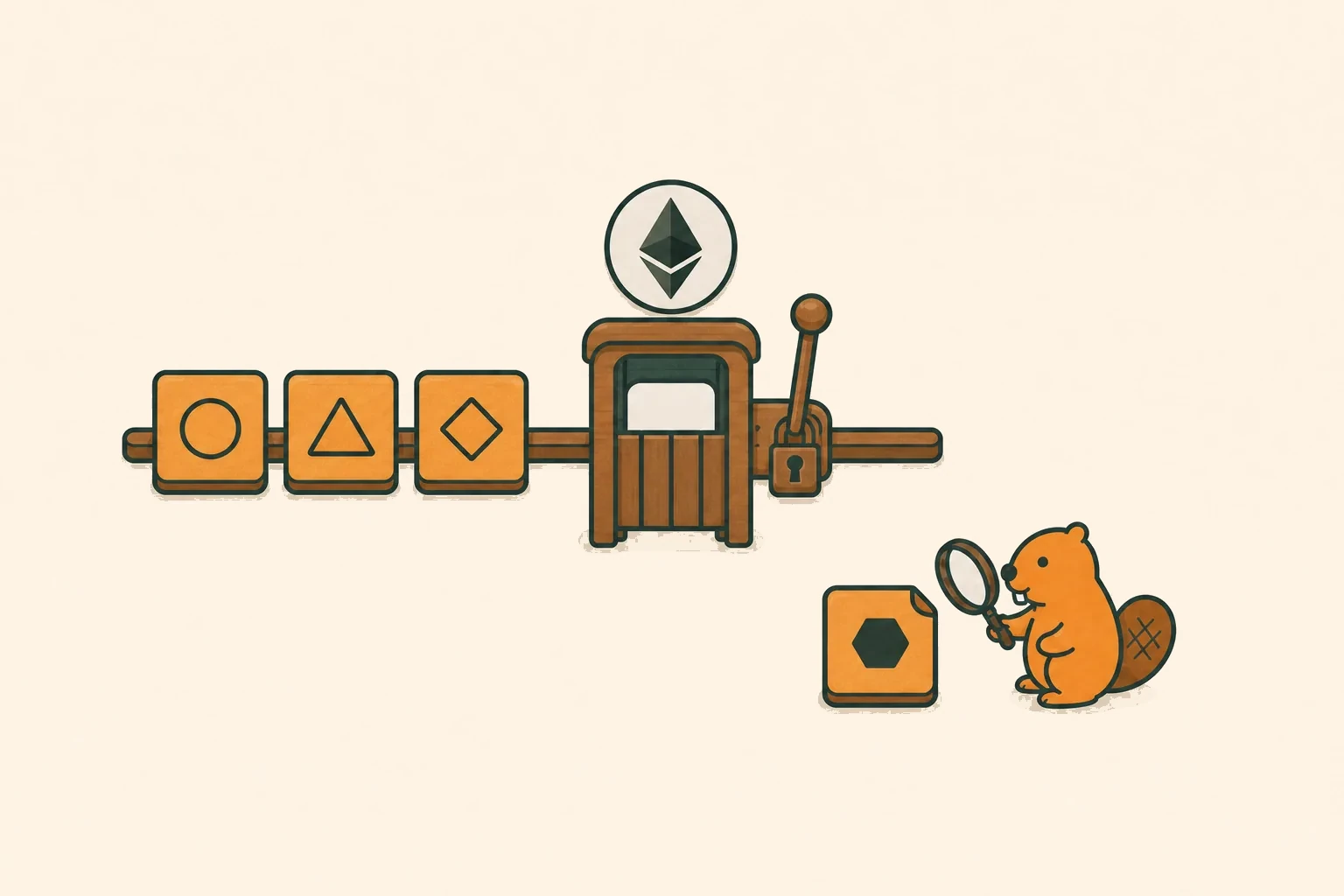
The important idea is not that a contract is magically self-enforcing. It is code whose result is checked by the network's rules. If the same valid call is made, participating nodes work toward the same resulting state.
Steps
Write shared rules in code
A smart contract specifies what the program can do and what conditions it checks.
Call the program with a transaction
A user asks the network to execute a permitted action, such as exchanging a token or updating a record.
Record the accepted result
The network validates the transaction and records the resulting state according to its rules.
What is ETH used for?
ETH is Ethereum's native asset. It is also used to pay gas: the cost a transaction offers for the computation and network resources it consumes. Gas makes resource use visible, but the total cost can change with network demand and the action being performed.
How does Ethereum differ from Bitcoin?
| Question | Bitcoin | Ethereum |
|---|---|---|
| Primary focus | A shared settlement history for BTC under Bitcoin's protocol rules. | A shared settlement history plus an environment for smart-contract programs. |
| Native asset | BTC | ETH |
| Resource cost | Transaction fees compete for block space. | Gas prices computation and transaction resource use. |
What did programmability trade away?
More flexible code creates more ways to build, but also more ways to make a mistake. A smart contract can contain a bug, a transaction can call the wrong contract, and execution costs can vary. Programmable does not mean safer or better for every use; it means the base layer supports a broader set of shared rules.
Conclusion
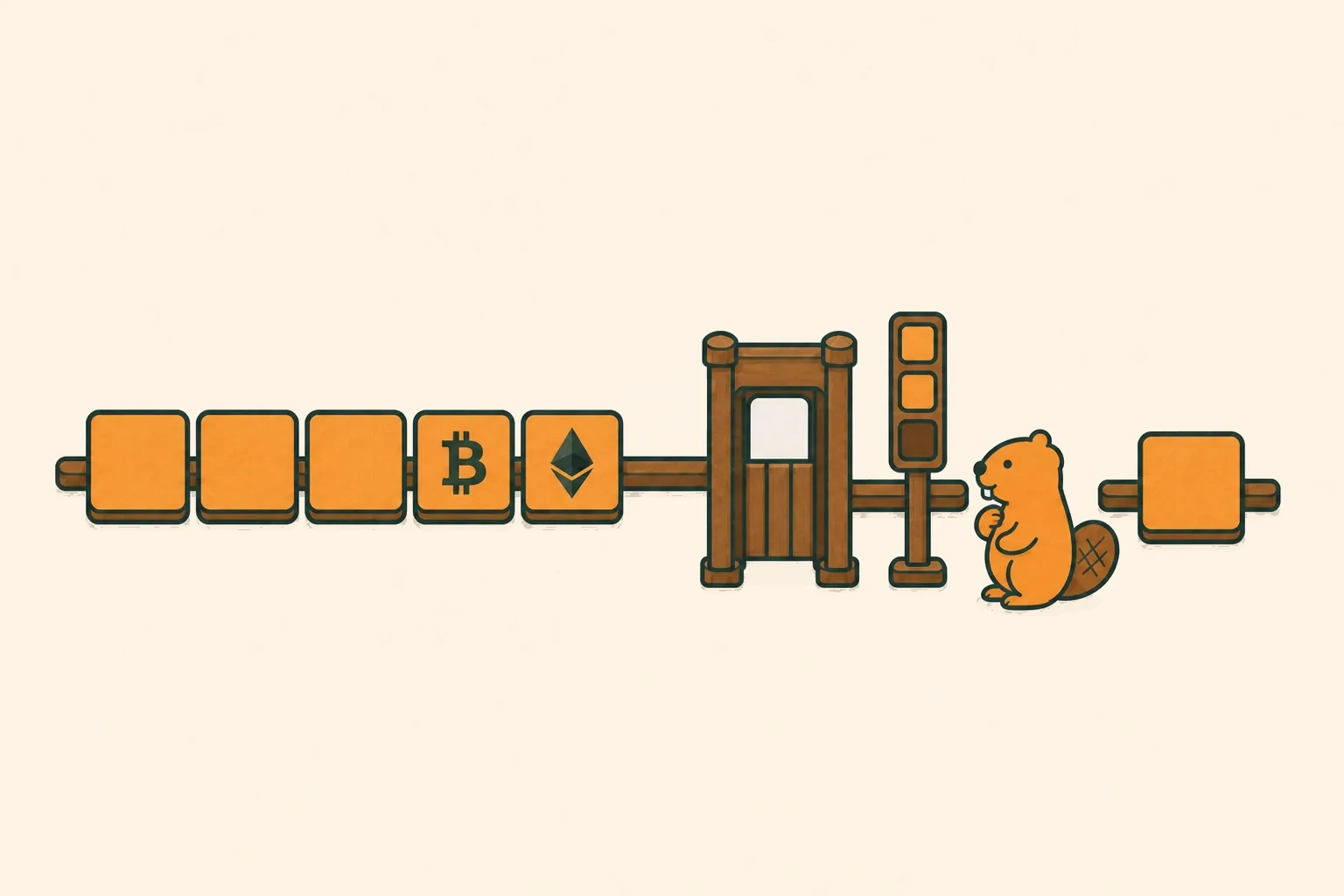
Ethereum kept Bitcoin's idea of a base layer that settles its own transactions and widened the question it answers. Instead of maintaining a shared record for one asset, it maintains shared rules for programs. A smart contract is not self-enforcing magic; it is code whose result the network's rules check, which is why the same valid call produces the same recorded state for every participant.
ETH carries two jobs that beginners often merge into one. It is Ethereum's native asset, and it is what pays gas — the cost a transaction offers for the computation and network resources it consumes. That makes resource use visible, but it also means the cost of an identical action is not fixed: it moves with network demand and with how much work the action actually requires.
The trade-off is the part worth internalizing. Flexible code creates more ways to build and more ways to be harmed. A contract can contain a bug, a transaction can call a contract you did not intend, and execution costs can vary between the moment you decide and the moment you sign. Programmable does not mean safer — it means the base layer supports a broader set of shared rules, with a correspondingly broader set of failure modes. Before approving a wallet prompt, confirm which network you are on and which contract you are addressing, because a perfectly valid transaction can still produce an outcome you did not want.
Bitcoin and Ethereum make the trade-off visible: a shared base layer can be secure and open, yet it has limited capacity and costs. The next chapter asks how newer Layer 1 networks and Layer 2 systems try to change those trade-offs without losing the value of a shared settlement layer.
Frequently asked questions
A program stored on Ethereum that defines actions to run when a transaction calls it. It specifies what it can do and what conditions it checks, and the network validates the transaction and records the resulting state under its rules. Its results are kept on the shared network rather than on one company's private server.
Both are Layer 1 networks that settle their own transactions, but they are designed around different goals. Bitcoin focuses on a shared settlement history for BTC under its protocol rules. Ethereum provides that settlement history plus an environment where smart-contract programs can run, which is why it can coordinate a much wider range of applications.
Gas is how Ethereum measures the computational effort and network resources a transaction consumes. The transaction pays for that consumption in ETH. Gas exists so that resource use is explicit and priced, rather than being an unlimited free claim on a shared network.
Two things move independently. The amount of gas an action uses depends on the work it requires, so a smart-contract call typically consumes more than a simple transfer. The price paid per unit of gas depends on how many people want their transactions processed at the same moment. When demand for limited block resources is high, that price rises.
Yes, if the action is a transaction on Ethereum itself. Gas is paid in ETH regardless of what the transaction does, so holding only a token is not enough to move or use that token on Ethereum. Wallets commonly show a transaction failing or being unsubmittable when there is no ETH available to cover the fee.
Yes. Ethereum maintains its own transaction rules, its own history, and its own consensus mechanism, and it does not depend on another blockchain to settle its transactions. Ethereum Layer 2 systems such as rollups are built above it and rely on it, which is a different relationship from being a base layer.
Yes. The network validates that a transaction followed the rules, not that a contract's logic reflects what its authors or users intended. A contract can contain a flaw, and a transaction executing exactly as written can still produce an unintended result. Being on a blockchain is not an audit of the code.
It means the base layer supports arbitrary shared rules expressed as code, not just transfers of a native asset. Applications can define their own logic and have the network record the results, which is what lets many separate services share one settlement environment instead of each running a private ledger.
Related coins


Keep learning
Recommended next reads based on this lesson.
- Why did Bitcoin need to exist?Start with the double-spend problem to understand why Bitcoin needed a shared transaction history.
- Bitcoin: the first Layer 1Learn why Bitcoin is a Layer 1 network, how its own rules secure BTC, and why settlement has trade-offs.
- Why are there so many tokens?Learn how ERC-20 made tokens reusable across Ethereum apps, and why a shared standard still leaves important risks.
- Why do blockchains get congested?Learn why shared Layer 1 resources are limited, how demand turns into fees and delays, and why scaling creates trade-offs.