StonkFun vs Pump.fun and pons: Why the Quote Asset Decides
How StonkFun prices new Solana tokens against tokenised stocks, and what that changes versus Pump.fun's SOL curve and pons's WETH pool — plus how to verify STONK's burn from the chain.

On this page
Quick read
StonkFun is a Solana launchpad that prices new tokens against tokenised stocks, currencies, and other assets instead of SOL. This comparison explains what that one design choice changes against Pump.fun and pons, how graduation and the STONK buyback work, and how to verify the burn on-chain.
What to remember
- All three platforms solve the same cold-start problem. The difference that reaches your trade is the quote asset: Solana tokens quote in SOL, pons quotes in WETH, and StonkFun can quote in a tokenised stock.
- A token paired with SPYx is priced in shares, not dollars. If the index rises while the token is flat in dollar terms, the pair falls and the position loses.
- The base token can be renounced and fixed while the quote token is permissioned and issuer-controlled. Check both mints, not just the one you are buying.
- StonkFun's STONK has no mint or freeze authority, and its supply is verifiable with a single RPC call. A falling supply is the observable burn; a feed can lag behind it.
- The buyback is funded from platform revenue, so the burn stops when trading fees stop. The mechanism is measurable, but it is not a floor.
Three launchpads, one job
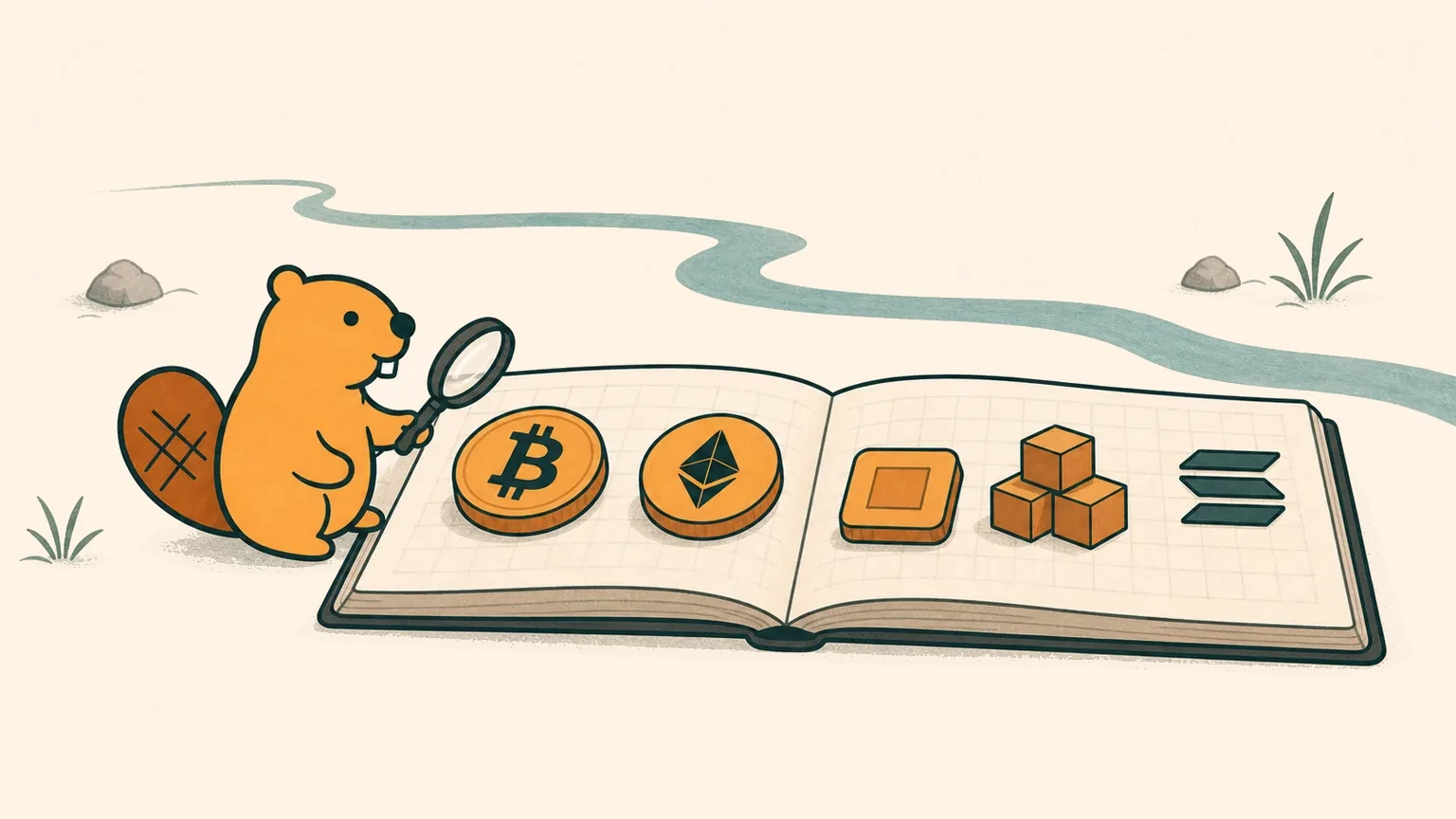
A launchpad exists to solve the cold-start problem: a brand-new token has no price, no liquidity, and no counterparty. Each platform bundles token creation and market opening so the token is tradable from the first block. The mechanics of that are covered in what a token launchpad is; this article is about the one design choice those platforms make differently.
StonkFun runs on Solana and is built on Raydium's LaunchLab, a bonding-curve program that third parties can brand as their own launch environment. Pump.fun runs its own bonding curve on Solana and graduates coins into PumpSwap. pons runs on Robinhood Chain and opens a locked Uniswap V3 pool in the launch transaction, with no curve at all.
The three platforms are similar in shape and different in one important field: what a new token is quoted against. Pump.fun quotes in SOL. pons quotes in WETH. StonkFun can quote in a tokenised stock, a currency, a leveraged token, SOL, or another token entirely. That field decides what your profit and loss is actually measured in.
Where the quote asset decides the trade
It is tempting to treat the quote asset as plumbing. It is not: it is the denominator of every trade in the pool, and it changes the question the market is answering.
| Design point | StonkFun | Pump.fun | pons v1 |
|---|---|---|---|
| Chain | Solana | Solana | Robinhood Chain |
| Opening mechanism | LaunchLab bonding curve | Bonding curve with virtual reserves | Instant locked Uniswap V3 pool |
| Quote asset | Any approved pair: xStocks, currencies, SOL, or a custom mint | SOL | WETH only |
| Quote asset issuer | Third party. xStocks are issued by Backed Assets | Solana protocol | Ethereum protocol |
| Graduation | Curve fills; migrates to a Raydium CPMM pool | Curve fills; migrates atomically to PumpSwap | Paired WETH reaches 4.2 ETH; trading continues in the same pool |
| Graduated liquidity | Locked Raydium position under LaunchLab rules | PumpSwap pool owned by the protocol | Locked Uniswap V3 position |
| Trading fee | 1% default with a 0.5% creator share; optional 2% tier at 1.5% | 1.25% total, split creator and protocol | 1% pool fee, plus a 0.0005 ETH launch fee |
| Opening protection | LaunchLab curve; reward launches add a 1% or 3% holder transfer tax | Curve pricing only | Two-block launch limits on buys |
The row that matters is the quote asset, and it is worth working through what it means.
On Pump.fun, a position is a bet on a token relative to SOL. On pons, it is a bet on a token relative to ETH. On a StonkFun pair quoted in a tokenised stock, it is a bet on the token relative to that stock. Those are three different questions, and a token can win one and lose another in the same hour.
Suppose a token is paired with SPYx, the tokenised S&P 500, and you buy it. Then the S&P 500 rises 2% over a week while the token's dollar price goes nowhere. In the pair's own terms the token has fallen, because the asset it is priced against appreciated and it did not. You are short the index inside that pool whether you meant to be or not. That is the core insight of the whole design: the quote asset is an exposure, not a label.
What pairing against a tokenised stock changes
StonkFun does not issue the shares it pairs against. It consumes a third-party asset, most visibly the xStocks range, where each token is a 1:1-backed representation of a US equity or ETF held in regulated custody by the issuer. SPYx tracks the S&P 500, NVDAx tracks Nvidia, and so on. xStocks are Token-2022 mints, and they carry features the launch token usually does not.
That contrast is the part worth holding onto. Read the two mints directly and they look nothing alike.
On 12 September 2026, STONK's mint returned a null mint authority and a null freeze authority: no party can mint more supply or freeze a holder's balance. The supply comes only down, which is what makes the burn verifiable from outside.
The SPYx mint is the opposite. It still has a live mint authority, a live freeze authority, a permanent delegate, a pausable switch, and a rebasing extension that adjusts balances for dividends and stock splits. None of that is a defect; it is what a permissioned, issuer-managed equity token requires. But it means the quote leg of the pool is controlled by a third party, while the token you are buying is not. When you check a pair, you are checking two assets with two different control models.
There is a second-order effect from rebasing. Corporate actions change the quote token's balances and supply, so the ratio a pool quotes is not a fixed unit of account over time. A pair priced in a rebasing asset inherits that drift on top of the token's own move.
How a StonkFun launch and graduation work
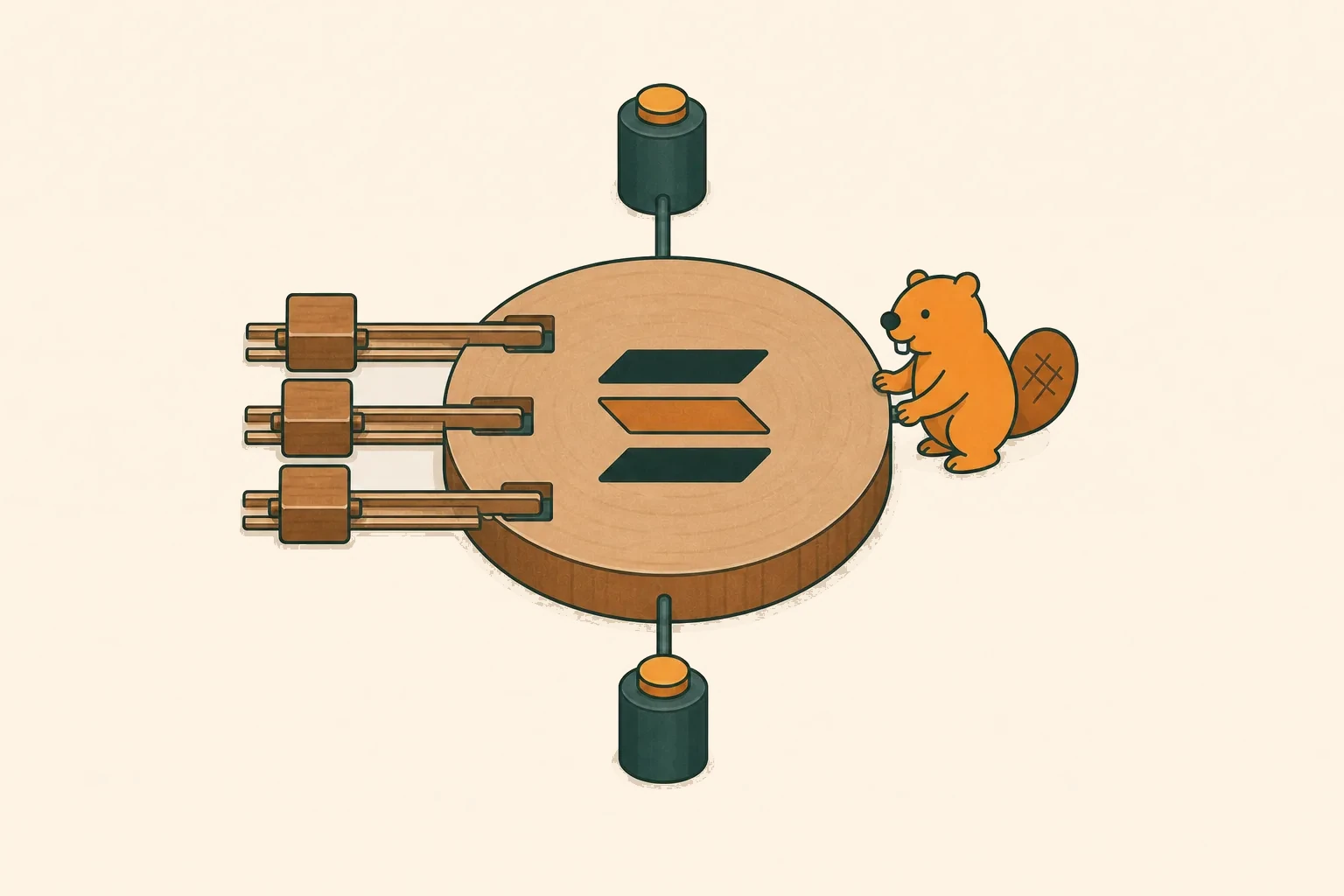
Newer StonkFun launches run through Raydium's LaunchLab. A creator picks a quote pair from the platform's approved list, and the token is minted into a constant-product bonding curve that graduates into a Raydium CPMM pool once the curve fills. LaunchLab is a shared program: StonkFun registers as a platform so its launches carry its branding and fee configuration, but the curve math and the graduation condition are enforced by the underlying program, not by StonkFun.
StonkFun describes two launch modes. A standard launch trades on a 1% pool with fees split evenly, so the creator earns 0.5% of every trade; an optional 2% tier raises the creator share to 1.5%. A reward launch also trades on a 1% pool but carries a transfer tax of 1% or 3%, fixed at launch and paid to the token's holders in the quote asset. Reward launches have no creator fee position.
For a trader, the mode is a cost line you can read before buying. A 3% transfer tax on every transfer is real, and it is disclosed at creation. The base Raydium mechanics are explained in what an automated market maker does, and the Solana context is in why Solana is an independent Layer 1.
The STONK token and how to verify the burn
STONK is the platform token. StonkFun's revenue page states that roughly 60% of platform revenue is used to buy STONK on the open market and burn it, with the rest retained. Its flywheel page describes the same fee-to-buyback-to-burn loop extended across a set of the platform's top tokens by market cap. The important property for a reader is that the burn is a claim you can check without trusting a dashboard or a feed.
STONK launched through an earlier Raydium pool on 23 July 2026, paired against SPYx, and graduated to a Raydium concentrated-liquidity pool the same day. It is worth separating the platform from its token: the launchpad is the product, STONK is one asset associated with it, and a falling supply is not a promise about price.
Steps
Get the mint address from the platform, not a post
STONK is the SPL token 6GmAFSYs4gk3FDao5FzzySQpPZaWsa4rUJHacpMpUNgx. Names, tickers, and logos are copyable on any permissionless venue, so the address is the only canonical identifier.
Read the live supply from the chain
A getTokenSupply call returns the authoritative number. On 12 September 2026 it read 850,073,691.72 STONK at 9 decimals, against StonkFun's stated launch supply of one billion.
Check the mint authorities in the same session
A getAccountInfo call with jsonParsed encoding returns mintAuthority and freezeAuthority. Both were null, which is what makes the falling supply meaningful rather than a snapshot someone could reverse.
Do the subtraction yourself
One billion minus 850,073,691.72 is about 149.9 million STONK, or 15.0% of the stated supply, removed by the buyback and burn at that reading.
Track it over time, not once
The burn is funded from revenue, so the honest signal is the direction of supply. A supply that keeps falling means fees are still being earned and recycled; a supply that flattens means the engine paused.
The insight in that example is not the percentage. It is that the number came from a node, not from the project, and that it can disagree with a price feed that refreshes supply far less often than it refreshes price. When a feed and the chain disagree about how many tokens exist, the chain is the record. The Solana RPC method used here is documented under getTokenSupply.
The risks the comparison exposes
The comparison is useful mainly because it makes the failure modes legible. None of them are about how fast the chain is.
- The quote asset is an unpriced exposure. On StonkFun, a position can lose while the token is flat in dollars, because the asset it is paired against moved. On Pump.fun and pons the same is true against SOL and ETH, but those are assets most traders already watch. An S&P 500 or Nvidia pairing adds a beta that launch-token buyers rarely price.
- Hours and rebasing cross the pool. The pair trades continuously while the underlying share trades 24/5. Gaps can open at the Monday equity open, and corporate-action rebasing moves the denominator without any trade happening.
- The quote asset is issuer-controlled. Mint, freeze, pause, and delegate authorities on an xStock are held by the issuer, not renounced. That is a counterparty you take on when you enter the pair, and it is invisible on a dollar-denominated chart.
- Copycat names remain structural. Anyone can deploy a token with an identical name, ticker, and image, and the quote assets have decoys too. The contract address is the only identifier that matters, which is the same lesson as how crypto rug pulls work.
- The burn is not a floor. A buyback funded by revenue shrinks supply while the platform earns. It does not create demand, and it stops the day fees stop. The base rate for launch tokens is still failure, as memecoin odds measures.
- Liquidity can be thin in both directions. Locked graduated liquidity removes one exit path for a creator. It does not guarantee a deep market, and your own exit can move the price.
How to check any launch before you buy
The checklist is short, and the quote-asset step is the one most people skip.
Steps
Verify both contract addresses
Confirm the launch token's mint and the quote asset's mint against the platform or a block explorer. Two lookalike tokens in one pair is two ways to buy the wrong thing.
Read the quote asset's mint
Check whether the quote token has a live mint authority, freeze authority, or permanent delegate. If it does, you are accepting an issuer counterparty on top of the token's own risk.
Find the fee and any transfer tax
A standard StonkFun launch carries a 1% or 2% pool fee; a reward launch adds a 1% or 3% transfer tax. Both are set at creation and should be discoverable.
Locate the launch in its lifecycle
A token on the curve, one about to graduate, and one already in a migrated pool are three risk profiles. Graduation is a threshold, not a quality rating.
Size for a total loss
Treat the position as capital you can write off. The token's burn, if it has one, changes its supply, not the odds that most launches fail.
Conclusion
StonkFun, Pump.fun, and pons are three answers to the same cold-start problem, and the answer that reaches your trade is the quote asset. Pump.fun prices a new coin in SOL and pons prices it in WETH. StonkFun can price it in a tokenised share, which turns every position in that pool into a relative bet on two assets at once and adds equity-market hours and issuer controls to a market that never closes.
The platform's own token makes the design concrete. STONK has no mint or freeze authority, its supply can only fall, and that supply is one RPC call away from being checked. The buyback that shrinks it is funded by revenue, so it is measurable in both directions and stops when the fees do.
For a trader, the practical rule is to read two mints before entering a StonkFun pair, not one, and to remember that graduation, a locked pool, and a falling supply are all statements about mechanics rather than about value. The rest is ordinary on-chain risk, which a cheap, fast chain makes easier to take and easier to lose money on.
Frequently asked questions
StonkFun is a token launchpad on Solana built on Raydium's LaunchLab. It lets creators launch a token priced against an approved quote asset, including tokenised stocks, currencies, SOL, or a custom mint, rather than only SOL.
Both use a bonding curve on Solana. Pump.fun prices every coin in SOL and graduates it to PumpSwap. StonkFun runs on Raydium's LaunchLab and can price a coin against a tokenised stock or another asset, so a position is measured against that asset instead of SOL.
It changes the denominator of every trade in the pool. Profit and loss become a function of the token relative to the share, so a token that is flat in dollars while the index rises has fallen in the pair, and the market can quote through weekends when the share has no live price.
No. It consumes third-party tokenised equities, most visibly the xStocks range issued by Backed Assets. StonkFun is a launch venue; it is not the issuer of the quote assets and does not control their mint authorities.
STONK was launched with a stated supply of one billion tokens and has no mint authority, so no new supply can be created. Its supply falls only through the platform's buyback-and-burn, which is funded from trading revenue.
Call getTokenSupply on the mint 6GmAFSYs4gk3FDao5FzzySQpPZaWsa4rUJHacpMpUNgx to read the live supply, then call getAccountInfo with jsonParsed encoding to confirm the mint and freeze authorities are both null. Compare the supply against the stated one billion.
A standard launch trades on a 1% pool with fees split evenly between the creator and the platform, or a 2% pool with a larger creator share. A reward launch trades on a 1% pool and adds a transfer tax of 1% or 3% paid to holders, with no creator fee.
Graduation only means the curve filled and the token migrated to a Raydium pool. It is a threshold, not a quality signal, and it does not guarantee liquidity, a buyer at your price, or a higher value.
The pair chart measures the token against the quote asset, while the dollar chart converts that ratio using the quote asset's price. When the quote asset is a tokenised stock, the two charts can move in opposite directions depending on what the stock does.
Related coins


Keep learning
Recommended next reads based on this lesson.
- Robinhood Chain, Explained for TradersWhat Robinhood Chain is, how its Stock Tokens differ from equity, why it has no native token, and how to separate the chain from the apps built on it.
- What Is a Token Launchpad? pons and Pump.fun ComparedHow token launchpads solve the cold-start problem, how pons and Pump.fun price a new token differently, and what graduation does and does not signal.
- What Moves Solana's Price: Issuance, Staking Dilution, and ActivitySolana's disinflation schedule, why not staking SOL is a decision to be diluted, how SIMD-0096 weakened the fee burn, activity quality, and supply overhangs.
- Why is Solana another Layer 1 choice?Learn why Solana and SOL form an independent Layer 1, how its performance-oriented design differs from Ethereum Layer 2s, and which trade-offs remain.