Crypto Rug Pulls Explained: Red Flags, Mechanics, and How to Protect Your Wallet
Learn how crypto rug pulls work, identify major smart contract red flags, and discover essential tools to verify token safety before investing.
On this page
Quick read
A crypto rug pull is a malicious scam where developers create a token, hype it on social media to attract investor funds, and then suddenly drain the liquidity pool or dump secret token allocations. Understanding smart contract red flags and verifying liquidity locks is essential for protecting your wallet in decentralized finance (DeFi).
What to remember
- Permissionless Listing Vulnerability: Decentralized exchanges (DEXs) allow anyone to create and list a token without regulatory approval, making DeFi a primary target for fraud.
- Hard Rugs vs. Soft Rugs: Hard rugs use malicious code or sudden liquidity drains to instantly steal funds; soft rugs involve developers slowly dumping insider tokens over weeks while abandoning the roadmap.
- Liquidity Lock Is Non-Negotiable: Always verify that a token's liquidity pool tokens (LP tokens) are locked in a reputable third-party time-lock contract or permanently burned.
- Beware of Honeypots: Malicious smart contracts can be coded to accept buy orders while completely blocking investors from executing sell transactions.
- Always Verify Contract Addresses: Use automated contract scanners like TokenSniffer or GoPlus Security to check for mint backdoors, hidden taxes, and unrenounced admin privileges before buying.
What is a crypto rug pull?
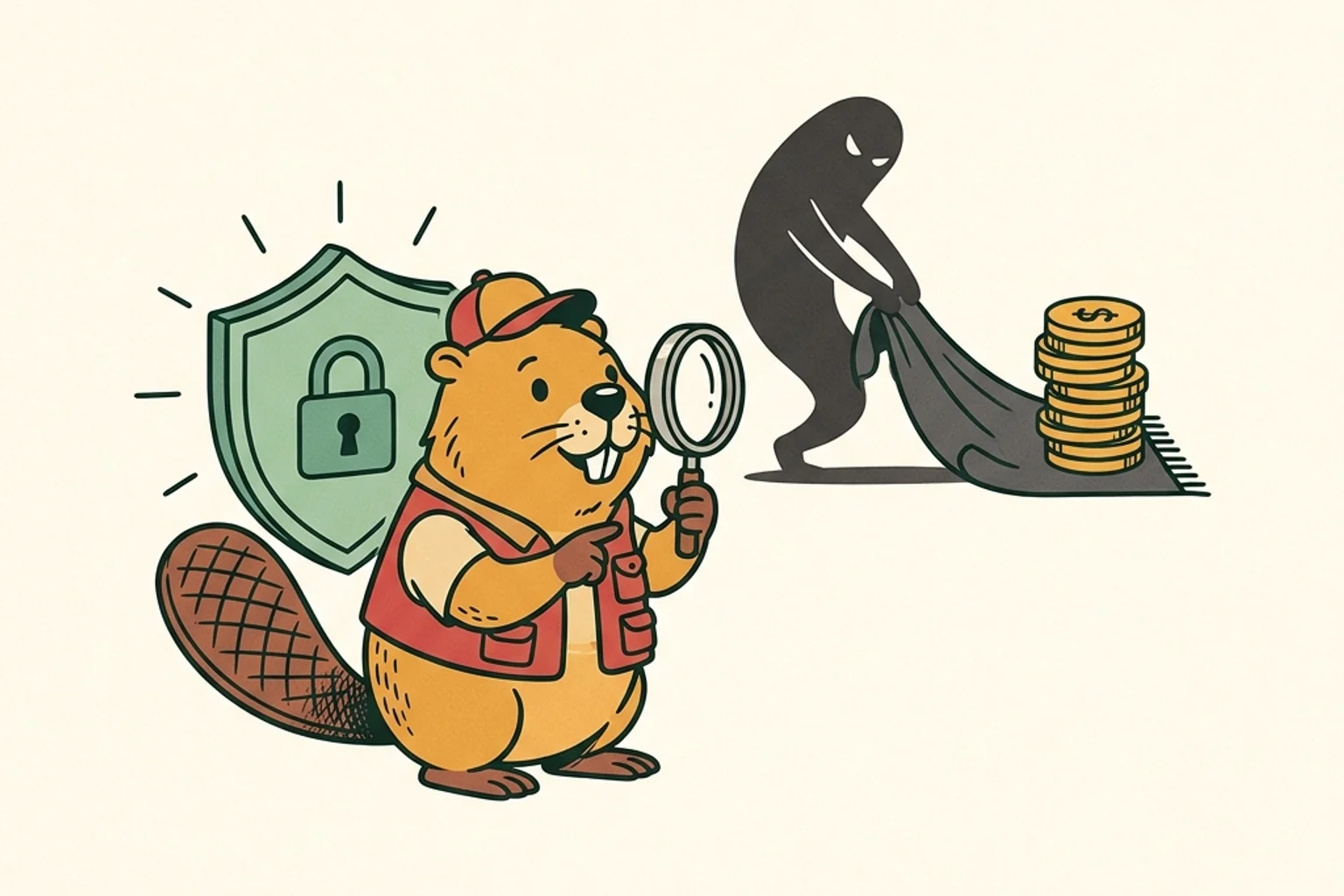
The phrase "rug pull" originates from the idiom "pulling the rug out from under someone." In cryptocurrency, it refers to a fraudulent scheme where project founders pump a new token's price through aggressive marketing, entice retail investors to buy in, and then abruptly withdraw all backer capital—leaving investors holding worthless digital tokens.
Rug pulls are particularly prevalent in . Unlike traditional centralized exchanges (like Coinbase or Kraken) that perform strict identity verification and code audits before listing an asset, decentralized exchanges (DEXs like Uniswap, PancakeSwap, or Raydium) allow anyone to create a token contract and pair it with a liquidity pool in minutes.
While this permissionless environment fosters rapid financial innovation, it also enables malicious actors to launch deceptive projects anonymously.
The three primary types of rug pulls
Rug pulls generally fall into two technical categories: hard rugs (instant programmatic theft via smart contract code) and soft rugs (gradual moral hazard and insider dumping). Hard rugs split further by the mechanism used, which gives the three primary types below: two hard-rug variants and one soft rug.
| Rug Pull Type | Mechanism | Execution Speed | Detection Difficulty |
|---|---|---|---|
| Liquidity Pool Drain | Developers withdraw paired reserve assets (ETH/SOL/USDT) from DEX pool | Instant (Single Transaction) | Easy (Check LP Lock Status) |
| Malicious Code / Honeypot | Backdoors in contract disable sell orders or enable infinite minting | Instant or Deferred | Medium (Requires Code Audit/Scanner) |
| Slow Rug / Insider Dump | Founders quietly sell hidden dev wallets while making false roadmap promises | Gradual (Weeks to Months) | High (Requires On-Chain Tracking) |
1. Liquidity pool drain (Hard Rug)
To trade a token on a DEX, developers must create a liquidity pool containing the new token paired with an established asset (such as ETH, SOL, or USDT). Early investors deposit their valuable assets into the pool in exchange for the new token.
In a liquidity drain rug pull, the developers retain ownership of the . Once the pool accumulates substantial value from incoming buyers, the developers execute a single transaction to redeem their LP tokens, withdrawing all the ETH/SOL/USDT and rendering the remaining project tokens mathematically un-sellable.
2. Malicious code backdoors & honeypots (Hard Rug)
Malicious developers often write deceptive rules directly into the token's smart contract code:
- Honeypots: The contract allows investors to purchase tokens normally, but blocks all sell transactions (or applies a 99% sell tax). Investors watch the token price skyrocket on price charts, unaware that no one except the developer can cash out.
- Infinite Mint Functions: The developer retains a secret administrative function to mint unlimited new tokens into their personal wallet at zero cost, which they immediately sell into the market to drain the liquidity pool.
- Blacklists & Proxy Key Abuse: Upgradeable proxy contracts allow developers to silently swap out innocent contract logic for malicious code after attracting investor capital.
3. Slow rug / team dump (Soft Rug)
Unlike hard rugs executed via code, a slow rug is a behavioral fraud. Project founders hype an ambitious roadmap—such as a play-to-earn game, layer-2 blockchain, or AI platform—and sell pre-allocated "team" or "marketing" wallets quietly into retail buying pressure over weeks or months. Once their allocations are fully cashed out, the developers quietly abandon social media channels and discontinue development.
Major red flags to spot before investing
Before swapping funds into any new token or meme coin, evaluate the project against these critical security red flags:
1. Unlocked liquidity pool
If the project's LP tokens are not locked in a verified third-party time-lock smart contract (such as PinkSale, Uncx, or Team Finance) or permanently sent to a burn address (0x000...dead), the developers can drain the liquidity pool at any second.
2. Extreme wallet concentration
Use a block explorer to inspect the top token holders. If the top 10 non-exchange wallets hold more than 20% to 30% of the total circulating supply, a single insider sell-off can crash the token price by 90%+.
3. Unrenounced contract ownership & proxy keys
If contract ownership has not been renounced, the creator retains special permissions (such as pausing trading, modifying transfer fees, or blacklisting addresses). Furthermore, if the contract is an upgradeable proxy, the admin can change the underlying smart contract code entirely without investor consent.
4. Anonymous team with no verified track record
While anonymity is common in crypto, an un-doxxed team with no prior public GitHub repositories, no verifiable history in Web3 development, and stock artificial-intelligence profile photos represents a severe risk profile.
5. Absence of independent security audits
Legitimate DeFi projects subject their code to independent third-party audits by established security firms (such as CertiK, OpenZeppelin, or Hacken). A lack of auditing—or a fake audit badge linking to an unverified PDF—is a primary red flag.
Essential tools to verify token safety
Protecting your wallet requires verifying on-chain data using free, public security tools:
1. Automated contract security scanners
- TokenSniffer: Automatically analyzes Ethereum, BNB Chain, and Polygon contracts for honeypot code, mint functions, and fee anomalies.
- GoPlus Security: Provides real-time automated risk assessments for token contracts, identifying blacklists, proxy keys, and sell tax traps.
- De.Fi Scanner: An automated smart contract auditing tool that grades token contracts and identifies high-risk administrative privileges.
2. DEX market screeners
- DexScreener & DEXTools: Check real-time buy/sell transaction histories, total liquidity depth, and automated LP lock indicators. If a token shows 1,000 buys and 0 sells, it is a honeypot.
3. On-chain block explorers
- Etherscan / Solscan / BscScan: Inspect the Holders tab to check wallet distribution and verify whether LP tokens are sent to a null burn address or a time-lock smart contract.
Frequently Asked Questions
While centralized exchanges perform strict due diligence and code audits to prevent hard rugs (like honeypots or liquidity drains), projects can still suffer 'soft rugs' if founders abandon the project or dump team token allocations after listing.
Burning liquidity means sending LP tokens to an unrecoverable null address (e.g., 0x000000000000000000000000000000000000dead). Because no one possesses the private key to this address, the liquidity pool can never be withdrawn by the developers, making a liquidity drain rug pull impossible.
Paste the token contract address into an automated scanner like TokenSniffer or GoPlus Security, and check DexScreener to confirm that regular retail wallets are successfully executing sell transactions in the live order log.
No. A code audit only verifies that the smart contract logic functions as intended at the time of review. Audits do not prevent developers from dumping team token allocations, abandoning roadmaps, or abusing upgradeable proxy keys if proxy contracts were not explicitly renounced.
Because blockchain transactions are irreversible and DEXs are permissionless, recovering funds lost to a rug pull is extremely difficult. In rare cases where law enforcement unmasks anonymous developers, stolen funds have been seized via judicial proceedings, but prevention is your only reliable defense.
Renouncing ownership means the contract creator permanently gives up their admin privileges by setting the contract owner to a null address. Once ownership is renounced, no one—including the original creator—can alter fees, mint new tokens, or pause trading.
Sources and further reading
Primary educational resources on smart contract security and risk prevention:
This article is educational. It is not financial or investment advice. Smart contract security risks vary across protocols and chains. Always perform independent technical verification before interacting with unverified Web3 contracts.
Keep learning
Recommended next reads based on this lesson.
- Using DeFi as a Trader: What You Need to Know Before You StartA practical guide for CEX traders evaluating DeFi: self-custody models, gas fee mechanics, DEX slippage, risk stacks, and when DeFi makes sense.
- Why are there so many tokens?Learn how ERC-20 made tokens reusable across Ethereum apps, and why a shared standard still leaves important risks.
- Why is Ethereum programmable?See how Ethereum extended the Layer 1 idea with shared programs, ETH gas, and new trade-offs.