Why can Lightning payments be faster?
Learn how Bitcoin Lightning payment channels update balances away from the base layer, route payments, and keep their final settlement tied to Bitcoin.
On this page
Quick read
Bitcoin can settle ownership on its base layer, but waiting for a block for every small payment can be slow or costly. This lesson explains how Lightning payment channels update balances away from the chain, how payments can route through channels, and why available liquidity and eventual Bitcoin settlement still matter.
What to remember
- Lightning moves frequent payments into channels so they do not each compete for Bitcoin block space, which is where the speed comes from.
- Channels stay tied to Bitcoin: funding, closing, and enforcement are all Bitcoin transactions, which is what makes the arrangement enforceable.
- There is no separate Lightning coin — the balances moving through channels are BTC and they resolve on Bitcoin.
- Routed payments depend on directional liquidity at every hop, so a payment can fail even when your own balance is sufficient.
Why can a Bitcoin payment need another path?
Bitcoin's base layer gives participants one shared history, but that history is not designed to record every possible small payment immediately. When a payment needs to be frequent or responsive, putting every update directly into a block can reintroduce the delay and competition for block space from the previous lesson.
Lightning is a payment-layer response to that constraint. It lets participants make many balance updates in a channel, then use Bitcoin's base layer when they need to establish or settle that channel.
What is a Lightning payment channel?
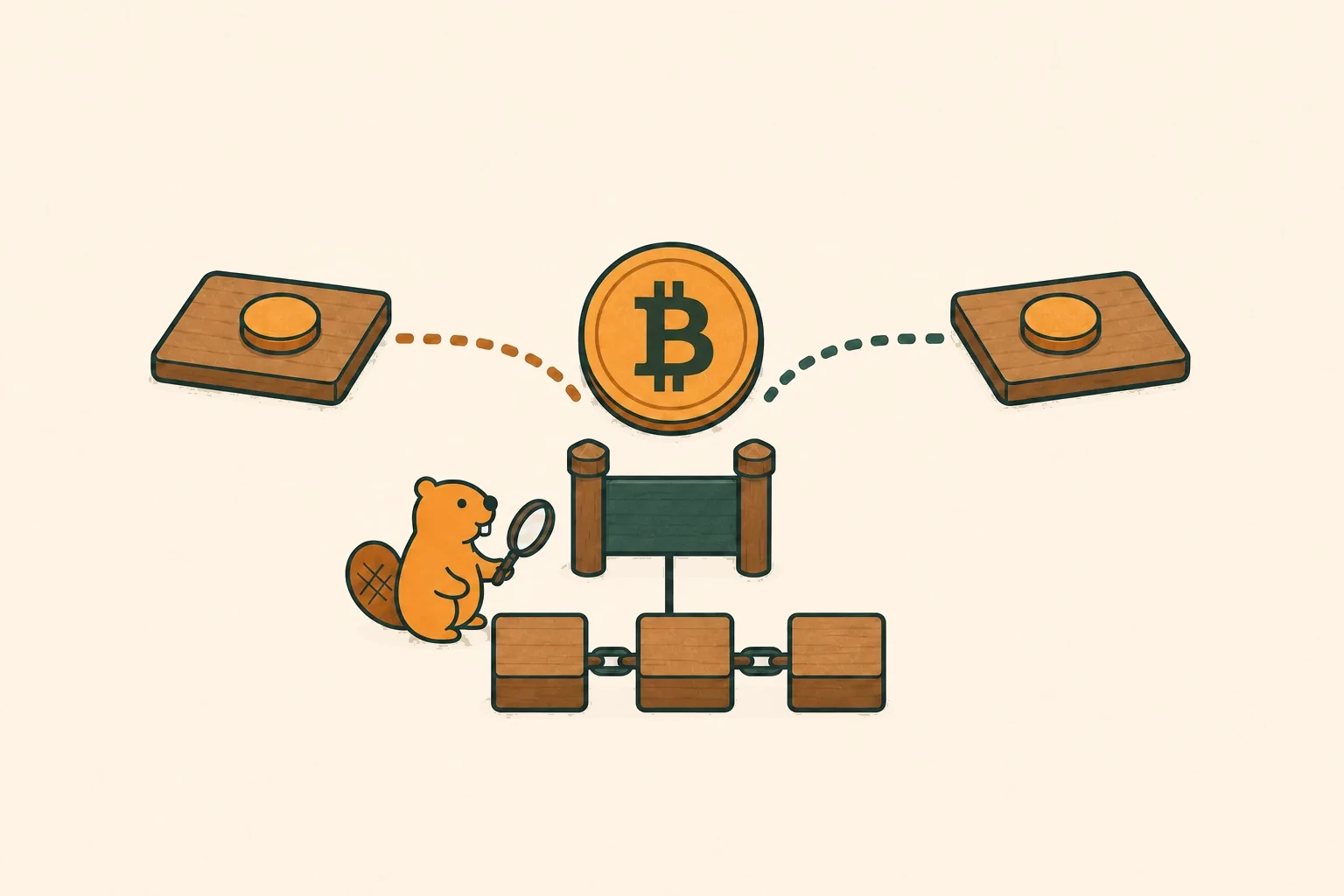
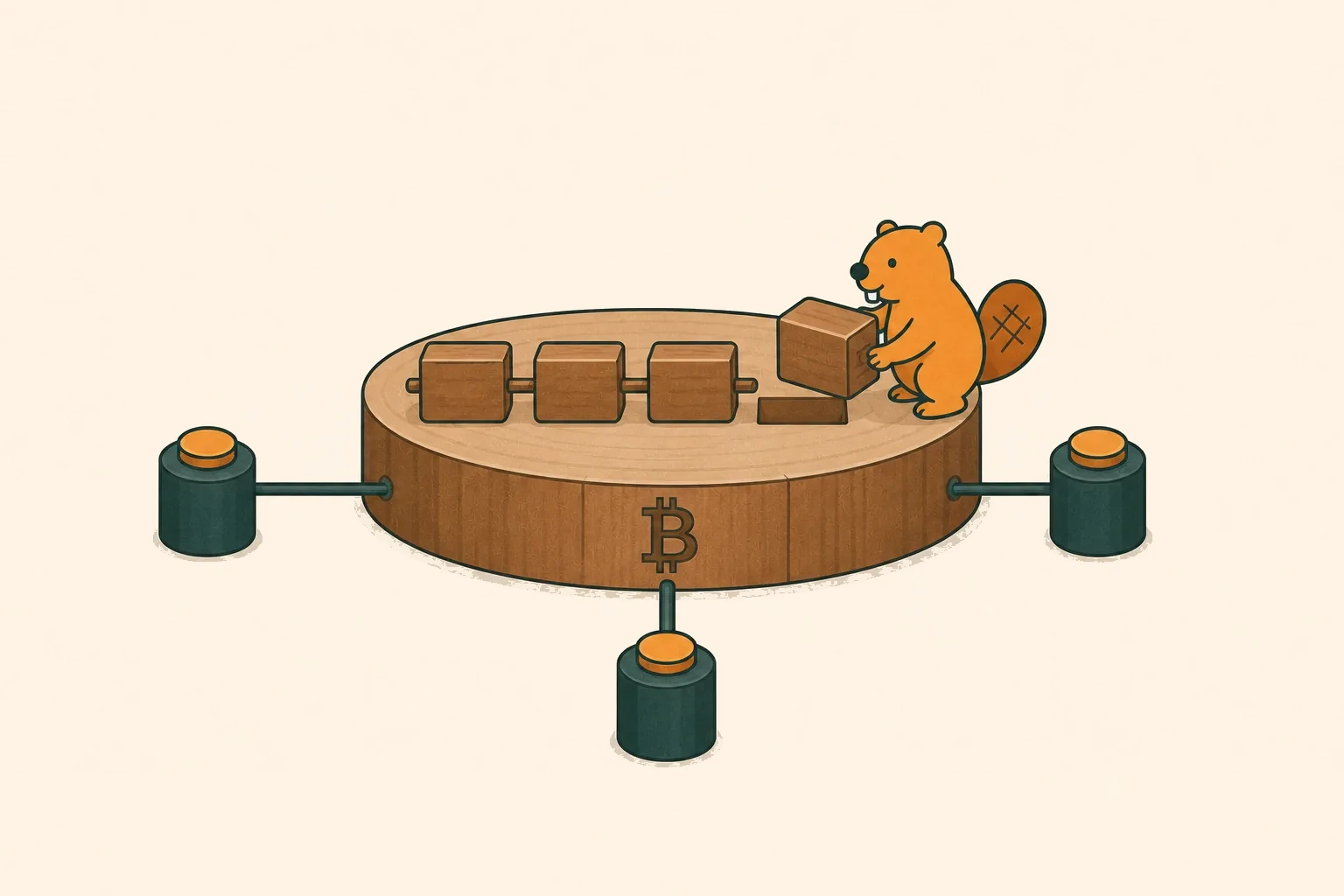
A payment channel begins with participants committing BTC to an arrangement that Bitcoin can recognize. Inside the channel, they can agree on newer balance states as they pay one another, without broadcasting every update as a separate Bitcoin transaction. The channel is not disconnected from Bitcoin: its funding and its closing or enforcement path remain tied to Bitcoin transactions.
Steps
Fund a channel
Participants create the funding arrangement that anchors the channel to Bitcoin.
Update balances
They exchange new channel states as payments change who can claim what amount.
Settle when needed
A channel can close or use its commitment path so the resulting balance is resolved on Bitcoin.
How can a payment reach someone without a direct channel?
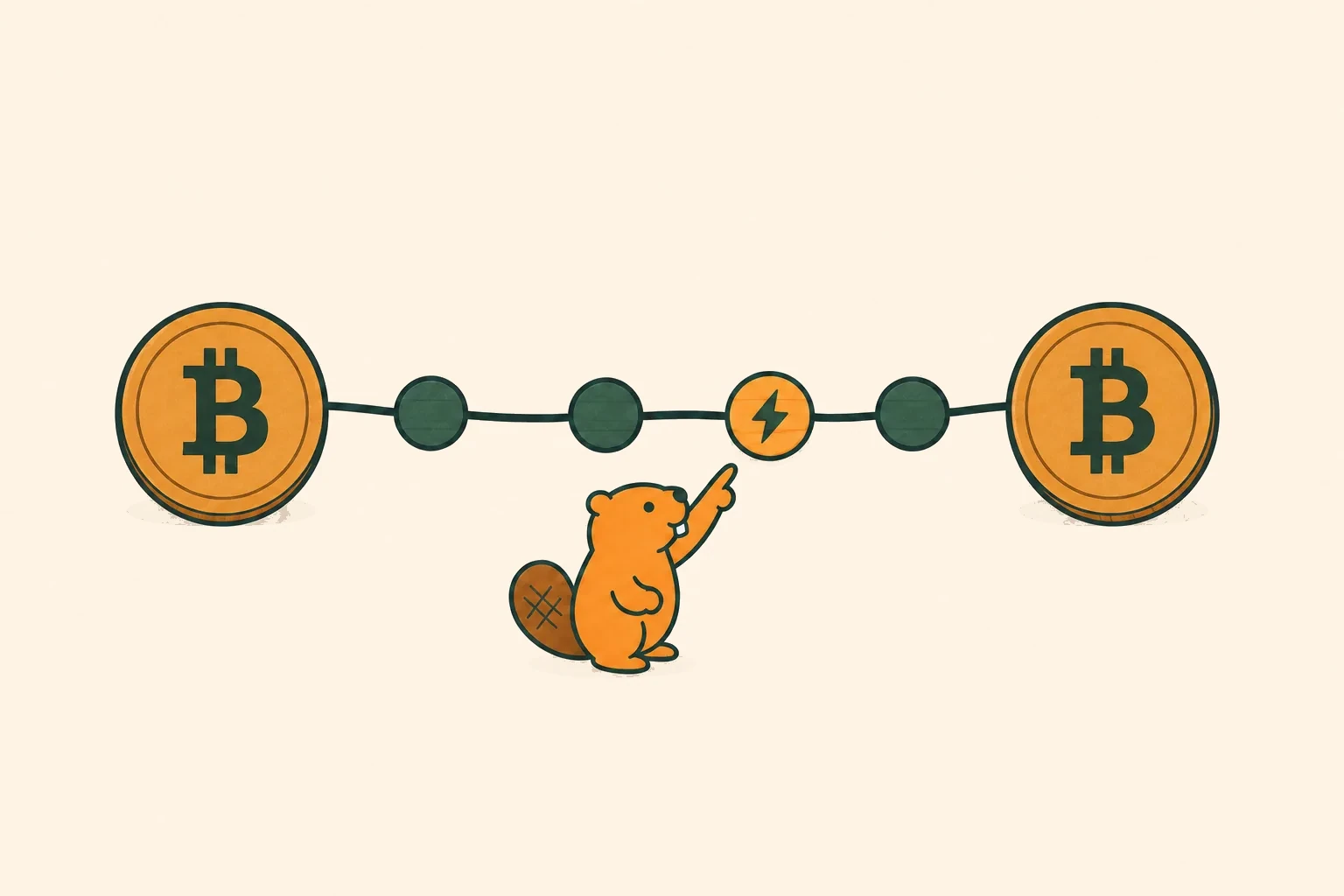
Lightning can forward a payment through a sequence of channels. Each forwarding node passes a conditional payment to the next hop, rather than taking custody of a separate asset. This is why Lightning can connect people who have not opened a channel with each other directly.
That route is not guaranteed merely because a diagram shows connected nodes. A payment needs a usable amount in the required direction at each hop, while also meeting the hops' current fee, timing, and HTLC limits. In this context, liquidity means whether the needed payment can actually travel along that route now—not simply how much value exists somewhere in the whole network.
| Question | Direct channel | Routed payment |
|---|---|---|
| Who updates the payment? | The two channel participants. | Each adjacent pair along a route updates its own channel. |
| What must be usable? | Enough capacity in the direction of the payment. | Enough usable capacity and compatible limits at every hop. |
| What can block it? | Channel constraints or an unavailable peer. | Any hop's availability, fee, timing, or amount constraint. |
What trade-offs remain after moving payments into channels?
Lightning can reduce the need to compete for a Bitcoin block for every payment, but it does not make constraints disappear. Funds must be committed to channels, available liquidity can differ by direction, and a route can fail if one hop cannot forward the amount. Channel participants also retain a relationship with Bitcoin for the funding and final settlement of those balances.
Conclusion
Lightning is a targeted answer to a specific constraint: Bitcoin's base layer was not designed to record every small, frequent payment immediately, and putting each one into a block reintroduces waiting and competition for block space. Channels let participants commit BTC once, then agree on new balance states between themselves as they pay each other, without broadcasting every update as a separate Bitcoin transaction.
The speed comes from moving updates off the base layer, not from escaping it. A channel's funding and its closing or enforcement path remain Bitcoin transactions, which is what makes the arrangement enforceable at all. This is also why Lightning does not introduce a separate asset — the balances being updated are BTC, and they resolve on Bitcoin when the channel settles.
The constraint that replaces block space is liquidity, and it is directional. A routed payment needs usable capacity in the required direction at every hop, along with compatible fee, timing, and HTLC limits, so a route can fail even though a diagram shows the nodes connected and even though plenty of value exists somewhere on the network. For a user, the practical expectations are that funds must be committed to channels before they can be spent this way, that a payment can fail for reasons unrelated to your own balance, and that the relationship with Bitcoin settlement never fully goes away.
Lightning is an example of a layer built on top of Bitcoin for a specific job: frequent payments. Its speed comes from moving many updates into channels, not from removing Bitcoin's settlement rules. The next lesson follows a different path on Ethereum, where rollups move much of the execution away from the base layer and submit batch information back to it.
Frequently asked questions
A payment layer built on top of Bitcoin for frequent payments. Participants commit BTC to channels and then update balances between themselves, using Bitcoin's base layer to establish and settle those channels rather than to record every individual payment. It exists to avoid competing for block space on every small transfer.
Participants first create a funding arrangement that anchors the channel to Bitcoin. Inside the channel they exchange new balance states as payments change who can claim what amount, without broadcasting each update as a Bitcoin transaction. When they need to finish, the channel closes or uses its commitment path so the resulting balance is resolved on Bitcoin.
No. There is no separate Lightning coin. Lightning changes how BTC payments are updated and routed; the value moving through channels is BTC, and it settles under Bitcoin's rules. Anything presented as a distinct Lightning token is not part of this design.
Because most payments never become individual Bitcoin transactions. Updating a channel balance does not require waiting for a block or bidding for block space, so it avoids the delay and fee competition that on-chain settlement involves. The base layer is used to open and settle channels rather than to record each payment.
Most commonly because the route could not carry it. A payment needs a usable amount in the required direction at every hop, and it must also satisfy each hop's fee, timing, and HTLC amount limits. Any single hop being unavailable or too constrained is enough to prevent the payment, even when your own balance is sufficient.
Whether the specific payment you want to make can actually travel along a route right now. It is directional: a channel that can send in one direction may not be able to send in the other. This is different from how much total value exists across the network, which tells you nothing about whether a particular route will work.
No. Lightning can forward a payment through a sequence of channels, with each forwarding node passing a conditional payment to the next hop rather than taking custody of a separate asset. That routing is what lets people who have never opened a channel with each other transact, subject to a viable route existing.
It is a layer built on top of Bitcoin that depends on the base layer for enforcement and final settlement, which is the general shape people mean by Layer 2. It is worth noting that it solves a different problem from Ethereum rollups: Lightning targets frequent payments, while rollups target general transaction execution.
The balances agreed inside the channel are resolved on Bitcoin. The channel either closes cooperatively or uses its commitment path, and the outcome becomes a Bitcoin transaction reflecting who holds what. This is the point at which the base layer's fees and confirmation times apply again.
Related coins

Keep learning
Recommended next reads based on this lesson.
- Why did Bitcoin need to exist?Start with the double-spend problem to understand why Bitcoin needed a shared transaction history.
- Bitcoin: the first Layer 1Learn why Bitcoin is a Layer 1 network, how its own rules secure BTC, and why settlement has trade-offs.
- Why is Ethereum programmable?See how Ethereum extended the Layer 1 idea with shared programs, ETH gas, and new trade-offs.
- Why are there so many tokens?Learn how ERC-20 made tokens reusable across Ethereum apps, and why a shared standard still leaves important risks.