DeFi Lending Explained: How On-Chain Borrowing and Liquidation Work
Understand DeFi lending protocols: over-collateralization, utilization-based borrow rates, Loan-to-Value (LTV), health factors, and keeper bot liquidations.
On this page
Quick read
DeFi lending protocols like Aave and Compound allow users to borrow assets instantly against crypto collateral without credit checks or bank approval. This explainer details how over-collateralization works, how interest rates adjust algorithmically based on pool utilization, how Health Factors are calculated, and how keeper bots execute automated liquidations during volatility.
What to remember
- DeFi loans require over-collateralization—you must deposit more dollar value in collateral than the amount you borrow.
- Borrow and supply interest rates adjust dynamically based on the pool's utilization rate (ratio of borrowed funds to total deposits).
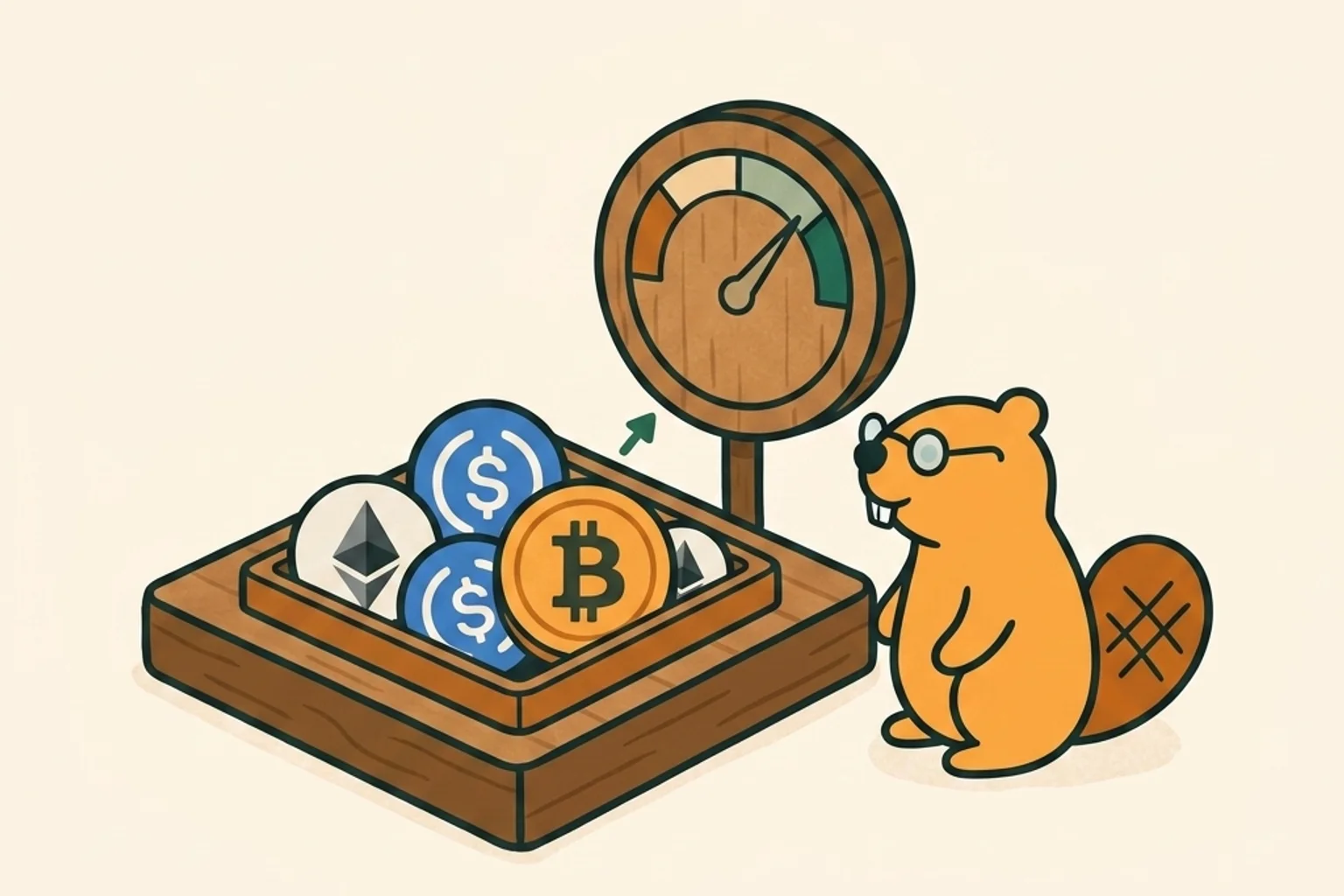
- Your Health Factor measures loan safety: a Health Factor above 1.0 is safe, while a factor below 1.0 triggers immediate liquidation.
- Liquidations are executed by automated keeper bots, which repay your debt and claim your collateral at a discounted liquidation penalty fee.
- Holding borrowed leverage during market downturns risks total collateral liquidation if collateral prices drop faster than you can repay.
Traditional banks evaluate credit scores, income, and legal contracts before approving a loan. Decentralized Finance (DeFi) eliminates human underwriters entirely, relying on smart contracts to execute permissionless lending.
To prevent defaults in an anonymous, permissionless environment, DeFi protocols enforce .
1. The Over-Collateralization Model
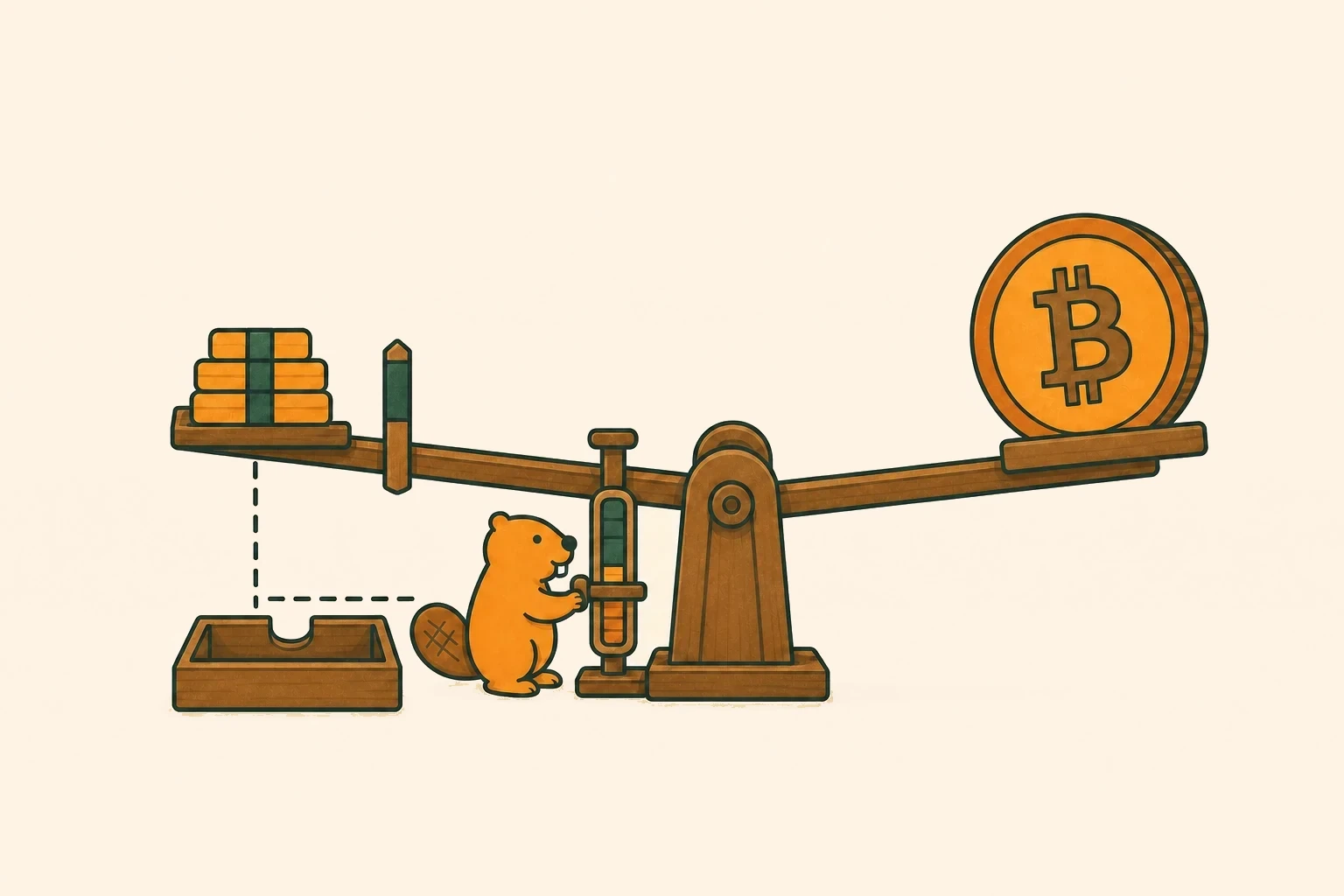
Because a DeFi protocol cannot garnish your wages or take you to court if you fail to repay, you must deposit collateral worth significantly more than the amount you wish to borrow.
Key Lending Terms:
- Maximum LTV (Loan-to-Value): The maximum percentage of your collateral's value you can borrow (e.g., an 80% LTV on $10,000 of ETH allows borrowing up to $8,000 of USDC).
- Liquidation Threshold: The percentage threshold at which your loan becomes under-collateralized and vulnerable to liquidation (e.g., 85%).
- Liquidation Penalty: A fee (typically 5% to 10%) deducted from your collateral to reward the bot that liquidates your unsafe loan.
2. Dynamic Interest Rates and Pool Utilization
DeFi protocols do not charge fixed interest rates set by human committees. Instead, borrow and supply rates adjust algorithmically based on the pool's Utilization Rate:
- Utilization Rate Formula: Utilization Rate = Total Borrowed Assets / Total Deposited Assets
Two-Slope Kinked Interest Rate Model
Explore how borrow and supply APYs react as pool utilization moves past the optimal kink target.
What Problem Does the Kink Solve?
In permissionless DeFi lending, depositors expect to withdraw their funds at any time. However, if a pool reaches 100% utilization (meaning all deposited funds are lent out), 0 liquid capital remains in the pool contract, temporarily locking suppliers out of their funds.
If a pool used a single flat linear interest rate curve, borrowing would stay cheap even when available liquidity was nearly exhausted, triggering severe withdrawal halts.
To solve this liquidity risk, protocols implement a two-slope kinked interest rate model (as shown in Figure 1):
- Below the Kink (0% to 80% Utilization): The interest rate curve has a gentle, shallow slope (R₁). Borrowing is affordable, encouraging capital deployment while keeping at least 20% of deposits liquid as a safety buffer for daily withdrawals.
- Above the Kink (80% to 100% Utilization): The moment utilization exceeds the optimal kink threshold, the interest rate curve hits an inflection point and spikes upward along a steep vertical slope (R₂).
This steep interest spike past the kink acts as an automated algorithmic circuit breaker that accomplishes two vital risk objectives:
- Forces Debt Repayment: High borrow APYs (which can jump from 5% to 60%+) make holding open debt prohibitively expensive, forcing borrowers to quickly repay their loans.
- Attracts Fresh Depositors: Elevated supply APYs entice yield-seeking LPs to deposit new funds into the pool.
Together, these dual incentives rapidly drag utilization back down below the kink target, maintaining liquid reserves so suppliers can always withdraw their capital on demand.
3. Understanding the Health Factor
Protocols like Aave summarize your loan safety into a single metric called the :
-
Health Factor Formula: Health Factor = (Total Collateral Value × Liquidation Threshold) / Total Borrowed Debt Value
-
HF > 1.5 (Safe Zone): Your collateral comfortably exceeds debt requirements.
-
1.0 < HF ≤ 1.5 (Caution Zone): Market price drops reduce your margin buffer.
-
HF < 1.0 (Liquidation Trigger): Your position is immediately eligible for automated liquidation.
4. Step-by-Step Liquidation Example
Step-by-Step Liquidation Timeline:
- Initial Position: You deposit 1 ETH (valued at $3,000) into Aave with an 85% Liquidation Threshold. You borrow $2,000 USDC.
- Maximum Liquidation Debt Limit = $3,000 × 0.85 = $2,550.
- Initial Health Factor = $2,550 / $2,000 = 1.275.
- Market Drop: ETH price drops from $3,000 to $2,300.
- New Collateral Liquidation Value = $2,300 × 0.85 = $1,955.
- New Health Factor = $1,955 / $2,000 = 0.978 (Below 1.0!).
- Bot Execution: A third-party detects your Health Factor < 1.0. The bot pays off $1,000 of your USDC debt and seizes $1,050 worth of your ETH collateral (including a 5% liquidation penalty).
Pro Tips for Managing DeFi Loans
To navigate permissionless lending markets safely without risking sudden collateral liquidation, keep these actionable practices in mind:
- Target a Health Factor Buffer (1.5+ HF): Never borrow up to your maximum LTV limit. Maintain a Health Factor buffer of at least 1.5 to withstand 20%+ market drawdowns without needing immediate manual intervention.
- Monitor Volatile Asset Beta: If using volatile altcoins as collateral, lower your borrow ratio significantly. High-beta tokens can experience sharp 30%+ intraday drops, shrinking your Liquidation Threshold faster than you can react.
- Use Stablecoin Debt for Market Hedges: Borrowing stablecoins (USDC/USDT) against ETH collateral allows you to access liquidity or yield without introducing short-side asset price risk on your debt.
- Set Automated Health Factor Alerts: Utilize notification tools (such as DeFi Saver, Push Protocol, or wallet push notifications) to receive instant Telegram, email, or mobile warnings if your Health Factor falls below 1.25.
Conclusion
DeFi lending protocols replace central banks and credit underwriters with transparent, code-governed money markets. Over-collateralization ensures protocol solvency in permissionless environments, while dynamic kinked interest rate curves algorithmically balance capital efficiency with instant withdrawal liquidity.
While borrowing against your crypto enables capital-efficient leverage and tax-deferred liquidity, it shifts 100% of risk management onto the user. By keeping Health Factors comfortably above 1.5, understanding fee structures, and actively monitoring collateral price swings, traders can harness the power of decentralized money markets while avoiding automated liquidations.
Frequently Asked Questions
Traders use over-collateralized loans to gain leverage without selling their long-term assets. For example, you can deposit ETH, borrow USDC to buy more ETH or pay real-world expenses, avoiding a taxable capital gains event while maintaining ETH price exposure.
Liquidations are executed by independent, automated keeper bots run by third-party searchers. Protocols incentivize bots by allowing them to purchase the borrower's discounted collateral upon debt repayment.
Yes. You can prevent liquidation by either depositing additional collateral to raise your Health Factor or repaying a portion of your borrowed debt before your Health Factor drops below 1.0.
Flash loans are uncollateralized loans that must be borrowed and fully repaid within the exact same blockchain transaction. If the borrower fails to return the principal plus a tiny fee before the block transaction completes, the smart contract automatically reverts the entire trade as if it never happened. Flash loans are widely used for arbitrage, instant collateral swapping, and keeper bot liquidations.
Yes. In protocols like Aave and Compound, your deposited collateral continues to accumulate supply APY even when pledged as collateral for an active loan. Your net yield equals the supply APY earned on your collateral minus the borrow APY charged on your outstanding debt.
Borrowing a volatile asset (such as ETH) means your debt obligation increases if ETH appreciates. If your borrowed asset rises faster in dollar value than your collateral, your Health Factor will decrease toward liquidation. Borrowing stablecoins (USDC/USDT) eliminates this risk because your debt remains fixed in dollar terms.
Efficiency Mode (e-Mode) allows borrowers to access ultra-high LTV ratios (up to 97%) when the collateral and borrowed assets are price-correlated (such as borrowing USDC against USDT or borrowing stETH against ETH). Because correlated assets experience minimal relative price divergence, protocols can safely lower collateral buffers.
Sources and further reading
Protocol documentation for decentralized lending markets:
- Aave v3 Documentation — Risk Parameters & Liquidations
- Compound Protocol Docs — Interest Rate Models
This article is educational. It is not financial or lending advice. LTV ratios, interest rates, and liquidation penalties are controlled by governance and change dynamically.
Related coins


Keep learning
Recommended next reads based on this lesson.
- Leveraged Yield and Credit Accounts: Gearbox vs Morpho BlueHow Gearbox credit accounts, Morpho Blue isolated markets, and Aave shared pools structure DeFi leverage, and where liquidation risk and bad debt land.
- Who Pays When a Liquidation Goes Bad: Insurance Funds, Backstops, and Socialized LossWhen a position closes below its bankruptcy price there is a hole. Trace one identical deficit through a CEX, a DEX perpetual vault, and a lending market.
- Soft Liquidations: How Curve LLAMMA and crvUSD Replace the Liquidation CliffHow Curve's LLAMMA converts collateral gradually across price bands, why a round trip still costs you, and why the position is short volatility.
- How crypto leverage trading worksCrypto leverage lets you control a larger position with a smaller deposit of collateral.