How crypto leverage trading works
Crypto leverage lets you control a larger position with a smaller deposit of collateral.
On this page
- What leverage actually is
- Initial margin vs maintenance margin
- Liquidation math for longs and shorts
- Spot margin vs dated futures vs perpetuals
- Cross margin vs isolated margin
- How professionals size leveraged positions
- Risks that the math makes concrete
- What to do before you open a leveraged trade
- Frequently asked questions
- Sources and further reading
Quick read
Crypto leverage lets you control a larger position with a smaller deposit of collateral. This deep dive covers borrowed capital, initial versus maintenance margin, liquidation math for longs and shorts, product types, and margin modes. By the end you will know how to read a leveraged position before you confirm it.
What to remember
- Leverage multiplies both gains and losses; the deposit you post is the capital at risk, not the full notional.
- Initial margin opens the position; maintenance margin is the floor that triggers forced liquidation.
- Higher leverage shrinks the price move needed to wipe the position — often to a few percent.
- Isolated margin caps loss to one position; cross margin can put your whole futures wallet at risk.
- Always read the venue's liquidation price on the order ticket before you click confirm.
What leverage actually is
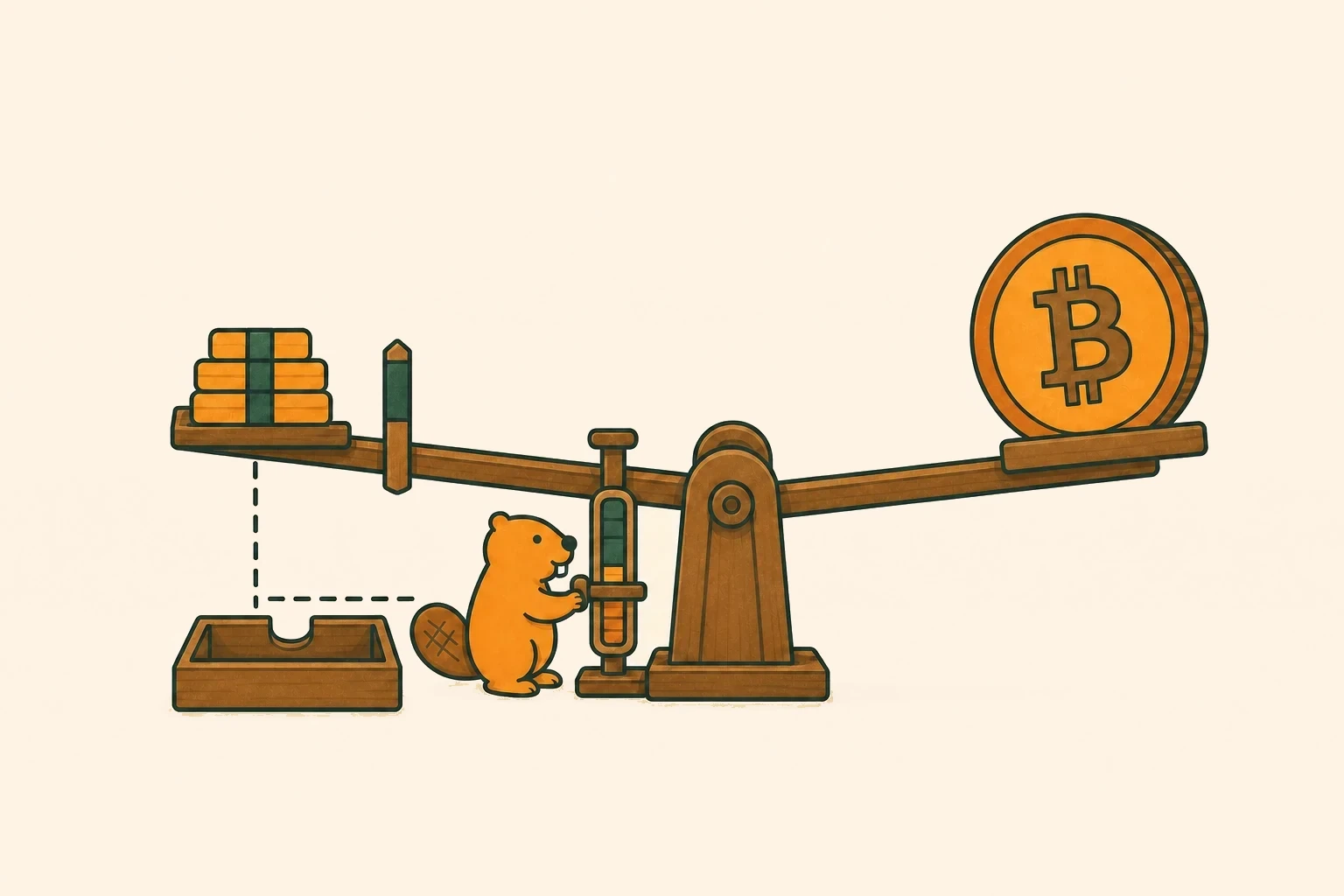
In crypto derivatives, leverage means you post a smaller amount of collateral — margin — to open a position whose size is larger than that deposit. The rest of the capital is effectively borrowed from the venue's risk engine (or, in classic margin trading, from a lending pool).
If you buy $10,000 of bitcoin exposure with 10× leverage, you typically post about $1,000 as initial margin. A 1% move in the right direction is roughly a 10% gain on your margin; a 1% move against you is roughly a 10% loss on that same deposit. The venue does not let the loss run past what your remaining margin can cover — it liquidates first.
Leverage is not free money. It is a permission to control more notional, paid for with tighter liquidation distance, trading fees, and — on perpetual contracts — ongoing funding payments.
Initial margin vs maintenance margin
Two numbers sit under every leveraged position:
| Concept | What it means | When it matters |
|---|---|---|
| Initial margin | Collateral required to open the position | Order ticket / max size at a given leverage |
| Maintenance margin | Minimum equity that must remain to keep the position | Liquidation threshold |
Initial margin falls as leverage rises. At 5× on a $10,000 notional you post about $2,000; at 20× you post about $500 (before fees and venue multipliers).
The is usually a fraction of notional, set by risk tiers. Larger notionals often require higher maintenance rates. When mark-to-market equity drops to that maintenance level, the venue starts forced liquidation rather than waiting for your balance to hit zero.
The gap between initial and maintenance margin is your buffer. High leverage shrinks that buffer until a normal candle can close the position.
Liquidation math for longs and shorts
Exchanges publish full formulas that include maintenance margin rates, maintenance amounts, fees, and multi-position effects. For intuition, start with the bankruptcy-style approximation (no fees, maintenance margin ≈ 0):
- Long (you profit if price rises): approx. liquidation price ≈ entry × (1 − 1 / leverage)
- Short (you profit if price falls): approx. liquidation price ≈ entry × (1 + 1 / leverage)
Worked example
Entry $100,000 BTC, 10× isolated, no extra margin:
- Long liquidates near $90,000 (~10% adverse move).
- Short liquidates near $110,000 (~10% adverse move).
Real venues liquidate before full bankruptcy because of maintenance margin and fees. A long at 10× might liquidate closer to an 8–9% adverse move than a clean 10%, depending on tier and fee schedule. Always trust the estimated liquidation price on the exchange ticket over a napkin formula.
Price move to liquidation by leverage
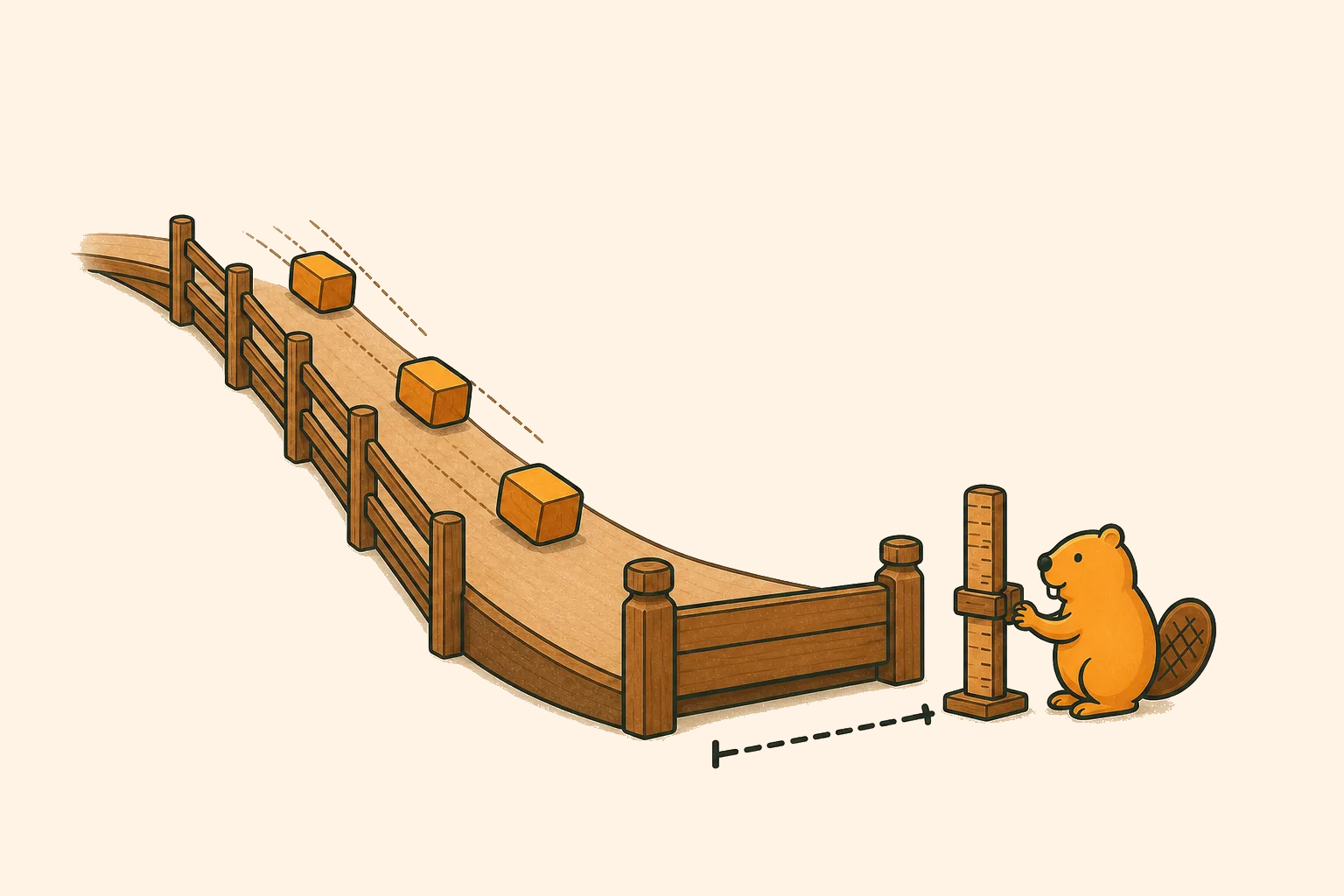
Assuming a long, isolated, and the simple 1 / leverage approximation:
| Leverage | Approx. adverse move to wipe margin | Entry $100,000 → liq. near | Practical reading |
|---|---|---|---|
| 2× | ~50% | $50,000 | Wide buffer; capital-intensive |
| 5× | ~20% | $80,000 | Common intermediate sizing |
| 10× | ~10% | $90,000 | One strong daily move can end it |
| 20× | ~5% | $95,000 | Intraday noise territory |
| 50× | ~2% | $98,000 | Liquidation is a normal candle |
| 100× | ~1% | $99,000 | Near-zero room for error |
Shorts flip the direction: the same percentage move up reaches liquidation.
Spot margin vs dated futures vs perpetuals
Crypto leverage is not one product. Three common structures share margin vocabulary but differ in funding, expiry, and basis risk:
| Product | What you hold | Expiry | How price stays near spot |
|---|---|---|---|
| Spot margin | Borrowed base or quote asset to buy/sell spot | Loan term / interest accrual | You trade the spot market itself |
| Dated futures | Contract settling on a fixed date | Yes (quarterly, monthly, …) | Converges at expiry; basis can be wide before then |
| Perpetual futures (perps) | Futures-style contract with no expiry | None | Periodic funding rate payments between longs and shorts |
Spot margin is closest to “borrow cash or coins and trade the book.” Interest is the carrying cost. Liquidation still applies if collateral falls short.
Dated futures fix a settlement date. Before expiry the futures price can trade above or below spot (). You can be right on direction and still lose on basis if you exit early.
Perpetuals dominate crypto derivatives volume because they never expire. Instead of rolling contracts, the venue runs a mechanism (often every eight hours) so that perpetual prices stay anchored near spot. Holding a crowded side costs funding over time even if mark price is flat.
Major perp venues used by active traders include Binance, Bybit, OKX, Hyperliquid, and decentralised alternatives such as dYdX. Product names, max leverage, and margin engines differ; the economic idea —
Beyond crypto, CoinBeaver tracks TradFi perpetual markets — equities, commodities, and indices traded as perps — with live prices, funding rates, and open interest. notional exposure backed by margin — is the same.
Cross margin vs isolated margin
Margin mode decides which collateral is eligible when a position loses money.
Isolated margin
- Only the margin assigned to that position can be lost to it.
- Liquidation price is driven by that position's size, entry, leverage, and assigned margin.
- Adding margin moves liquidation farther away; reducing margin pulls it closer.
- Default choice when you want a known maximum loss per trade.
Cross margin
- Positions share a wallet-level collateral pool.
- Unrealized profit on one position can support another; unrealized loss can drag the whole wallet toward liquidation.
- A single bad position can cascade into liquidation of multiple positions.
- Used when hedging or when professionals deliberately manage portfolio-level margin — not as a “set and forget” mode for beginners.
Same trade, different modes: a 10× long with $1,000 isolated risk can only burn that $1,000 (plus fees). The same notional in cross mode can keep eating the rest of the futures wallet if you do not cut risk.
A dedicated comparison of modes belongs in the guide on cross vs isolated margin; the rule of thumb here is simple: new traders should default to isolated until they can explain cross-wallet risk without the help page.
How professionals size leveraged positions
Professionals rarely start from “what is the max leverage?” They start from how much account equity can this idea lose if I am wrong, then back into notional and leverage.
A practical sequence:
- Define max loss in account terms — for example 0.5%–1% of total equity on a single idea (your own limit; there is no universal constant).
- Place the invalidation level — the price where the thesis is wrong (often beyond a structure level, not a random round number).
- Compute position size so that a move from entry to invalidation (plus fees/slippage) equals the max loss.
- Choose leverage only as a capital-efficiency tool so the required margin fits, while liquidation stays beyond the invalidation and stop — never inside it.
- Prefer stops and planned adds of margin over hoping the venue’s liquidation engine is your risk manager.
If liquidation price sits inside your stop distance, leverage is too high for that setup. Lower notional or lower leverage until liquidation is a distant catastrophe, not the first line of defense.
Risks that the math makes concrete
Leverage does not create a new kind of market; it compresses the time and distance to a total loss of the posted margin.
Other concrete failure modes:
- vs last price — liquidation engines key off mark price, not the last trade print you watched on a chart.
- Gaps and cascades — in fast markets, many positions hit maintenance margin together; exit prices can be worse than the estimated liquidation level.
- Funding and fees — a “flat” leveraged hold still pays trading fees and, on perps, funding; high leverage magnifies how painful a wrong-side funding rate feels relative to margin.
- and insurance funds — after liquidation, residual risk may hit insurance mechanisms or, in extremes, counterparty deleveraging. Those details are venue-specific and matter most in crashes.
What to do before you open a leveraged trade
Steps
Name the product
Know whether you are on spot margin, a dated future, or a perpetual, and which settlement asset (USDT, USDC, or coin-margined) you are using.
Choose isolated unless you have a portfolio reason for cross
Isolated keeps a single position from draining the whole futures wallet.
Size from max loss, not max leverage
Pick the equity you can lose, set invalidation, then derive notional. Leverage is the residual, not the goal.
Read the estimated liquidation price
Confirm it sits beyond your stop and beyond normal noise for that market. Use the venue calculator when the ticket is unclear.
Account for fees and funding
Especially on multi-day perp holds, funding can rival the trading fee as a holding cost.
Frequently asked questions
For a fixed notional, higher leverage means less margin and a closer liquidation price, so yes — the position is more fragile. You can reduce risk by cutting notional even if the leverage number on the ticket stays high; risk lives in size and distance to liquidation, not in the multiplier alone.
On well-designed isolated futures with automatic liquidation, losses are intended to be limited to the margin assigned to the position, but fees, slippage, and extreme gaps can produce residual losses on some venues and products. Cross margin can consume the shared wallet. Read each venue's bankruptcy and clawback rules before sizing large.
Notional is the economic size of the position (for example $10,000 of BTC exposure). Leverage is notional divided by margin. Two traders can share the same leverage number and still take very different risk if their notionals differ.
Stops are instructions that may not fill in gaps or thin books. Liquidation is a venue risk process driven by mark price and maintenance margin. If liquidation is closer than your stop, the risk engine acts first.
Both are derivatives with margin and liquidation. Perpetuals have no expiry and use funding payments to track spot; traditional dated futures expire and rely on convergence at settlement. Rolling, basis, and holding costs differ.
Start with each venue's official liquidation and margin documentation (Binance, Bybit, OKX, and Hyperliquid all publish calculators and formulas; for on-chain venues such as dYdX, check their protocol docs). CoinBeaver's follow-on explainers cover perps, funding rates, liquidations, open interest, and margin modes in more depth.
Sources and further reading
Primary documentation for the mechanics above:
- Binance — liquidation price of USDⓈ-M futures
- Binance — Futures liquidation protocols
- Bybit — isolated-mode liquidation price calculation
- OKX — liquidation FAQ
- ESMA — CFD / binary options product intervention (retail loss rates)
This article is educational. It is not trading advice, and product availability, max leverage, and margin formulas change by venue and jurisdiction. Verify live parameters on the exchange before you risk capital.
Keep learning
Recommended next reads based on this lesson.
- Trading Perpetual Futures: How They Work and What You Need to KnowUnderstand perpetual swaps (perps), how they differ from dated futures, how funding rates anchor their price to spot, and basis risk.
- Auto-Deleveraging (ADL) Explained: When the Exchange Closes Your WinnerHow the ADL queue is ranked, what price your position is closed at, why the settlement gap matters less than the forced exit, and how to read the indicator on your position row.
- Cross Margin vs. Isolated Margin: Which Protects You Better?Learn the core differences between cross and isolated margin modes, compare their risk profiles, and see step-by-step worked examples to protect your trading capital.
- How Crypto Liquidations Happen: Mechanics, Math, and Risk ManagementLearn how crypto liquidations work, how exchanges calculate liquidation prices, and practical strategies to protect your margin and avoid getting rekt.