Trading Perpetual Futures: How They Work and What You Need to Know
Understand perpetual swaps (perps), how they differ from dated futures, how funding rates anchor their price to spot, and basis risk.

On this page
- What are perpetual futures?
- Perpetual futures vs. traditional dated futures
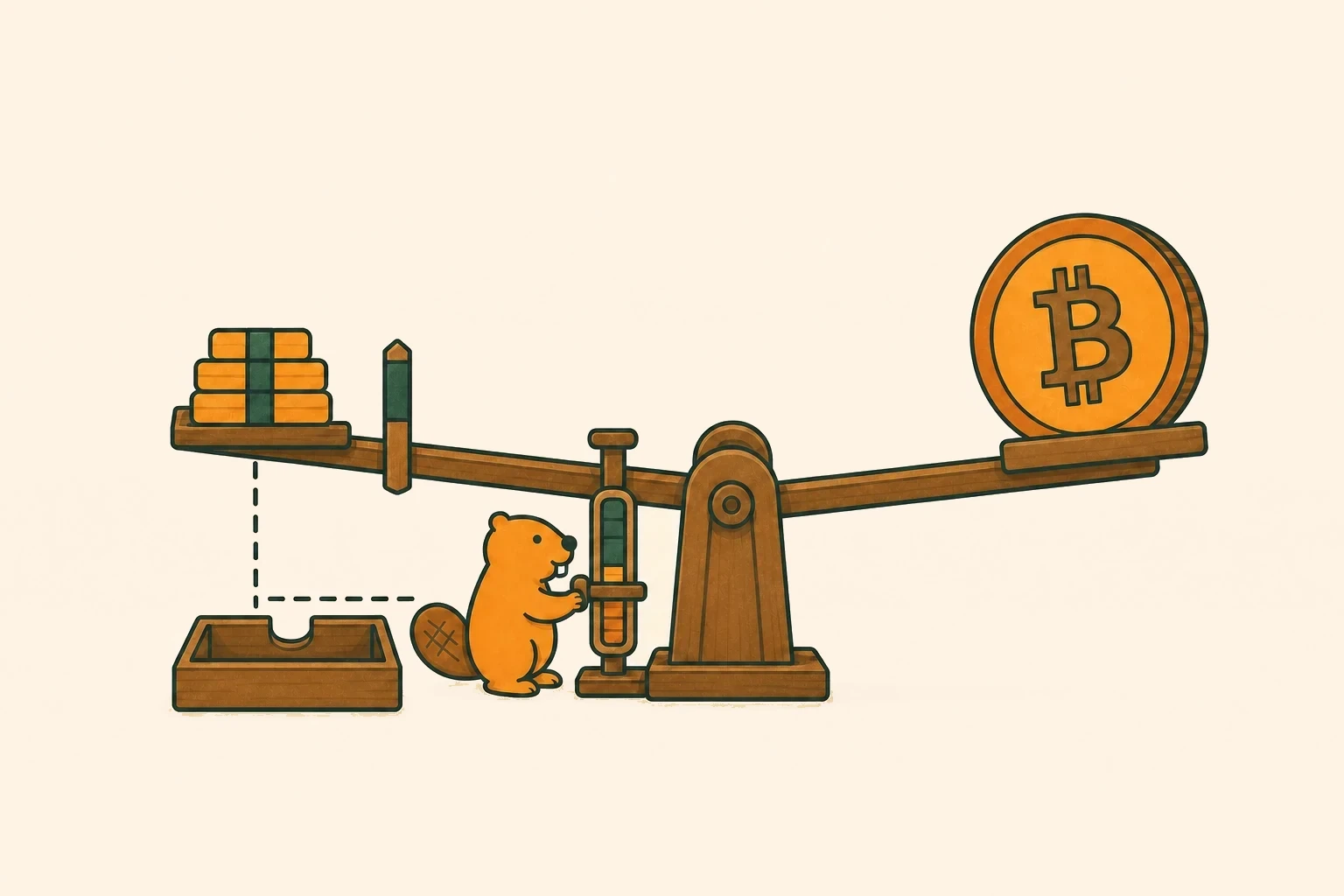
- How funding rates anchor perp price to spot
- The three prices of a perp: market, index, and mark price
- How perps affect your capital: costs vs. profit streams
- Decision framework: spot, futures, or perps?
- Understanding basis risk in perps
- Major perpetual futures venues
- Frequently Asked Questions
- Sources and further reading
Quick read
Perpetual futures (perps) are the most traded derivative in crypto, allowing you to speculate on price movements with leverage without an expiration date. This explainer covers how perps differ from traditional futures, how funding rates anchor their prices to spot, and the key risks like basis risk and liquidation.
What to remember
- Perpetual futures have no expiry date, allowing you to hold positions indefinitely as long as you maintain required margin.
- A periodic funding rate mechanism (computed every 1, 4, or 8 hours, or even continuously depending on the platform) keeps perpetual prices closely aligned with the underlying spot price.
- Funding rates represent a holding cost or profit opportunity: depending on your direction relative to market sentiment, you will either pay or receive funding fees.
- Basis risk is the price discrepancy between the perpetual contract and the spot asset, which can widen during periods of extreme volatility.
- Traders choose between centralized venues (Binance, Bybit, OKX) or decentralized networks (Hyperliquid, Lighter, Aster, dYdX) based on custody, fees, and execution preferences.
What are perpetual futures?
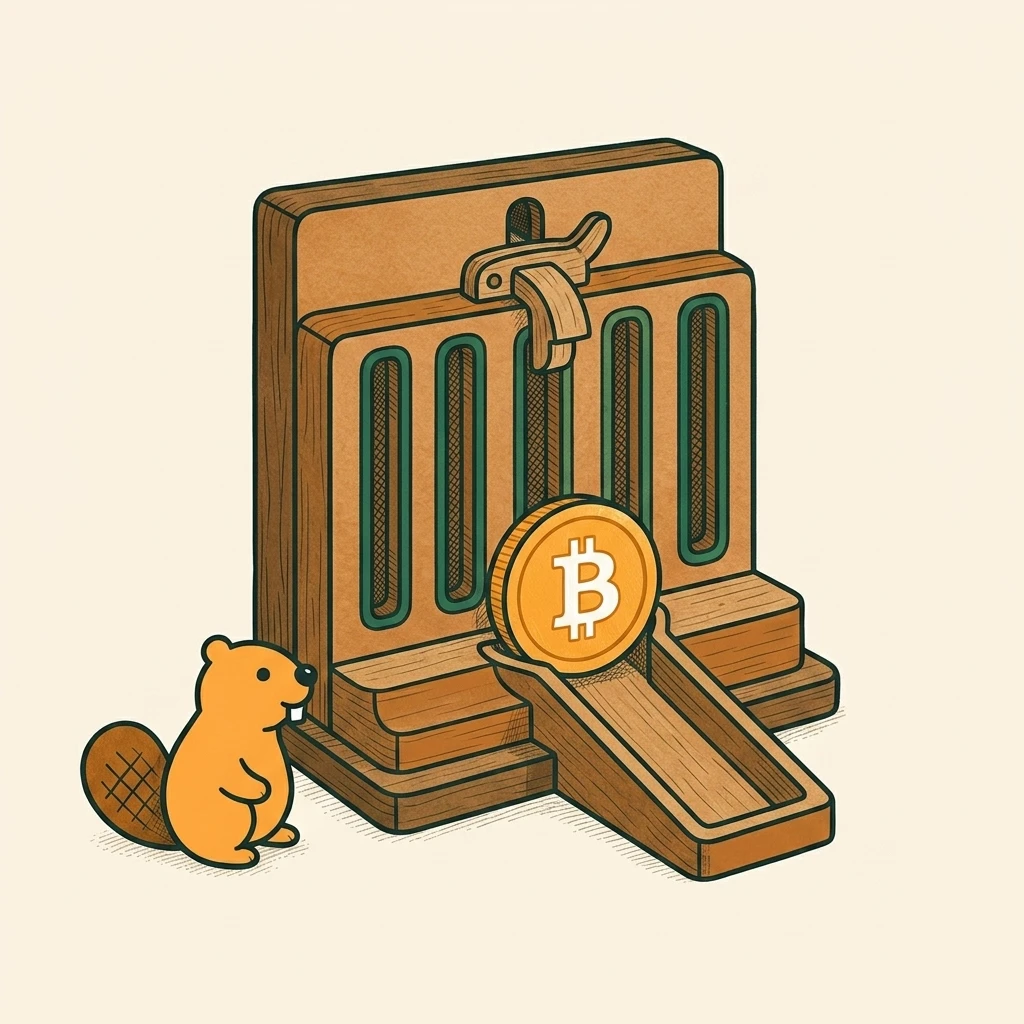
A perpetual future (often called a "perp" or "perpetual swap") is a derivative contract that allows you to buy or sell exposure to an asset's price using , but without a set expiration date.
Unlike traditional finance futures contracts—which settle on a specific day of the month or quarter—perps can be held open indefinitely. You do not have to close or "roll over" your position as a settlement date approaches.
Perpetuals were introduced in 2016 by BitMEX, at the time the dominant crypto derivatives venue, specifically to solve a problem: retail traders wanted high-leverage exposure to Bitcoin's price without the operational complexity of physical delivery or rolling dated contracts. Today, perpetual futures volume regularly dwarfs spot trading volume across all major crypto markets.
Perpetual futures vs. traditional dated futures
To understand why perps dominate, it helps to compare them to traditional dated futures:
| Feature | Perpetual Futures (Perps) | Traditional Dated Futures |
|---|---|---|
| Expiration Date | None (held open indefinitely) | Fixed (monthly or quarterly settlement) |
| Rollover Requirement | None | Must close or roll over before expiry |
| Price Tracking | Anchored to spot via funding rates | Converges to spot automatically at expiry |
| Basis Risk | Low, but subject to short-term deviation | Higher; futures trade at premium/discount |
| Main Cost Layer | Periodic funding payments + execution fees | Rollover costs + execution fees |
With traditional futures, if you want to maintain a long-term position, you must manually sell your expiring contract and buy the next one. This process, called rolling, incurs transaction costs and exposes you to price slippage. Perpetuals eliminate this friction entirely.
How funding rates anchor perp price to spot
Because perpetual contracts never expire, there is no natural settlement event to force the perpetual contract's price to match the underlying asset's real-time market price (the ).
Without an anchoring mechanism, speculative buying or selling could cause the perp price to drift permanently away from the spot price.
To prevent this, exchanges use a mechanism called the funding rate.
The funding payment mechanism
The funding rate is a periodic payment exchanged directly between long position holders and short position holders. The exchange does not collect this fee; it is paid peer-to-peer:
- When Perp Price > Spot Price (Premium): The funding rate is positive. Longs must pay shorts. This penalizes buyers and incentivizes sellers, driving the perp price back down toward spot.
- When Perp Price < Spot Price (Discount): The funding rate is negative. Shorts must pay longs. This penalizes sellers and incentivizes buyers, lifting the perp price back up toward spot.
Funding rate payments represent a significant holding cost (or source of income) for active traders. If you hold a long position during an extended bull market, positive funding rates can slowly erode your margin balance over time, even if the price of the asset remains flat.
The three prices of a perp: market, index, and mark price
One of the most confusing concepts for new derivatives traders is that every perpetual contract tracks three distinct prices simultaneously:
- Market Price (Last Price): The actual, real-time price at which trades are currently executing on that specific exchange's perpetual order book.
- Index Price: The aggregate spot price of the underlying cryptocurrency (e.g. BTC), calculated by taking a volume-weighted average from multiple external spot exchanges. This represents the true benchmark.
- Mark Price: A smoothed value calculated by the exchange to determine your unrealized profit/loss and trigger liquidations. It is based on the Index Price plus a decaying funding premium.
Why this distinction matters to you
Exchanges use the to trigger liquidations rather than the Market Price to protect traders. If a massive trade occurs on a single perp exchange and temporarily crashes the order book's price (creating a localized "scam wick"), but the broader spot market remains stable, your position will not be liquidated. The Mark Price will filter out the noise and stay anchored to the spot market index.
How perps affect your capital: costs vs. profit streams
For active traders, the funding rate is not just a technical alignment tool—it is a critical driver of capital efficiency and portfolio yield. Because funding rates are paid peer-to-peer, they can either act as a silent fee on your balance or as a direct revenue stream, depending on your position.
Funding as a holding cost (The "Funding Tax")
When a trend is strong and crowded, the cost of holding a leveraged position in the direction of the trend escalates rapidly.
- Imagine a long position on Bitcoin during a bull run where the average 8-hour funding rate is 0.05% (roughly 1.5% weekly, or 6% monthly).
- If you are trading with 10x leverage, that monthly funding cost represents 60% of your initial margin deposit.
- If the price of Bitcoin stays completely flat for a month, you lose more than half of your collateral solely to funding payments.
Funding as a profit stream (Basis & Funding Arbitrage)
Conversely, counter-trend traders and market makers use funding rates to earn passive income. If you go short when funding rates are highly positive, you will receive ongoing payments from the long traders.
A common professional strategy is the or cash-and-carry trade, where a trader buys an asset on the spot market and simultaneously opens an equal-sized short position on a perpetual market. Because the spot and perp positions offset each other, the trader has zero price exposure but continuously collects positive funding rate yield.
Decision framework: spot, futures, or perps?
To choose the right product for your trade, use the following guide:
- Use Spot Trading when: Your holding horizon is long-term (months to years), you do not want to manage liquidation risks, and you do not require leverage.
- Use Perpetual Futures (Perps) when: You are trading short-to-medium term (hours to a few weeks), require high leverage, want to trade on margin, or want to short-sell an asset easily with deep liquidity.
- Use Dated Futures when: You are implementing basis/hedging trades over a fixed horizon and want to lock in a known premium or discount without worrying about fluctuating, unpredictable funding rate charges.
Understanding basis risk in perps
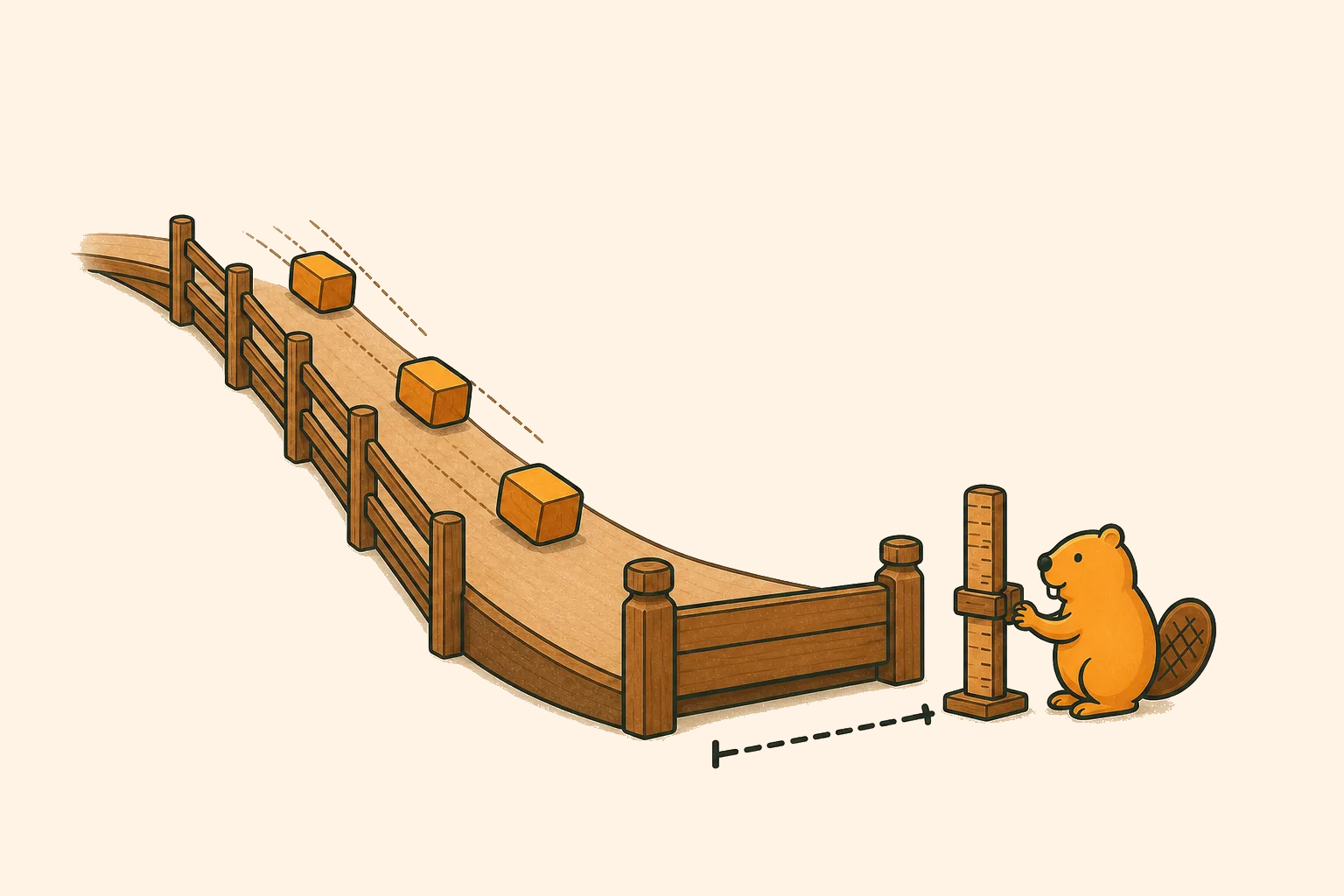
Although the funding rate keeps perpetual contract prices close to spot, they are not always identical. The price difference between the perpetual contract and the spot price is called the .
is the risk that the perpetual contract's price deviates significantly from the spot price during times of extreme market stress or leverage imbalances.
For example, during a sudden market crash:
- Massive liquidations of long positions trigger cascading market sell orders on perpetual exchanges.
- The perpetual price drops much faster and deeper than the spot price on physical asset exchanges.
- This creates a temporary wide negative basis, where the perp trades at a deep discount.
If you are forced to close your position (or get liquidated) during this period, you will suffer a worse execution price than if your position had been closed at the spot price.
Major perpetual futures venues
Perpetual swaps are traded on both centralized exchanges (CEXs) and decentralized exchanges (DEXs). The right venue depends on your requirements for custody, execution speed, and geographic availability:
| Exchange | Type | Custody Model | Maximum Leverage | Funding Interval |
|---|---|---|---|---|
| Binance Futures | Centralized (CEX) | Custodial | Up to 125x (varies by asset) | Typically every 8 hours |
| Bybit | Centralized (CEX) | Custodial | Up to 100x | Typically every 8 hours |
| OKX | Centralized (CEX) | Custodial | Up to 100x | Typically every 8 hours |
| Hyperliquid | Decentralized (DEX) | Self-custody (smart contract / L1) | Up to 50x | Hourly updates |
| Lighter | Decentralized (DEX) | Self-custody (ZK-circuit matching) | Up to 20x | Hourly updates |
| Aster | Decentralized (DEX) | Self-custody (ZK private order book) | Up to 1001x (Simple Mode) | Typically every 8 hours |
| dYdX Chain | Decentralized (DEX) | Self-custody (smart contract) | Up to 20x | Hourly updates |
Centralized exchanges generally offer deeper liquidity, tighter bid-ask spreads, and higher leverage, but require you to trust them with your deposits. Decentralized alternatives allow you to trade directly from your hardware or software wallet, keeping you in complete control of your funds at all times.
CoinBeaver tracks live TradFi perpetual markets — equities, commodities, and indices traded as perps on Hyperliquid, Aster, Lighter, and EdgeX — with prices, funding rates, and open interest for each market.
Frequently Asked Questions
Yes. If the market moves against your position and your account equity falls below the required maintenance margin threshold, the exchange's risk engine will liquidate your position to prevent systemic default.
Liquidation is triggered by the mark price, not the last traded price. The mark price is calculated using a basket of spot prices from multiple external exchanges. This protects traders from localized price manipulation or temporary flash crashes (scam wicks) on a single exchange.
Yes. Funding rates are paid peer-to-peer. If the funding rate is positive (bullish sentiment) and you hold a short position, or if the funding rate is negative (bearish sentiment) and you hold a long position, you will receive funding payments directly into your margin account at each funding timestamp.
Every funding payment you make is deducted directly from your margin balance. Over long holding periods with high funding rates, these continuous payments shrink your collateral buffer. This brings your liquidation price closer to the current market price, even if the market price itself does not move.
USDT-margined (linear) perps use stablecoins (USDT/USDC) as collateral, meaning your margin value is stable, and gains/losses are linear. Coin-margined (inverse) perps use the underlying crypto asset (e.g., BTC or ETH) as collateral. This creates a non-linear PnL profile: when the price drops, your collateral value also depreciates, which accelerates your margin loss and pulls your liquidation price up faster during a sell-off.
If a market moves too fast and a liquidated position cannot be closed on the order book, exchanges protect themselves from bad debt using different mechanisms: CEXs like Binance and Bybit use an Insurance Fund funded by liquidation premiums. On-chain exchanges like Hyperliquid have no central insurance fund; instead, they use a decentralized backstop liquidation pool (the HLP vault) where depositors take over liquidated positions. If these reserves fail or are exhausted, the protocol triggers Auto-Deleveraging (ADL), forcibly closing profitable opposing trades to keep the exchange solvent.
Funding rates are determined by the premium index (the difference between the perp price and the spot price). During rapid price surges or crashes, the rush for leverage on one side of the market (e.g., aggressive buyers during a breakout) drives the perpetual price to trade at a substantial premium to spot. This results in the funding rate spiking to ensure the opposite side gets compensated enough to counter the price skew.
Since perpetuals are synthetic contracts with no physical delivery, holding a perp does not grant you entitlement to hard fork tokens or airdrops. During token swaps or migrations, exchanges typically halt trading, settle all open positions at a set index price, delist the old perp contract, and launch a new one under the updated token specifications.
Funding rate arbitrage involves opening opposing positions on two different venues (e.g., going long on a DEX with low funding and short on a CEX with high funding) to harvest the funding rate difference. The main risks include execution slippage, basis divergence (where the price difference between the two venues changes unfavorably), transaction fee drag, and liquidation risk on one of the exchanges if a sudden price action is not managed.
Sources and further reading
Primary documentation for the mechanics above:
- Binance — Introduction to Binance Futures Funding Rates
- dYdX — What Are Perpetual Contracts (Academy)
- Bybit — Perpetual Contract Management Rules
- dYdX — Developer Documentation & API
- Hyperliquid — Perpetual Trading Specifications
This article is educational. It is not trading advice, and product availability, max leverage, and margin formulas change by venue and jurisdiction. Verify live parameters on the exchange before you risk capital.
Keep learning
Recommended next reads based on this lesson.
- How crypto leverage trading worksCrypto leverage lets you control a larger position with a smaller deposit of collateral.
- Auto-Deleveraging (ADL) Explained: When the Exchange Closes Your WinnerHow the ADL queue is ranked, what price your position is closed at, why the settlement gap matters less than the forced exit, and how to read the indicator on your position row.
- Cross Margin vs. Isolated Margin: Which Protects You Better?Learn the core differences between cross and isolated margin modes, compare their risk profiles, and see step-by-step worked examples to protect your trading capital.
- How Crypto Liquidations Happen: Mechanics, Math, and Risk ManagementLearn how crypto liquidations work, how exchanges calculate liquidation prices, and practical strategies to protect your margin and avoid getting rekt.