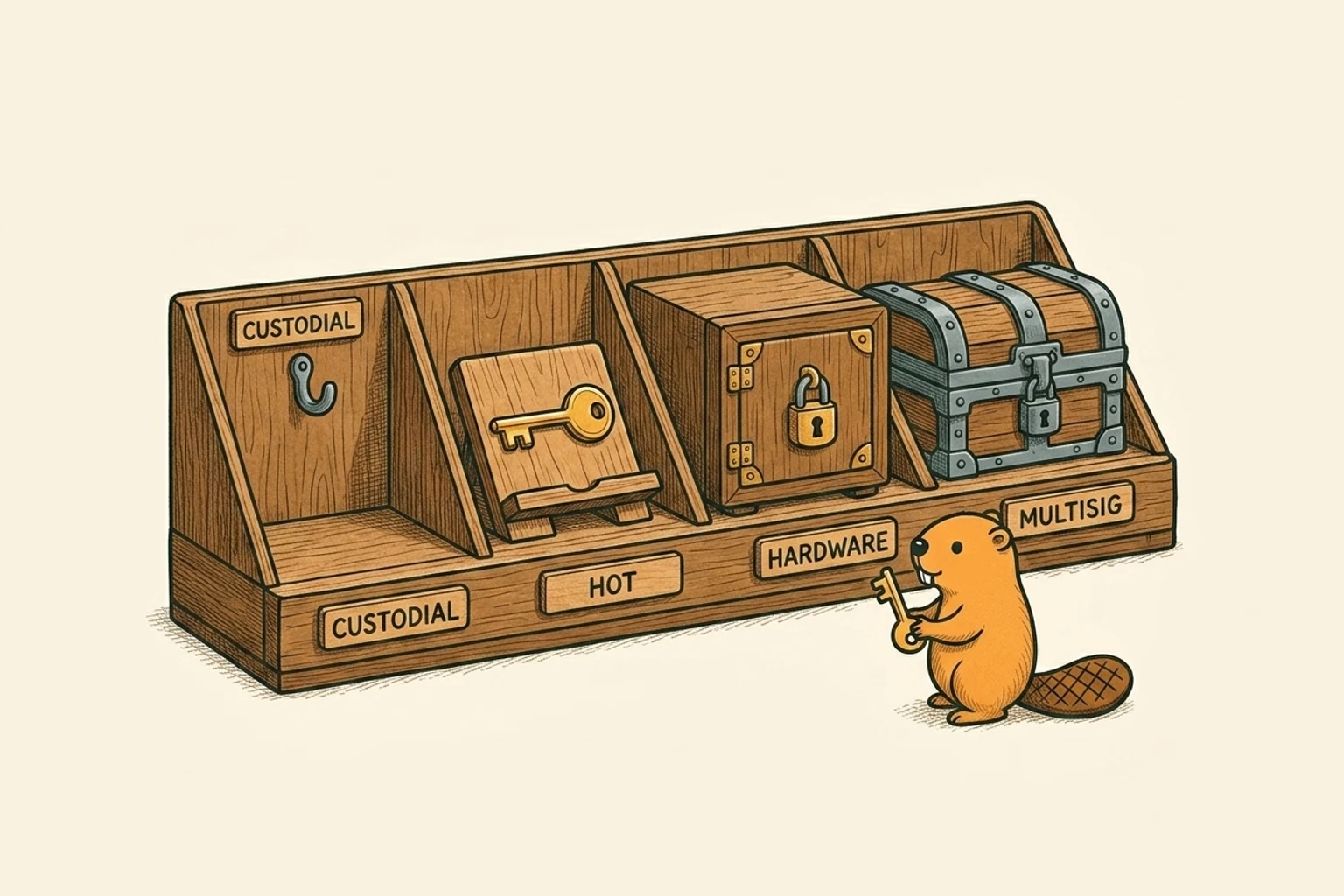
Hot Wallet vs. Cold Wallet: Security, Trade-Offs, and How to Store Your Crypto
Compare hot vs. cold crypto wallets, understand private key self-custody, examine security trade-offs, and implement a multi-tier storage strategy.

On this page
Quick read
A hot wallet is an internet-connected software app optimized for daily Web3 transactions, while a cold wallet is an offline physical hardware device designed for maximum long-term security. Understanding their trade-offs enables you to build a multi-tier storage strategy that balances convenience with protection.
What to remember
- Wallets Store Keys, Not Coins: Crypto assets live on the public blockchain. Your wallet holds the private keys and seed phrase required to authorize transactions.
- Hot Wallets for Daily Convenience: Browser extensions and mobile apps (like MetaMask or Phantom) offer fast Web3 and DeFi access, but are vulnerable to online malware and phishing.
- Cold Wallets for Long-Term Reserves: Dedicated hardware devices (like Ledger or Trezor) sign transactions completely offline, protecting private keys from remote hackers.
- Not Your Keys, Not Your Coins: Leaving digital assets on centralized exchanges exposes your capital to exchange insolvency, withdrawal freezes, and account hacks.
- Adopt a Multi-Tier Strategy: Keep 80% to 90% of your long-term wealth in cold storage, and transfer small spending balances into hot wallets for active trading.
The foundation: How crypto wallets actually work
A common misconception among beginner investors is that crypto wallets hold digital coins inside them like a physical leather wallet holds cash.
In reality, your cryptocurrencies reside permanently on the public blockchain ledger. A crypto wallet is simply a tool that manages your cryptographic keys:
- Public Key (Wallet Address): Analogous to your bank account number or email address. You share this publicly to receive funds.
- : Analogous to your bank account password or digital signature. Anyone who possesses your private key gains complete, irreversible control over your assets.
When you create a self-custody wallet, your private key is derived from a 12-word or 24-word seed phrase (recovery phrase). The primary distinction between a hot wallet and a cold wallet comes down to how and where that private key is generated and stored.
| Feature / Attribute | Hot Wallet (Software) | Cold Wallet (Hardware) |
|---|---|---|
| Internet Connectivity | Always connected online | Permanently air-gapped / offline |
| Primary Medium | Browser extension, mobile app, desktop app | Dedicated USB physical hardware device |
| Setup Cost | Free (0.00) | $60 to $200+ for hardware device |
| Security Level | Moderate (Vulnerable to online malware & phishing) | Maximum (Immune to remote software hacks) |
| Web3 / DeFi Speed | Instant transaction signing in browser | Requires physical button confirmation on device |
| Best Use Case | Daily trading, small Web3 spending, minting NFTs | Long-term savings, high-value crypto reserves |
What is a hot wallet? (Convenience and connectivity)
A hot wallet is any cryptocurrency wallet connected directly to the internet. Examples include browser extension wallets (MetaMask, Phantom), mobile apps (Trust Wallet, Coinbase Wallet), and web wallets hosted by centralized exchanges.
Advantages of hot wallets
- 100% Free and Accessible: Anyone can download and configure a hot wallet in seconds without buying hardware.
- Seamless Web3 Integration: Connects instantly to decentralized exchanges (Uniswap, Raydium), NFT marketplaces, and DeFi yield protocols.
- Convenient Mobile Access: Allows you to execute transactions on the go using smartphone biometrics.
Security risks of hot wallets
Because hot wallets run on general-purpose, internet-connected operating systems (iOS, Android, Windows, macOS), their private keys are exposed to online attack vectors:
- Phishing & Malicious Approvals: Accidental signature approvals on fake dapps can grant hackers unlimited access to drain your tokens.
- Device Malware & Keyloggers: Malicious software installed on your computer can intercept clipboard addresses or steal unencrypted wallet seed files.
- Exchange Insolvency: Leaving funds in hot exchange accounts means relying on third-party custody, exposing you to exchange bankruptcies or frozen withdrawals.
What is a cold wallet? (Security and air-gapped isolation)
A cold wallet (or hardware wallet) is a physical, purpose-built electronic device that stores your private keys completely offline, isolated from internet connection. Leading hardware wallet manufacturers include Ledger, Trezor, and Keystone.
How hardware cold storage works
When you initiate a transaction on a cold wallet:
- Your computer or smartphone constructs the raw transaction data.
- The transaction data is sent to the physical hardware device via USB cable or Bluetooth/QR code.
- The hardware device's internal secure element chip signs the transaction offline inside the device.
- The signed transaction is sent back to the computer to be broadcast to the blockchain.
At no point during this process does your private key ever leave the hardware device or touch an internet-connected screen.
Advantages of cold wallets
- Immune to Remote Malware: Even if your laptop is infected with keyloggers or viruses, hackers cannot extract the private key locked inside your physical device.
- Physical Button Authorization: Transactions require physical button presses on the hardware device itself, preventing remote unauthorized transfers.
Disadvantages of cold wallets
- Upfront Hardware Cost: Devices cost between $60 and $250+.
- Physical Loss & Damage Risk: Physical devices can be lost, stolen, or damaged by water/fire (though funds remain recoverable via your offline seed phrase backup).
The multi-tier wallet storage strategy
Professional investors do not choose exclusively between hot or cold wallets; instead, they implement a multi-tier storage architecture:
Tier 1: The Spending Wallet (Hot Storage)
Keep 10% to 20% of your active liquid portfolio in a software hot wallet. Use this balance for active trading, paying gas fees, and interacting with new DeFi protocols. Treat this balance like cash in a physical pocket wallet—never risk more than you can afford to lose to a malicious smart contract approval.
Tier 2: The Cold Vault (Offline Hardware)
Store 80% to 90% of your long-term crypto wealth in a dedicated hardware wallet. Never connect this hardware wallet to unverified Web3 dapps or click experimental claim links with your vault address.
Frequently Asked Questions
Your crypto is not stored inside the physical device; it lives on the blockchain. As long as you have your 12-to-24 word seed phrase backup written down safely, you can buy a new hardware device or software wallet and restore 100% of your funds immediately.
Yes. Exchange accounts are internet-connected hot wallets managed by a third party. Because you do not hold the private keys, you do not have true self-custody and remain exposed to exchange insolvency, account bans, or withdrawal restrictions.
Dedicated hardware wallets use custom, highly restricted operating systems and secure element chips designed specifically to isolate private keys. They cannot run general third-party software, making them immune to standard computer viruses.
A paper wallet or steel seed plate is a non-electronic offline backup method where private keys or seed phrase words are printed on paper or engraved into stainless steel/titanium plates to protect against fire, water, and digital theft.
For small amounts (like $100), the cost of a $100 hardware device may not make financial sense. Free self-custody software hot wallets (like MetaMask or Trust Wallet) provide good security for smaller amounts as long as you safeguard your seed phrase.
A multi-signature wallet requires approval from multiple distinct private keys (e.g., 2 out of 3 keys) to authorize a transaction. Multisig setups are widely used by DAOs, businesses, and high-net-worth investors to eliminate single points of failure.
Sources and further reading
Primary digital asset security documentation:
- Bitcoin.org — Securing Your Wallet Guide
- Ethereum.org — Ethereum Wallets: Buy, Store, and Send Crypto
This article is educational. It is not financial or security advice. Hardware wallet specifications, firmware updates, and seed backup protocols vary by manufacturer. Always purchase hardware devices directly from official manufacturer stores.
Keep learning
Recommended next reads based on this lesson.
- How to choose a bitcoin walletThe four ways to hold bitcoin keys — custodial, hot, hardware, and multisig — and a single test for deciding which one your holdings actually need.
- Managing Risk in Crypto: A Practical Framework for TradersLearn how to protect your trading capital in crypto with a 4-variable framework, position sizing rules, R-multiples, and multi-layered risk management.
- Using DeFi as a Trader: What You Need to Know Before You StartA practical guide for CEX traders evaluating DeFi: self-custody models, gas fee mechanics, DEX slippage, risk stacks, and when DeFi makes sense.